
Listen to this podcast in the app for free: Download for free in the App Store
radio.net
Sleep timer
Save favourites
3804 episodes
Travis Knight: Wildwood director on the film's creative journey and the impact of stop-motion animation
25/10/2026 | 13 mins.Film director Travis Knight and his studio Laika have built up a name for themselves in the world of stop-motion animation, but his newest project is his most ambitious one yet.
Wildwood is in theatres now, after 16 years in development - and it took 6 years of filming, 233 handmade puppets and over a thousand artists to get it all done.
There's already plenty of Oscar buzz around this project, with early speculation claiming it could take home the prize for Best Animated Feature.
Travis Knight says it was 'bittersweet' getting this wrapped up.
"Now we're finally sharing this thing that we've been working on for years with the rest of the world and I'm really thrilled by the response so far."
LISTEN ABOVE
See omnystudio.com/listener for privacy information.Ke Huy Quan: Oscar-winning actor on his new memoir 'Never Say Die'
25/10/2026 | 16 mins.Oscar-winning actor Ke Huy Quan's had a memorable Hollywood career, but there's more to his story than the fame and accolades.
He got his start as a child actor, having starred in Indiana Jones and the Temple of Doom and Goonies - but he took a hiatus after he couldn't find any new roles in his 20s.
Two decades later, he made a big professional comeback and won an Oscar for his role in the hit film Everything Everywhere All at Once.
But before his big film career, he was a refugee escaping a war-torn Vietnam, and he's exploring that part of his life in his new memoir Never Say Die.
"I never thought I would have the courage to write this book, but I'm really glad I did."
LISTEN ABOVE
See omnystudio.com/listener for privacy information.Whitcoulls Recommends: London Station and Peck & Peck
24/10/2026 | 4 mins.London Station by David McCloskey. This is the fourth book in his series about Artemis Aphrodite Procter, a CIA operative who’s a bit of a maverick and does things by her own rules. The author used to work at the CIA and clearly knows his way around and some of the background in the stories is fascinating. In this new one, Artemis has been (reluctantly) appointed as the Chief of the CIA London’s station just as the American administration wants to cut ties with their UK counterparts and diplomatic change is in the air. This is as good as the previous titles.
Peck & Peck by Bonnie Garmus – who wrote the brilliant Lessons in Chemistry which has now been loved by thousands of readers. This is her first book since, about a young man who gets a job at the most prestigious, secretive and dysfunctional poetry journal in the world: the renowned Peck & Peck. Batter Gray (named after his mother’s dog) is an unusual individual who ends up working for an even more unusual business. It’s quirky and clever.
LISTEN ABOVE
See omnystudio.com/listener for privacy information.Megan Singleton: BloggerAtLarge.com writer on Maui's recovery after the fires three years ago
24/10/2026 | 4 mins.Three years after the devastating fires tore through the village of Lahaina, Megan Singleton visited the seaside town as part of her day in Maui.
Officials have been working to rebuild residential homes, and it's expected more new businesses will be opening in 2028.
Amid the ongoing recovery efforts, Megan shared what Maui has to offer - read more about her experience here.
LISTEN ABOVE
See omnystudio.com/listener for privacy information.The Sunday Panel: How could officials reach younger voters?
24/10/2026 | 10 mins.This week on the Sunday Panel, Newstalk ZB Wellington mornings host Nick Mills and Resident Economist at Opes Partners Ed McKnight joined in on a discussion about the following issues of the week - and more!
Enrolments are due to close tonight, with early voting beginning on Monday. 92 percent of eligible Kiwis are enrolled, but only 69 percent of 18 to 24-year-olds are enrolled. Do we think officials have done enough to get people enrolled? How could they reach more people?
JetBlue has teamed up with Virgin Voyages to launch a child-free holiday package made exclusively for travellers over 18. Do we see this catching on?
LISTEN ABOVE
See omnystudio.com/listener for privacy information.
More News podcasts







Trending News podcasts
















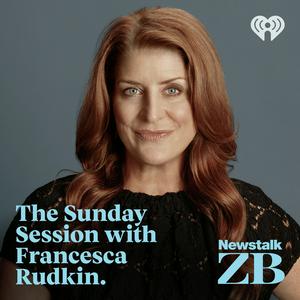
About The Sunday Session with Francesca Rudkin
News, opinion, analysis, lifestyle and entertainment – we’ve got your Sunday morning listening covered with The Sunday Session with Francesca Rudkin on Newstalk ZB.
Podcast websiteListen to The Sunday Session with Francesca Rudkin, Inside Trump's Head and many other podcasts from around the world with the radio.net app
Get the free radio.net app
- Stations and podcasts to bookmark
- Stream via Wi-Fi or Bluetooth
- Supports Carplay & Android Auto
- Many other app features
Get the free radio.net app
- Stations and podcasts to bookmark
- Stream via Wi-Fi or Bluetooth
- Supports Carplay & Android Auto
- Many other app features

The Sunday Session with Francesca Rudkin
Scan code,
download the app,
start listening.
download the app,
start listening.
The Sunday Session with Francesca Rudkin: Podcasts in Family







 New Zealand
