

Listen to this podcast in the app for free: Download for free in the App Store
radio.net
Sleep timer
Save favourites
352 episodes
#352: Her Daughter Had Autism and Just 2 Words… Look at Her Now
06/10/2026 | 44 mins.Mary Barbera welcomes back Michelle, a parent and autism coach, to share her daughter Elena's remarkable journey. Michelle discusses recognizing early signs of regression, receiving an autism diagnosis, and navigating therapy shutdowns during COVID-19. She shares how implementing at-home teaching strategies helped Elena progress from two words to 180 words and phrases in just 33 days.
Now eight years old and thriving in third grade, Elena continues to make progress. Michelle reflects on the challenges her family overcame and the importance of empowering parents to actively participate in their children's development.#351: Her Granddaughter Wasn't Talking—Then Tracy Learned What to Do
22/09/2026 | 30 mins.Mary Barbera interviews longtime collaborator Tracy Rasmussen about helping her 16-month-old granddaughter, Cece, who was showing signs of a speech delay. Tracy shares the strategies she learned through Mary's program, including language sampling, modeling words, repetition, structured table time, and reducing pressure around speaking. She also discusses Cece's early progress with new word approximations, communication, and cooperation. The program is designed to give parents, grandparents, and professionals practical tools they can use to help children build stronger communication and language skills.#350: "Free" Tips & Therapy Aren't Really Free - The Autism Myth Keeping You Stuck
08/09/2026 | 17 mins.Dr. Mary Barbera explains why "free" autism advice and therapy can still carry a cost when they delay real progress. Mary shares two parent stories: Ruth, who spent 150+ hours piecing together free content without a step-by-step plan, and Kelsey, who had funded therapy in place but watched her son work on the wrong goals. Both stories point to the same lesson: parents need to become the "Captain of the Ship" with a clear plan for teaching language, reducing problem behaviors, and supporting progress every day.#349: Child Talking Too Quietly? How to Improve Voice Volume in a New Talker
25/08/2026 | 15 mins.When a child has words but speaks too quietly to hear, low volume may be connected to confidence, fluency, and how difficult the word feels. In this coaching call excerpt, Dr. Mary Barbera explains how to increase talking and voice volume by giving the answer, modeling words clearly, slowing down practice, using 3D objects, matching, microphones, mirrors, songs, outdoor play, and weekly word lists. The goal is to shape louder, clearer communication without constant correction or pressure.#348: Siblings, Autism & Speech Delays: Why You Can't Predict the Future
11/08/2026 | 12 mins.Dr. Mary Barbera shares the story of her sons Lucas and Spencer, two boys who looked very similar as toddlers but had very different outcomes. Through their journey, she explains why parents can't predict a child's future with a "crystal ball," but should still take action early when they notice speech delays, autism signs, or developmental concerns. She also introduces her 5 Weeks to More Talking program as a step-by-step way to start helping children right away.
More Education podcasts






Trending Education podcasts











About Turn Autism Around
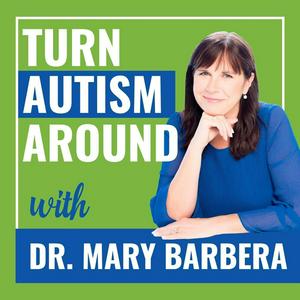
If you're a parent with a child diagnosed with Level 1, 2, or Level 3 autism or worried about speech delays, tantrums, autism signs, hitting, potty training struggles, picky eating, meltdowns, sensory issues, or toddler behavior that feels confusing or overwhelming, you're in the right place: www.marybarbera.com
Hosted by Dr. Mary Barbera — RN, doctoral-level Board Certified Behavior Analyst (BCBA-D), best-selling author, and creator of widely used online programs for toddlers and preschoolers — this bi-weekly podcast breaks down complex child development topics into simple, actionable steps any parent or professional can use immediately.
Every other week, Mary shares her proven 4-step approach to help children (with and without autism or ADHD) make measurable progress at home, school, and in the community. Episodes cover highly searched topics such as:
🗣️ Speech & Language Development
How to get your toddler to talk
What to do when your toddler isn't talking
Late talking, first words, echolalia, scripting, and vocal stimming
Strategies to build interaction, joint attention, and social engagement
😭 Behavior & Tantrums
How to stop hitting, biting, throwing, and daily meltdowns
What causes tantrums and how to reduce them
Simple behavior plans any parent can use
Emotional regulation for toddlers and preschoolers
🧠 Autism, ADHD & Early Signs
Early signs of autism in toddlers
What to do if you suspect autism — or if someone told you to "wait and see"
Screening vs. diagnosis
Sensory processing disorder, hyperlexia, giftedness vs. autism traits
Navigating early intervention, speech therapy, OT, or ABA therapy
👶 Daily Life Skills
Potty training for toddlers with speech delays or autism
Picky eating and feeding challenges
Sleep issues and bedtime routines
Safety, wandering, transitions, and managing hard outings
Preparing for doctor, dentist, or haircut visits
👨👩👦 Parent Coaching & Real-Life Stories
Real parent success stories (like toddlers going from 0 words to hundreds)
How to create calm, confident routines at home
Reducing stress for the whole family
Mindset support for overwhelmed parents
This show is designed to help parents, but is also widely followed by behavior analysts, speech-language pathologists (SLPs), occupational therapists, teachers, pediatricians, nurses, and early-intervention professionals who want child-friendly, research-backed strategies that work in real homes.
Whether you're dealing with a diagnosis of autism or a late talker with frequent tantrums, sensory challenges, or early signs of autism… or you simply want a clear, compassionate, step-by-step plan to help your child thrive — this podcast is here to guide you.
Subscribe and learn how to improve talking, reduce problem behaviors, and help your child gain confidence, independence, and skills — starting today.
Podcast websiteListen to Turn Autism Around, Everyday Māori and many other podcasts from around the world with the radio.net app
Get the free radio.net app
- Stations and podcasts to bookmark
- Stream via Wi-Fi or Bluetooth
- Supports Carplay & Android Auto
- Many other app features
Get the free radio.net app
- Stations and podcasts to bookmark
- Stream via Wi-Fi or Bluetooth
- Supports Carplay & Android Auto
- Many other app features

Turn Autism Around
Scan code,
download the app,
start listening.
download the app,
start listening.
 New Zealand