
Listen to this podcast in the app for free: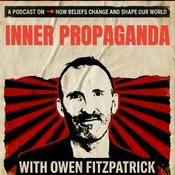 Download for free in the App Store
radio.net
Sleep timer
Save favourites
100 episodes
How to fix burnout with Cait Donovan
26/10/2026 | 49 mins.Cait Donovan burned out while working around 25 hours a week. She had time for long lunches with friends and mornings free to exercise, yet she still felt exhausted, irritated, and stuck. Years later, a single line in the burnout research gave her the answer she had been searching for.
Cait's central idea is that burnout grows out of mismatches between people and their work, their families, their coping habits, and the environments around them. Workload matters, though it is only one piece of a much bigger picture.
In this episode of Inner Propaganda, I explore the six workplace mismatches with Cait, why organizations that ignore them invite attrition and disengagement, and the personal factors that lead good people to accept mismatches in the first place. Cait also shares how she learned to disappoint people in small ways for practice, and why "pee when you need to pee" might be some of the best burnout advice you'll ever hear.
What you will discover:
Why the largest driver of burnout is a mismatch between a person and their role
The six workplace mismatches and how to recognize them
How interoception helps you notice burnout before it takes hold
Why aiming for a 75% match works better than chasing perfection
Simple ways to practice people pleasing less and asking for help more
Cait's brilliant new book, Mismatch: Why Good People Burn Out in Good Organizations, is out October 27, 2026. Order it now: https://caitdonovan.com/mismatch
If you enjoyed this episode, check out my new book, Inner Propaganda, where I explore the stories we sell to ourselves and how they shape what we believe and accept. The audiobook is now available for preorder.
Visit my website: https://owenfitzpatrick.com/
Join my newsletter: https://owenfitzpatrick.com/newsletter/
Order my book, Inner Propaganda: https://www.amazon.com/Inner-Propaganda-Leading-Through-Turbulent/dp/1646872444/5 steps to becoming the hero of your life
19/10/2026 | 26 mins.Over 30 years as a therapist and executive coach, I noticed that almost every person I worked with explained their problems using one of two stories. Some saw themselves as the victim of everything happening around them. Others saw themselves as the villain, the reason everything kept falling apart.
Both stories can feel completely true, and sometimes the evidence backs them up. The trouble is that the inner dictator only shows us the evidence that supports the story it wants us to believe. Each of us has been a victim, a villain, and a hero at different moments, which means we have more choice in the story we sell ourselves than we realize.
In this episode of Inner Propaganda, I explore the victim story and the villain story, how the inner dictator uses each one as a tactic, and how the arcs of Darth Vader and Luke Skywalker show us what it looks like to move toward a hero story. I also share the five steps I have used with clients for decades to help them build a hero narrative and an antifragile identity.
What you will discover:
The two stories most people tell about their problems, and how to spot which one you are running
Why being a villain is another way of being a victim
How the inner dictator chooses evidence to make its narrative feel like fact
The five As: awareness, agency, alternatives, adapt, and accept
How Viktor Frankl's search for meaning and Nassim Nicholas Taleb's idea of antifragility can help you keep moving forward
If you enjoyed this episode, check out my new book, Inner Propaganda, where I explore how the stories we sell to ourselves become the beliefs we buy into. It is packed with research, history, and practical tools to help you recognize your own inner propaganda and change the story.
Visit my website: https://owenfitzpatrick.com/
Join my newsletter: https://owenfitzpatrick.com/newsletter/
Order my book, Inner Propaganda: https://www.amazon.com/Inner-Propaganda-Leading-Through-Turbulent/dp/1646872444/Why we need to learn to disagree
12/10/2026 | 23 mins.When was the last time you sat down with someone who sees the world very differently and listened to understand them? I believe the biggest problem in the world today is that we are not disagreeing effectively enough. Too often, we decide it is pointless even to try.
Polarization, echo chambers, and media that amplify the most extreme voices have convinced many of us that the gap between "us" and "them" is too wide to cross. Research shows we consistently overestimate how extreme the other side is, and when we respond with shame and moral outrage, we often push people further away.
In this episode of Inner Propaganda, I explore why shaming backfires, what the rise of the Nazis teaches us about ignoring people's grievances, and why identity-protective cognition makes us reject views that challenge who we are. I also share a conversation with my guide in Afghanistan that tested my ability to disagree well, along with research on deep canvassing and what it reveals about how people change their minds.
What you will discover:
Why we overestimate how extreme the other side really is
How shaming and moral outrage can create the very thing they oppose
What identity-protective cognition means for every difficult conversation
How the illusion of explanatory depth opens the door to more flexible thinking
Why curiosity and respect give us the best chance of changing minds
If you enjoyed this episode, check out my new book, Inner Propaganda. It explores how the stories we are sold by leaders, by the media, and by our own minds shape what we believe, and what it really takes to change hearts and minds in a polarized world.
Visit my website: https://owenfitzpatrick.com/
Join my newsletter: https://owenfitzpatrick.com/newsletter/
Order my book, Inner Propaganda: https://www.amazon.com/Inner-Propaganda-Leading-Through-Turbulent/dp/1646872444/Why doing good as an organization pays with Jess Pettitt
05/10/2026 | 37 mins.What if your competitors are wrestling with the same dilemma you are, and nobody is brave enough to ask? My friend Jess Pettitt, a Hall of Fame speaker and crisis advisor, believes this fear is keeping good organizations from doing better.
In her new book, Doing Good Better, Jess adapts Maslow's hierarchy of needs for organizations. At the top sits outlasting the cycle: surviving recession, disruption, and crisis while staying true to your values. She argues that every mistake you have made prepares you to recognize the next one faster.
In this episode of Inner Propaganda, I explore with Jess why leaders fear admitting mistakes, the internal and external pressures behind that fear, and the two questions she asks leadership teams that reveal where they really stand. We also discuss the shareholder-versus-stakeholder debate, a protein loophole in the food industry, an oil refinery racing its competitors, and what it would take for AI leaders to agree on a shared off button.
What you will discover:
How organizations can climb their own version of Maslow's hierarchy
Why past mistakes are preparation for recognizing new ones
How internal and external pressure shape the decisions leaders make
Why collaboration with competitors can create collective decisions that do good
How to take back control of your own sense of urgency
Jess' new book, Doing Good Better, is out now! I highly recommend it. Spread the word, and you can order it here: https://jesspettitt.com/doing-good-better-2/.
Take Jess Pettitt's advisory survey: https://jesspettitt.com/advisory-survey
Learn more about Jess: https://jesspettitt.com/
Exciting news: my brand new book, Inner Propaganda, is now available to buy in Ireland and the UK. In the book, I explore how our beliefs form, why they resist change, and how leaders can align what they do with who they are. You can now find it on https://www.amazon.ie/ and https://www.amazon.co.uk/.
Visit my website: https://owenfitzpatrick.com/
Join my newsletter: https://owenfitzpatrick.com/newsletter/How to talk back to the voice that hates you
28/09/2026 | 32 mins.Whenever I feel anxious or down, a voice in my head speaks with complete authority. It tells me I'm a fraud, that I'm broken, that nothing I do matters. I call it the inner dictator, and I have named him Dick.
Inner propaganda is how we convince ourselves of the ideas we hold. The stories we sell to ourselves become the beliefs we buy into, and the inner dictator is the voice that sells the darkest of them with total certainty.
In this episode of Inner Propaganda, I explore why recognizing the inner dictator weakens its hold, drawing on the persuasion knowledge model and my own experiences of propaganda in North Korea. I then go through the most common lines Dick uses on me, from "You're a freak" to "The world is so full of pain," and share how I talk back to each one.
What you will discover:
Why naming the inner dictator makes its messages less convincing
How the change of meaning principle works inside your own mind
Why your mood decides which evidence feels like proof
Simple questions that expose the vague claims behind self-doubt
How to judge a thought by its usefulness rather than its accuracy
If you enjoyed this episode, check out my brand-new book, Inner Propaganda, where I explore how the stories we are sold by leaders, the media, and our own minds shape what we believe. Drawing on field research and stories from across history, it offers practical ways to take back control of your own narrative.
Visit my website: https://owenfitzpatrick.com/
Join my newsletter: https://owenfitzpatrick.com/newsletter/
Order my book, Inner Propaganda: https://www.amazon.com/Inner-Propaganda-Leading-Through-Turbulent/dp/1646872444/
More Education podcasts









Trending Education podcasts
























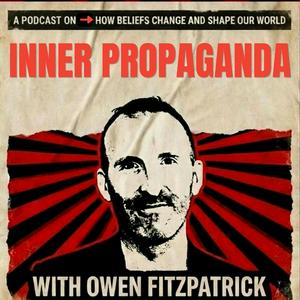
About Inner Propaganda with Owen Fitzpatrick
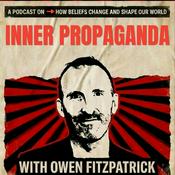
The most powerful propagandist in your life is you. Inner Propaganda with Owen Fitzpatrick explores the unconscious beliefs and stories that shape how we think, decide, and lead. Owen is a social psychologist, keynote speaker, and author of Inner Propaganda (Ideapress, 2026). For over two decades, he's studied belief systems, from global boardrooms to field research in North Korea, Rwanda, and Afghanistan. Each episode unpacks how beliefs form, why they resist change, and what it takes to lead through uncertainty. Ideas for leaders, thinkers, and anyone tired of soft-skill clichés. (Formerly Changing Minds.)
Podcast websiteListen to Inner Propaganda with Owen Fitzpatrick, Luke's ENGLISH Podcast - Learn British English with Luke Thompson and many other podcasts from around the world with the radio.net app
Get the free radio.net app
- Stations and podcasts to bookmark
- Stream via Wi-Fi or Bluetooth
- Supports Carplay & Android Auto
- Many other app features
Get the free radio.net app
- Stations and podcasts to bookmark
- Stream via Wi-Fi or Bluetooth
- Supports Carplay & Android Auto
- Many other app features

Inner Propaganda with Owen Fitzpatrick
Scan code,
download the app,
start listening.
download the app,
start listening.
 New Zealand
