
Listen to this podcast in the app for free: Download for free in the App Store
radio.net
Sleep timer
Save favourites
311 episodes
#310: Turning a Foster Care Past Into Purpose and Advocacy - Dr. Sherri Raftery
15/10/2026 | 32 mins.[32:22] What does it take to turn a difficult past into an opportunity to help others? Dr. Sherri Raftery, a college professor, six-time Distinguished Toastmaster and former foster youth, joins host Greg Gazin to share how her experiences shaped her passion for education, mentorship and advocating for young people in foster care.
Growing up in foster care, Sherri attended 15 different schools. Despite those challenges, she pursued higher education, eventually earning a doctorate. Along the way, she found herself asking a powerful question: “Where's the other 99% of us?” That question helped inspire her research into mentorship programs for foster youth pursuing higher education.
Sherri also shares how Toastmasters, which she joined in 2005, helped her grow as a communicator and leader, giving her greater confidence to share her experiences and strengthen her advocacy.
Listeners will also hear:
Why Sherri chose to embrace her foster care experiences rather than leave them behind.
How mentors, education and perseverance helped shape her journey.
How Shirley Temple, theatre and stand-up comedy influenced her development.
How Toastmasters helped her share difficult personal experiences without letting emotion overwhelm her message.
What it meant to be honoured by The Home for Little Wanderers before an audience of approximately 900 people.
How her involvement with Toastmasters prison clubs connects with her advocacy work.
Why earning her sixth Distinguished Toastmaster designation was especially meaningful.
Her advice for overcoming difficult experiences, finding mentors and making a difference in others' lives.
Sherri's journey reminds us that our past doesn't have to define our limits. Sometimes, the experiences that challenge us most can become the foundation for helping others build a better future.
Related article: Using Her Past to Impact Others’ Futures by Stephanie Darling, Toastmaster magazine, September 2026.
About Dr. Sherri Raftery
Dr. Sherri Raftery is a college professor and public speaker, teaching communication and speech at two Massachusetts colleges. She's also a court-appointed advocate and nonprofit volunteer for foster youth and speaks to community and child-welfare audiences about the challenges they face.
She holds an EDD in Higher Education Leadership and an M.Ed. in Arts & Learning from Endicott College, and a B.S. in Theater, Performance & Communications from Emerson College.
She is also a performer, artist, published poet, mother and grandmother.
A Toastmaster since 2005, Sherri has served a term as District 31 Governor and earned numerous speaking and leadership honours, including being a six Distinguished Toastmaster, Area Governor of the Year and Toastmaster of the Year. She also placed second in the District 31 International Speech Contest in 2022.
A fun fact about Sherri: she's ambidextrous and crochets blankets for foster babies in her spare time.
Sherri lives near Boston, Massachusetts and can be reached at sherri.raftery01@gmail.com or Google her to find her on socials.#309: Dirceu "Didi" da Silva - Meet the 2026 World Champion of Public Speaking
01/10/2026 | 43 mins.[43:04] Dirceu “Didi” da Silva is the 2026 Toastmasters World Champion of Public Speaking. The Rotterdam, Netherlands, speaker rose above seven other finalists after a months-long competition that began with thousands of Toastmasters from more than 100 countries. In this episode, Didi takes us behind his winning speech, Best Decision Ever!, his long road to the championship, and the lessons he learned along the way.
Didi's championship speech begins with a basketball game, a ticking clock and a decision to make. It also ends with a question he deliberately refuses to answer. He explains why he took the risk of leaving his audience hanging, how a version of the speech dates back more than a decade, and why the outcome of that basketball shot isn't really the point.
Didi also shares how family, friendship and coaching became part of his championship journey, with different people providing the support, perspective and expertise he needed along the way.
Listeners will also hear:
Why Didi once thought his life wasn't extraordinary enough to produce championship-worthy stories, and what changed his mind.
How a road trip and shared dream connected Didi and 2025 World Champion Sabyasachi “Saby” Sengupta long before either became a World Champion.
Why the right feedback matters, and how Didi learned to decide which advice to take and which to leave behind.
What Toastmasters taught him about giving back, even after becoming an accomplished speaker.
The camaraderie he witnessed among competitors at the World Championship.
What his next chapter looks like now that he can no longer compete for the Toastmasters world title.
A simple exercise for discovering stories in your own life and why Didi believes inspiration can be found in the mundane....and more!
You can read Didi's profile by Laura Mishkind in the October 2026 issue of Toastmaster magazine.
Watch Didi's World Championship-winning speech, Best Decision Ever!.
You can also listen to our interview with 2025 World Champion Sabyasachi “Saby” Sengupta in Episode #286.
You can also watch Didi's semifinal speech, What's the Worst That Can Happen? and find out who George is, by subscribing to the 2026 International Convention On-Demand.
About Dirceu “Didi” da Silva
Dirceu “Didi” da Silva is a consultant, speaker and trainer who helps people speak with clarity, confidence and impact. With more than 25 years of experience, he has worked across business, education and social innovation, coaching professionals, leaders and TEDx speakers. He has hosted and spoken at multiple TEDx events across Europe, and his work focuses on communication, leadership and personal growth.
Based in Rotterdam, Netherlands, Didi has been a member of Sprekershaven Toastmasters since 2014 and was also a dual member of Rotterdam Toastmasters for five years. Offstage, he is a father of four and a passionate amateur photographer.
You can reach Didi at: https://dirceudasilva.com/#308 Bonus: Vancouver 2026: Let's Hear From Toastmasters International Convention Attendees
15/09/2026 | 39 mins.[39:18] Forty plus Voices from around the world. And one question at the heart of it all: What was it like to experience the 2026 Toastmasters International Convention in Vancouver, Canada? In this bonus episode and Part 2 of our convention coverage, Toastmasters Podcast host Greg and fellow podcaster & Toastmaster Michael Dugan turn the microphone over to the people who were there, including many experiencing their first International Convention.
You'll hear attendees share...
· What brought them to Vancouver and what surprised them once they arrived.
· Their takeaways from the educational sessions and World Championship of Public Speaking.
· The people and moments that inspired them.
· What first-time attendees thought of the convention experience.
· Why meeting friends, mentors and Toastmasters from around the world meant so much.
· What they hope to take back to their clubs, districts and communities.
Through all those different voices and experiences, one theme comes through again and again: Connection. Sometimes the most memorable convention moment wasn't a presentation at all. It was simply meeting another person.
If you haven't already, we recommend listening first to Episode #307: Vancouver 2026: Our Highlights & Takeaways From the International Convention for Greg and Michael's highlights and takeaways from Vancouver.#307: Vancouver 2026: Our Highlights & Takeaways From the International Convention
15/09/2026 | 34 mins.[34:30] The 2026 Toastmasters International Convention brought 1,137 attendees, including 392 first-timers, to Vancouver, British Columbia, Canada in August for four days of learning, inspiration and connection under the theme Wide Open Communication.
For this special episode, we're doing things a little differently. Greg is joined by fellow podcaster and 12-year Toastmaster Michael Dugan of Seattle, Washington, who travelled to Vancouver for his first International Convention. Together, they look back at some of the people, learning and memorable moments from Vancouver, with Michael adding the perspective of experiencing it all for the first time.
Their conversation touches on the energy of the opening ceremonies, Jody Carrington's keynote, educational sessions, the World Championship of Public Speaking, Golden Gavel recipient Jennifer Moss, the convention sing-along, some of the things you may have missed, and much, much more. Along the way, Greg and Michael share their own takes on what stood out, what they learned, and a few of the unexpected moments that made the Vancouver experience memorable.
Of course, listening isn't quite the same as being there. But if something catches your interest, many of the convention sessions are still available to watch on demand.
But that's only Part 1.
In Episode #308, Vancouver 2026: Let's Hear From International Convention Attendees our bonus companion episode, we're turning the microphone over to the attendees themselves. Greg and Michael spoke with Toastmasters from around the world in Vancouver, including many first-timers, to find out what brought them to convention, what stood out, who inspired them, and what they'll take home from the experience.
Special thanks to Michael Dugan, who was instrumental in helping make our two-part convention coverage possible. In addition to sharing his first-timer perspective, Michael shared the interviewing duties with Greg and provided a huge assist during the editing process. Michael is the host and producer of the Voice4Chefs podcast, which recently celebrated its fifth anniversary.
Other Resources Mentioned
Article: Communicators Connect at Convention 2026, Toastmaster magazine recap, SEP 2026
2026 International Convention / On Demand
Club Resuscitation Please – Kathy Draper, 26-page convention handout
Previous TMP interviews we promised to link
Joel Schwartzberg — #298: Spotting & Resolving Generative AI Pitfalls for Communicators
Stefano McGhee — #306: Doesn't Sit Still - Introducing 2026-27 International President Stefano McGhee, DTM.
Morag Mathieson — #270: Celebrating Women in Leadership and Toastmasters' Impact. Also links back to her original #236 International President interview.
Aletta Rochat — #282: Inviting Opportunity: Meet 2025-2026 International President Aletta Rochat, DTM
Luisa Montalvo — #260: Luisa Montalvo — 2024 World Champion of Public Speaking
Jennifer Moss — #299: Championing Workplace Well-Being: Meet the 2026 Golden Gavel Recipient
Blake Carver & Bambi Cash — #278: How to Take Great Photos: The Do's, Don'ts & Tips
Carole Murphy and Tom Jones #301: Meet the 2026 Int'l Convention, Vancouver Canada Co-Chairs – Carole Murphy & Tom Jones
Photo: Past Int'l President, Deepak Menon, Michael Dugan & Greg Gazin#306 Doesn't Sit Still - Introducing 2026-27 International President Stefano McGhee, DTM
01/09/2026 | 33 mins.[33:03] Meet Distinguished Toastmaster Stefano S. McGhee, the 2026–2027 Toastmasters International President from Weymouth, Massachusetts. A senior IT executive and Toastmaster since 2005, Stefano is also an aviation enthusiast, motorcyclist, and yacht club leader who readily admits that becoming International President was never part of his original plan.
On today's episode, we explore Stefano's journey from reluctant guest to International President and the experiences that shaped his approach to communication and leadership. He shares how tagging along to his wife's club eventually led him to join, although one fellow member apparently predicted where he was headed long before he did. He also reflects on the confidence he gained through Toastmasters and why continually asking "why" has become central to how he leads.
He also talks about the impact we can have when we see potential in others before they see it themselves, and why giving someone our time and confidence can be one of the most valuable gifts we offer.
Listeners will also hear...
His approach to making complex, data-heavy information understandable and relatable.
Why asking "why" can be such a powerful leadership tool.
How helping someone move from "I can't" to "I can" can change a life.
Why he believes the future of Toastmasters rests in its clubs.
His challenge to clubs to support every member in achieving excellence.
Laura Amann's profile, "Meet Stefano McGhee, DTM, 2026–2027 International President: Doesn't Sit Still," can be found in the September 2026 issue of Toastmaster magazine.
About Stefano McGhee
Stefano S. McGhee, DTM, has been a Toastmaster since 2005. His home club is Network Voice Toastmasters in Weymouth, Massachusetts. A senior IT executive, he holds a master's degree in Military Operational Arts and Sciences. He is also a member of the Aircraft Owners and Pilots Association, a yacht club leader, and an avid motorcycle enthusiast.
Born in Italy, Stefano lives in Weymouth, Massachusetts, USA with his wife, Jennifer. They have a son, Tucker who attends the University of New Hampshire, and a beagle named Trevor.
Stefano can be reached at smcghee@toastmasters.org.
More Education podcasts


Trending Education podcasts








About The Toastmasters Podcast
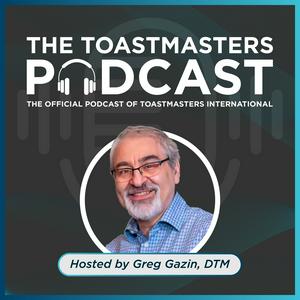
The official Toastmasters podcast featuring conversations on communication, confidence, leadership, and personal growth.
Podcast websiteListen to The Toastmasters Podcast, Everyday Māori and many other podcasts from around the world with the radio.net app
Get the free radio.net app
- Stations and podcasts to bookmark
- Stream via Wi-Fi or Bluetooth
- Supports Carplay & Android Auto
- Many other app features
Get the free radio.net app
- Stations and podcasts to bookmark
- Stream via Wi-Fi or Bluetooth
- Supports Carplay & Android Auto
- Many other app features

The Toastmasters Podcast
Scan code,
download the app,
start listening.
download the app,
start listening.
The Toastmasters Podcast: Podcasts in Family
 New Zealand
