
Listen to this podcast in the app for free: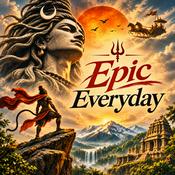 Download for free in the App Store
radio.net
Sleep timer
Save favourites
Buddha's Stories: Self-Help, Mental Health and Psychology
Gautama Buddha
Latest episode
37 episodes
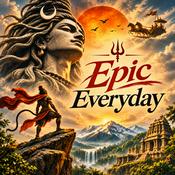
Matsya Avatar: The First Avatar of Lord Vishnu
06/11/2026 | 5 mins.Matsya Avatar - The First Avatar Of Vishnu Matsya, the first avatar of Vishnu, is in the form of a fish. Vishnu took the form of Matysa to rescue the Manu, the first man as per the Hindu epics from a huge destruction. Once King Satyavrata (the real name of ‘Manu’) was performing a sacred ceremony besides a river. While scooping in some water from the river to offer to Surya, the Sun God, he accidentally caught a tiny fish in the palm of his hand. Satyavrata was ready to release the fish back into the water, but the fish requested otherwise. The tiny fish begged him not to throw it back into the river as the river had bigger fishes that would prey upon it. To save itself from other predators of the sea, the fish requested the King to take it along with him to his palace, convincing him that his palace would be safe and big enough to accommodate a small fish. King Satyavrata took pity on the little fish and took it with himself to his palace. Upon reaching there, he put the fish in a small bowl. The King was happy and satisfied that he was able to save the life of this little being. The next morning Satyavrata came to check on the fish and was surprised to see that the tiny fish he had brought with him had grown large enough to fill the entire pot. This time the King transferred the fish to the largest lake of his Kingdom, but in no time the fish outgrew the lake too. The King had no other option but to drop the fish into the ocean from where he originally rescued it. He apologized to the fish that despite being a King he could not save her or provide enough to ensure her survival. As the fish was dropped into the ocean, its size knew no bounds. It grew beyond what Satyavrata eyes could see. At this point, Satyavrata concluded that this was no ordinary animal, but it had to be a divine appearance of God. After seven days, as Matsya had predicted, huge clouds appeared in all directions and began pouring on land and sea. The huge waves from the ocean flowed into the land, becoming one with it. Soon there was no land in sight and the entire earth was flooded with water. Then Satyavrata with all his companions saw a large mysterious boat floating towards them across the waves. Remembering the words of Matsya, Satyavrata onboarded the Seven Rishis, animals, all his belongings and himself on the boat, finding some safety. Soon Matsya appeared there with the snakkue Vasuki. Vasuki tied itself to the boat on side and held on to the horns of Matsya on the other side. Matsya with the help of Vasuki towed the boat across the waters of devastation. For countless days, darkness covered the world and they wandered across the stormy ocean waiting for the water to subside. During their journey and days of patience, Vishnu in the form of Matsya preached King Satyavrata and the seven sages the spiritual knowledge of the Vedas. Thus, Vishnu – The Preserver from the holy Trinity, was able to save mankind and brought them into the new era, the beginning of Satya Yuga. Satyavrata came to be known as ‘Manu’, the first man and the seven sages who accompanied became the Saptarishis going on to repopulate the earth. Hosted on Acast. See acast.com/privacy for more information.Why Goddess Kali Appeared to Sri Ramakrishna Paramahansa
05/11/2026 | 7 mins.How Shri Ramakrishna Paramhansa Saw The Hindu Goddess Kali? Ramakrishna poured his heart and soul into the worship of Kali. While others perceive Kali as destruction, for him She was the all-loving Mother. While she wore a garland of heads on neck, Her waist was covered with human arms, two of her hands held weapons of death, and eyes that glazed fire, strangely Ramakrishna felt in her presence the soothing touch of tender love. Once when he was anxious and restless, he picked up a sword that was kept in Mother Kali’s temple to kill himself. Suddenly the Goddess appeared in front of him. In that moment he could see nothing else in the world, not even his own existence, all his eyes were able to see was the form of Kali. This vision disappeared immediately. Ramakrishna describes that moment to be so short that it last for blink of an eye, yet so limitless and infinite that it would remain with him for eternity. Hosted on Acast. See acast.com/privacy for more information.Ramayana Episode: How Ram and Lakshman Left the Earth
05/11/2026 | 6 mins.The story Lakshman ending his avatar is mainly found in the Puranas. After returning to Ayodhya, Shri Rama ruled his kingdom for several years. There was peace and prosperity on earth. Dharma was flourishing. His sons and the sons of his brothers were made kings in many parts of the large empire that he ruled. During this period, Sita Devi also disappeared from earth when she merged with Bhudevi (Mother Earth). Yama (Kala), the lord of death, arrived at the palace of Sri Rama disguised as a pious sage and requested a meeting with him. Lord Ram received his guest. Yama said that he wanted to have a private discussion with Lord Ram and would not want anyone in the room. He put forth a condition that no one should interfere them or attempt to see or hear their conversation while they were in discussion. If anyone interferes, that person should be given a death penalty. Lord Ram gave the word to Yama. Lord Ram summoned Lakshman and asked him to guard the door such that none could enter the room or hear their conversation. He was also told about the condition put by Yama. Lakshman assured that nobody would interrupt them and stood outside as the chambers as a guard. While this meeting between Yama and Rama was on going, Sage Durvasa, the hotheaded saint who was well-known for his shirt temper and curses, appeared in Ayodhya and demanded an immediate meet with Sri Ram. Lakshman tried to convince him to have patience and wait for some time by explaining him situation, but Sage Durvasa became angry. He thought he was being disrespected by the King of Ayodhya by making a pious sage wait outside his door. His anger began shooting the peak and he threatened to curse the entire city of Ayodhya to burn down to ashes. After meeting with sage Durvasa, Sri Ram now had to declare death penalty to Lakshman. He could not dare take that decision and reached out to his Guru Sage Vasishta. Muni Vasishtha advised that Lakshman was a big devotee of Shri Ram and his life was all about his brother. The ultimate reason for Lakshman’s life, his living, his happiness and his sorrows was all Lord Ram. So, if one could take him away from his elder brother Ram, it would be like destroying his purpose of living. He suggested that if Rama abandoned Lakshman and sent him away from the kingdom, it would be equal to a death penalty for Lakshman. Lord Ram agreed to his Guru’s advice. Meanwhile, Lakshman also realized that the arrival of Yama to meet Ram had other objectives. He understood that time has for Shri Ram to end his avatar on earth. When Sri Ram told Lakshman about abandonment, the younger brother told that he would accept death but not staying away from Sri Ram. Lakshman then walked into the Sarayu River and drowns himself taking Jal Samadhi to fulfill his brother’s promise. Lakshmana then took the form of Ananta Shesha and waited for Rama in the milky ocean. Hosted on Acast. See acast.com/privacy for more information.Mahabharata Episode: Why Pandavas Went To Hell And Kauravas Went To Heaven
04/11/2026 | 8 mins.Why Pandavas Went To Hell And Kauravas Went To Heaven | After Mahabharata Part 2 Hosted on Acast. See acast.com/privacy for more information.The Origin Of Transgender In Hinduism
04/11/2026 | 8 mins.The Hindu God Of Transgenders | Origin Of Transgender In Hinduism It is widely believed in the Southern India that transgender community originated from a small character in the Mahabharata named Iravan, often also referred as Aravan. Aravan was the child of Arjun and Ulupi, the widowed Naga princess. According to the Tamil version of Mahabharata, before the beginning of the Kurukshetra war a sacrificial rite named Kalappali was performed. Aravan sacrificed himself in the war and was granted three boons by Lord Krishna, which ended up with Lord Krishna marrying him. Krishna as Mohini married Aravan, spending the night with him. It is from Aravan’s lineage after his association with Krishna’s female form that the transgenders are said to have been born. And that is why, trans-genders or Kinnars are also called Aravanis in Tamil. That is why in certain parts of Southern India there is 18-day Aravani festival which is mostly held by the trans-gender community. The Aravanis (Trans-genders) are married to Aravan as his bride and when the sacrifice of Aravan is enacted, the Aravanis become the widow of Aravan and mourn his death by breaking their bangles, beating their chest and discarding their bridal jewelry. Hosted on Acast. See acast.com/privacy for more information.
More Education podcasts









Trending Education podcasts





























About Buddha's Stories: Self-Help, Mental Health and Psychology
Buddha's Stories: Self-Help, Mental Health and Psychologyis a podcast that combines timeless Buddhist wisdom with modern psychology and practical self-improvement. Through inspiring stories of the Buddha, ancient parables, and mindfulness teachings, each episode explores topics like mental health, emotional healing, stress management, self-discipline, inner peace, confidence, happiness, meditation, and personal growth.Whether you're looking to reduce anxiety, build resilience, improve your mindset, or find daily motivation, this podcast offers simple, actionable lessons rooted in Buddhist philosophy and mindfulness. Perfect for anyone interested in self-help, psychology, meditation, Buddhism, mental wellness, emotional intelligence, and living a more peaceful and purposeful life.Listen weekly for inspiring stories and practical insights that help you grow, heal, and transform your life one story at a time. Hosted on Acast. See acast.com/privacy for more information.
Podcast websiteListen to Buddha's Stories: Self-Help, Mental Health and Psychology, The Mel Robbins Podcast and many other podcasts from around the world with the radio.net app
Get the free radio.net app
- Stations and podcasts to bookmark
- Stream via Wi-Fi or Bluetooth
- Supports Carplay & Android Auto
- Many other app features
Get the free radio.net app
- Stations and podcasts to bookmark
- Stream via Wi-Fi or Bluetooth
- Supports Carplay & Android Auto
- Many other app features

Buddha's Stories: Self-Help, Mental Health and Psychology
Scan code,
download the app,
start listening.
Buddha's Stories: Self-Help, Mental Health and Psychology: Podcasts in Family
 New Zealand