
Listen to this podcast in the app for free: Download for free in the App Store
radio.net
Sleep timer
Save favourites
795 episodes
How DTC Brands Should Prep for Amazon Black Friday After Prime Day
23/10/2026 | 25 mins.How should DTC brands prep for Black Friday on Amazon? This year's Prime Day events show where ecommerce growth is coming from: shoppers stocked up on consumables while big-ticket categories lagged.
Tyler leads the Amazon team at Pilothouse. He walks through what June and October Prime Day showed. Some consumable brands Pilothouse manages grew 150% or more year over year during October Prime Day, a few sold more in that two-day event than in the four-day June event, and average order value dropped. He explains what that means for Black Friday and Cyber Monday, how premium brands should position for shoppers who wait for deals, and what to set up on Amazon now.
Work with Pilothouse: https://dtcnews.link/pilothouse
Key takeaways:
- Know which shoppers are waiting on you. Paper products, household cleaning, personal hygiene and pet food jumped on deal days, while headphones, tablets, wearable tech and TVs lagged.
- Sell on value. Shoppers want the product they already like at a better price, so make your differentiator easy to find and quick to understand on the listing.
- Build awareness before the deal day. Shoppers do their research ahead of the sale, so get in front of them in the weeks before Black Friday and retarget them on the day.
- Test your listing images with care. Amazon once required white backgrounds, and lifestyle and annotated images exist because sellers kept pushing. Deal-day hints in images are a gray area, and a removed listing means missing the event entirely.
- Be available where your customer shops. More shoppers compared Walmart, Target and DTC sites during deal days, and if your competitor is listed there and you are not, they get the sale.
- Plan a review push after Black Friday. Amazon's new Review Requests ads let you pay per click to ask recent buyers for a review. A click does not guarantee a review.
- Start ranking for your Black Friday keywords now. Put the keyword in your title, highlights, bullets and description, give it its own campaign, and use placement modifiers to hold top of search into the deal day.
About the guest:
Tyler leads the Amazon team at Pilothouse, a full-funnel performance marketing agency for DTC brands.
https://pilothouse.co
Stay connected:
Get the DTC Newsletter: https://directtoconsumer.co
Sponsors:
Advertise on DTC: https://dtcnews.link/advertise
Timestamps:
00:03:36 Amazon Prime Day trends
00:05:00 Consumables surge during deal days
00:07:40 How shoppers define value
00:12:30 Positioning premium products for BFCM
00:16:40 Omnichannel holiday shopping behaviorHow to Build a Creative Flywheel for Your DTC Brand for Free
21/10/2026 | 40 mins.Do influencer partnership ads lower customer acquisition costs for DTC brands, or just move them?
They lower CAC on Meta, but rev-share creator deals send a big share of that saving into a new line on the P&L. Yash Chavan, founder and CEO of Saral, the team behind the Sathi affiliate platform, walks through the math on an $80 AOV supplement brand and lays out how to build a creative flywheel instead: an influencer affiliate program where affiliate revenue covers the cost of seeding product, and the posts that win organically become the ads you boost on Meta and TikTok.
Get the DTC Newsletter: https://directtoconsumer.co
Key takeaways:
- Work out whether partnership ads are cutting your CAC or relocating it, using Yash's worked example of an $80 CAC dropping to $68 while creator and platform fees add $9.20 back.
- See why creator payouts tied to GMV grow as a variable cost when you scale ad spend, and how capping the payout on any single ad stops one viral video from costing you $10,000.
- Build a creator pyramid: seed creators who already post in your niche, turn the ones who post into affiliates, give the top sellers bigger deals, and run the top performers by views as partnership ads.
- Let organic performance choose your ad creative, with rules like boosting a reel on Meta once it passes a view threshold inside 48 hours.
- Raise your affiliate activity rate by rewarding the steps before the sale, like a free product when a creator joins and a small cash reward when they post.
- Catch leaked codes, leaked affiliate links, and affiliates bidding on your brand keywords before you pay commission on those sales.
- Plan a creator push in mid October that can still produce ad creative and affiliate revenue before Black Friday.
About the guest:
Yash Chavan is the founder and CEO of Saral, an influencer marketing platform for ecommerce brands. Before Saral he ran an influencer marketing agency. His team also built Sathi, an affiliate platform for creator-led brands with fraud protection and gamified rewards.
Saral: https://getsaral.com/
Sathi: https://www.mysathi.io
Stay connected:
Website and newsletter: https://directtoconsumer.co
Want to be a guest? Email eric@directtoconsumer.co
Sponsors:
This episode is sponsored by Saral and Sathi. Saral matches your brand with creators who already make content in your niche, and Sathi turns the creators who post into affiliates, with fraud protection and gamified rewards built in. Start a free trial at https://getsaral.com/DTC Customer Acquisition: How O Positiv Scaled TikTok Shop to $70K a Day
19/10/2026 | 49 mins.How do you lower customer acquisition costs for a DTC brand? Bobby Bitton, co-founder and CEO of O Positiv, says TikTok Shop did more for his CAC than any other channel.
He launched it as a side project in November 2023, and within 30 days one SKU went from $2,000 a day to $70,000 a day.
Bobby walks through how O Positiv runs more than 100 ads a week through an in-house creative team, how they move what works on TikTok Shop over to Meta, and why retention now gets the same attention as acquisition.
He also explains why the brand waited until it was a $100 million business to go into retail, why linear TV beat streaming in their geo tests, and the brand architecture decision he would make differently.
Get the DTC Newsletter: https://directtoconsumer.co
Key takeaways:
Lower CAC with TikTok Shop by sending samples generously and recruiting affiliates every week. Bobby set a goal of 1,000 affiliates and did the outreach himself on Sunday nights.
Start TikTok Shop simple. Get affiliates posting before you touch GMV Max, paid campaigns, or contests.
Get more usable creative by briefing creators less. O Positiv's brief is the product, what it does, what creators can say, and what they can't.
Feed Meta with TikTok Shop learnings. The winning creator content runs on Meta, and the creators get paid extra for it.
Test for creative diversity instead of running ten copy variations on one static image.
Hold Meta to an allowable CAC and move spend up or down with the strength of your creative.
Grow lifetime value by planning for life stages. A PMS customer who gets pregnant should reach for your pregnancy product, then your menopause product.
Launch products customers can feel working. O Positiv's fiber gummy stuck and its immune gummy didn't, and that became the product rule.
Go into retail with a big DTC business behind you, push for endcaps and out-of-aisle displays, and fly out for the buyer meeting.
Expect retail to break your attribution. When Meta ads drive store sales, your Shopify CAC climbs while the business grows, so build omnichannel measurement early.
Decide early whether you are a house of brands or a branded house, and keep it simple.
About the guest: Bobby Bitton is the co-founder and CEO of O Positiv, the women's health brand he started with his sister Brianna Bitton in 2018. O Positiv makes FLO, URO, and MENO, and sells through its own site, TikTok Shop, Amazon, Target, Walmart, and CVS.https://www.opositiv.com
Stay connected: Follow The DTC Podcast on Apple Podcasts, Spotify, and YouTube.Want to be a guest? Email eric@directtoconsumer.coFounder Story Ads: How DTC Brands Win on Meta Without an Obvious Product Edge
16/10/2026 | 36 mins.What's the best DTC marketing strategy on Meta when every competitor makes the same claims?
Liam Robinson, co-founder of Marlbank, says to stop arguing features and lead cold prospecting with your brand's growth story. On this episode of All Killer No Filler, he walks through how that switch got a supplement brand built by chemists scaling on Meta after months of feature-led ads went nowhere.
Get the DTC Newsletter: https://directtoconsumer.co
Key takeaways:
- How to sell a product that's better than the competition when the reasons don't show up in an ad
- Why feature-led ads turn into a shouting match in cold Meta prospecting
- How to imply product quality through your brand's growth story instead of claiming it
- What to use when you don't have big numbers yet: a first farmers market, a first hire, a first customer
- How to build a then-and-now prospecting ad from your own camera roll
- How Marin Skincare and Vyper Industrial pair a product distinction with a founder story
- How to turn a Dragons' Den appearance into an ad, whether you got a deal or walked away without one
- Which brands this angle won't work for
About the guest:
Liam Robinson is co-founder of Marlbank, a Meta-only agency for early-growth ecommerce brands, built in partnership with Pilothouse. Before Marlbank, he was one of Pilothouse's first media buyers. Reach Liam at liam@marlbank.co or his co-founder Nate at nate@marlbank.co.
Stay connected:
Subscribe to The DTC Podcast on Apple Podcasts, Spotify, and YouTube.
Get the DTC Newsletter at https://directtoconsumer.co
Want to be a guest? Email eric@directtoconsumer.coHow to Get Your CFO to Approve a Bigger Marketing Budget: CAC, Meta and Brand Spend | Harness the Halo 5/6
15/10/2026 | 39 mins.How do you get your CFO to approve a bigger marketing budget for a DTC brand? Drew Fallon, former CFO of Mad Rabbit, says finance is watching one number, CAC, and that brand spend only gets funded once direct response is efficient enough to pay for it.
Drew is now CEO of Iris Finance, a finance platform for CPG and DTC brands, where he sees the books of 200 brands, most of them between $20 million and $300 million in revenue. He joins Eric Dyck and Claudia Lauture, VP of Client Services at Keen Decision Systems, to work through the argument between marketing and finance, including who should own the budget and when a brand can afford upper funnel. You walk away knowing what to bring into the budget meeting and how finance will score it.
Get the DTC Newsletter: https://directtoconsumer.co
WHAT YOU WILL SOLVE
You don't know what finance is judging your plan on. Drew's answer is CAC. If CAC, retention and LTV to CAC land where his model has them, he says he does not care how much you spend or what you spend it on.
You need money for a bet that won't pay back this quarter. Drew wants one of two cases made: that it raises MER and contribution margin, or that the upside is big enough to be worth the risk.
You want to start brand marketing and direct response is only just carrying the business. Drew says there is no room yet. Most companies he sees don't start brand work until somewhere past $30 million in revenue, and he would not do it at $10 million.
You think you have topped out on Meta. Drew says Meta takes a brand farther than most operators expect, and that you can probably ride it to $100 million.
You are looking for the next channel after Meta. Across the 200 brands on Iris, Drew has not seen one scale AppLovin spend and make more money. The pattern he describes is a brand that reaches $50 million on Meta, puts $200K a month into AppLovin and watches its margin go away.
Your upper funnel keeps getting cut to hit the quarter. Claudia's team at Keen runs both plans out two and three years, so the cost of the cut is on the table next to the short-term number.
Your cash position keeps surprising you. Drew builds a bear, a base and a bull case, then tests the base at 40% over and 40% under. Beating plan by 60% can still run a brand out of money, because of inventory.
Nobody agrees who owns the marketing budget. Drew says it is usually the marketing lead and should be the CFO, on the condition that the CFO understands growth marketing, which he calls rare.
Your agency bill is being questioned. At Mad Rabbit, Drew let go of an Amazon agency he liked because it cost roughly $60K a month and he could hire two full-time people for two thirds of that.
You are planning Q4 the way you did last year. Drew is hearing more brands pull back on TikTok after losing money there last year, and supplement founders tell him they are waiting for January because Q4 brings higher returns, more churn and discount shoppers.
You are reporting platform revenue to finance. Both guests named it as the number they stopped trusting. Drew: "It's all higher than what you get on your P&L."
ABOUT THE GUESTS
Drew Fallon is co-founder and CEO of Iris Finance and the former CFO of Mad Rabbit. https://irisfinance.co
Claudia Lauture is VP of Client Services at Keen Decision Systems, the marketing mix modeling, planning and forecasting platform. https://keends.com
HARNESS THE HALO
Harness the Halo is a six-part series from DTC and Keen about the spend that doesn't pay you back the same day, and the measurement that gives you room to make it. This is episode 5 of 6, and a new episode drops every other week.
SPONSOR
Harness the Halo is presented by Keen Decision Systems. Keen measures the incremental impact of every channel on sales, revenue and profit, and forecasts how a channel will perform before you spend in it. https://keends.com
More Business podcasts





Trending Business podcasts













About The DTC Podcast
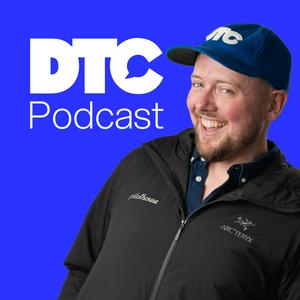
What does it take to build and scale a successful direct-to-consumer brand?
The DTC Podcast is a marketing strategy podcast hosted by Eric Dyck, with practical ecommerce growth strategies from founders, operators, and marketing experts.
Explore DTC marketing, customer acquisition, performance marketing, paid media, conversion rate optimization, customer retention, creative strategy, AI, and brand growth.
Hear what works, what fails, and how leading consumer brands adapt and grow. Subscribe for actionable insights to help you build a stronger, more profitable ecommerce business.
Podcast websiteListen to The DTC Podcast, Prof G Markets and many other podcasts from around the world with the radio.net app
Get the free radio.net app
- Stations and podcasts to bookmark
- Stream via Wi-Fi or Bluetooth
- Supports Carplay & Android Auto
- Many other app features
Get the free radio.net app
- Stations and podcasts to bookmark
- Stream via Wi-Fi or Bluetooth
- Supports Carplay & Android Auto
- Many other app features

The DTC Podcast
Scan code,
download the app,
start listening.
download the app,
start listening.
The DTC Podcast: Podcasts in Family
 New Zealand
