
Listen to this podcast in the app for free: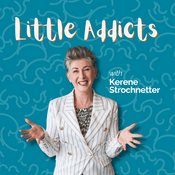 Download for free in the App Store
radio.net
Sleep timer
Save favourites
27 episodes
Ep 1 - Why do we keep doing things we know aren't good for us? - Kerene Strochnetter and Philly Powell
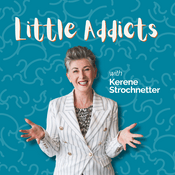
21/10/2026 | 1h 9 mins.To kick off Season 2 of Little Addicts, I'm swapping seats. My friend and colleague Philly Powell, founder of Wellbeing First and creator of Wellbeing Tick, interviews me about my new book, Little Addicts: Why We Do What We Do.
It's an honest, open and personal conversation about the things we reach for to change how we feel—from wine, scrolling and shopping to people-pleasing, overworking and needing to be liked. I share my own patterns, what they were doing for me, and why understanding them matters more than giving myself another stern talking-to.
We explore:
When "I enjoy this" quietly becomes "I need this"—and when self-soothing starts costing us.
Why knowing better doesn't always mean doing better, and why willpower alone falls short.
Homer and Yoda: our impulsive Reactor and more reflective Responder.
Why wanting something and enjoying it aren't always the same thing.
The hidden costs of people-pleasing, perfectionism and socially rewarded busyness.
The 3 N's—Notice, Name, Need—and how to pause, stay with discomfort and choose what matters.
Why I included psychedelics in the book, including therapeutic support and integration.
The power of an accountability buddy, including our ongoing "not eating after dinner" experiment. Yes, we still have to fess up.
This conversation is about curiosity, compassion and creating more choice. No personality overhaul required by next Tuesday.
A question to take away: What is this behaviour doing for me—and what is it costing me?
Get the book: Little Addicts: Why We Do What We Do. Podcast listeners can use DISCOUNT10 for $10 off.
We also discuss why serious addiction needs professional treatment and support beyond the everyday practices explored here.
To contact Kerene go to the website.Ep 25 - Psychedelics, Addiction, and the Search for Something Deeper — with Tommy Benefield
10/05/2026 | 59 mins.What if addiction isn't just about substances… but about what we reach for when life feels hard, empty, overwhelming, or just a bit too much?
In this honest, fascinating, and occasionally mind-bending conversation, I sit down with psychotherapist and Addiction Specialist Tommy Benefield to talk about addiction, recovery, trauma, psychedelics, and the deeper human search underneath all of it.
Tommy shares his own story of addiction and recovery, his cautious path into ayahuasca and plant medicine, and why healing isn't always calm, blissful, or a "good trip."
This is a conversation about relief, escape, consciousness, distress tolerance, and what people may really be looking for when they reach for something outside themselves.
In this episode, we explore:
Tommy's personal history with addiction and recovery
Why addiction often starts as a solution before it becomes a problem
The role of guilt, values, and your inner compass
Why some people feel more internal conflict around addiction than others
Why psychedelics are not a magic bullet
Why "bad trips" may not actually be bad at all
The idea that addiction may be less about wanting a fix… and more about wanting connection
Why distress intolerance matters more than most of us realise
The role of integration after psychedelic experiences
What might sit underneath the coping
A few standout ideas:
Addiction often begins as an attempt to soothe, regulate, or escape discomfort
The things we reach for aren't always the problem — sometimes they're the clue
Freedom isn't needing life to feel good all the time. It's being able to stay with yourself when it doesn't
Why insight without integration doesn't change much
Books, thinkers, and ideas mentioned
Michael Pollan – How to Change Your Mind
Christopher Bache – LSD and the Mind of the Universe
Ram Dass
Eckhart Tolle
The Bhagavad Gita
Default Mode Network (DMN)
12-step recovery
Trauma, distress tolerance, and integration
Final thought
If you've ever found yourself asking: "Why can't I stop?"
This conversation invites a more useful question: "What am I actually needing when I reach?"
To contact Tommy Benefield, go to his website https://tommytherapy.com/Ep 24 - What 23 Juicy Conversations Taught Me (And What's Next?)
03/06/2025 | 17 mins.Show Notes:
In this special episode, Kerene reflects on the journey (23 conversations diving deep into addiction, behaviour change, and what it means to be human).
She shares her biggest takeaways: that addiction isn't just about substances – it's about our need to numb, to avoid, and to self-soothe in a world that says "be happy" at all costs.
Hear excerpts from past episodes that cracked her open.
She reminds us that real change begins not with white-knuckling or shame, but with curiosity, compassion, and the willingness to feel.
This episode isn't a farewell – it's a pause while Kerene writes her book, deepens her coaching work, and percolates what might come next.
Key message: Addiction isn't a moral failing – it's a survival strategy built into us all. We're wired to seek comfort and relief. The trouble begins when self-soothing turns into self-harm. The first step to freedom? Seeing that truth together.
Connect with Kerene:
Website - mindfulatwork.co.nz
LinkedIn - Kerene Strochnetter
Instagram – https://www.instagram.com/kerene_strochnetterEp 23 - Breaking Up with Diet Culture (Spoiler: It's Toxic AF) with Lotta Dann
20/05/2025 | 49 mins.In this refreshingly raw and witty episode, Lotta Dann—author, sobriety advocate, and anti-diet warrior—talks about the tangled web of body image, addiction, and freedom from toxic cultural norms. Lotta unpacks the truth behind diet culture and shares her own vulnerable journey from extreme dieting to empowered body acceptance.
We discuss:
Lotta's Wake-Up Call
No big bang—just a slow anti-diet awakening via social media
Her "aha" moment: realising diet culture is a lie built on profit and control
The Addiction Crossover
How her battle with alcohol and diet culture shares common roots
Emotional coping, control, and the myth of "healthy" restriction
"When self-soothing becomes self-harm"—the turning point
Inside Diet Culture's Dirty Lies
Diets don't work—most people regain the weight (plus some!)
Fat ≠ unhealthy; health at every size is real
The billion-dollar shame machine keeps us hooked
The Recovery Shift
From thigh gaps to food freedom: Lotta's personal healing
Learning to eat what she wants—without guilt, without obsession
Mindfulness and awareness as superpowers in recovery
Shame and the Inner Critic
A jaw-dropping reading from her journal: brutal self-talk laid bare
Humour, honesty, and mindfulness to disarm the shame cycle
Practical Tools & Advice
Daily habits: challenge negative thoughts, ditch the scales, unfollow toxic accounts
Morning pages (a la Julia Cameron) for mental decluttering
Surround yourself with anti-diet practitioners and media
Choose movement for strength, not weight loss
Standout Quotes
"My life was diminished down to two sets of scales—one for my body, one for my food."
"The pants aren't wrong for not fitting your body—your body isn't wrong for not fitting the pants."
"Diet culture is noisy—because it's hungry."
"Sobriety is a gift that keeps on giving."
Resources & Mentions
Lotta's book: Mrs. D is Not on a Diet
Website: Living Sober
Movement: Health at Every Size (HAES)
Book: The Artist's Way by Julia Cameron
Anti-diet dietitians and social media (found at the end of Lotta's book)
Final Thought
This episode is a gentle yet fierce invitation to disentangle yourself from the shame spiral and reclaim your body, mind, and joy. Whether you've ever counted calories or counted drinks, Lotta's message hits home: You are enough, just as you are.Ep 22 - Fighting Meth Together: A Mother-Daughter Story of Survival and Hope
06/05/2025 | 58 mins.Episode Overview:
In this deeply moving episode, I speak with Izzy, a young woman in recovery from meth addiction, and her fiercely loyal mum, Lisa. Together, they peel back the layers of chaos, courage, love and connection.
Life Before Addiction
Izzy shares how her growing dependency on meth began.
Emotional suppression and disconnection paved the way for substance use.
Lisa reflects on the challenges of seeing your child in pain.
The Chaos of Addiction – Living in the Messy Middle
Izzy describes the raw realities of life gripped by addiction: shame, secrecy, and survival.
The breakdown of trust, daily crises, and the toll on family relationships.
Lisa talks about the balance between boundaries and compassion.
Turning Point – The Spark of Change
The moment Izzy realised she wanted more than just survival.
How self-awareness became her first real tool for transformation.
Lisa's role: to love Izzy while letting her take responsibility.
Tools for Recovery – Regulating the Storm
Izzy shares the importance of self-love.
Rebuilding trust with others—and with herself.
Community, structure, and professional support are non-negotiables.
A New Chapter – From Addiction to Advocacy
Izzy is now thriving and training to become a support worker.
Her mission? To help others feel seen, safe, and supported, just like she needed.
Lisa reflects on how this experience changed her understanding of love and strength.
Key Takeaways:
Addiction affects the whole family, but so does recovery.
Healing is messy, non-linear, and absolutely worth it.
Support doesn't mean fixing—it means staying.
Self-love is the foundation for long-term change.
Links mentioned:
Narcotics Anonymous
Brave Hearts NZ
Facebook Watershed Addictions
Facebook NZ P-Pull
More Education podcasts






Trending Education podcasts












About Little Addicts
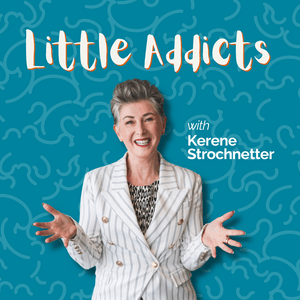
'Little Addicts' is a podcast about facing the addictions we all have, making space for the pain we all feel, and reclaiming the power and life we're all entitled to - starting now.
Podcast websiteListen to Little Addicts, Learning English For Work and many other podcasts from around the world with the radio.net app
Get the free radio.net app
- Stations and podcasts to bookmark
- Stream via Wi-Fi or Bluetooth
- Supports Carplay & Android Auto
- Many other app features
Get the free radio.net app
- Stations and podcasts to bookmark
- Stream via Wi-Fi or Bluetooth
- Supports Carplay & Android Auto
- Many other app features

Little Addicts
Scan code,
download the app,
start listening.
download the app,
start listening.
 New Zealand

