
Listen to this podcast in the app for free: Download for free in the App Store
radio.net
Sleep timer
Save favourites
219 episodes
When Internal Networking Becomes a Barrier to Career Growth
17/11/2026 | 52 mins.Organizations spend enormous amounts of time designing reporting structures, workflows, and processes. But when it comes to the relationships that actually make work happen? We hire adults and assume they'll figure it out. That assumption is costing companies more than they realize.
In this episode of People Managing People, host David Rice sits down with Greg Roche, founder of The Introverted Networker, to explore why workplace relationships deserve the same intentionality as organizational design. They discuss how connections reduce friction, why forced team-building often misses the point, and how managers can develop employees by making themselves less essential. They also tackle a less comfortable question: When career opportunities depend on who you know, what happens to talented employees who aren't naturally good at networking?
Related Links:
Join the People Managing People Community
Subscribe to the newsletter to get our latest articles and podcasts
Connect with Greg on LinkedIn
Check out The Introverted Networker
Check out this episode’s sponsor: Teamflect
Support the showWhy Human Oversight Isn’t Enough to Keep AI in Check
10/11/2026 | 52 mins.AI isn't the first technology to promise better decisions by removing messy human judgment. But generative AI brings something different: the ability to sound convincing, authoritative, and remarkably human. And that makes questioning its recommendations harder than organizations might want to admit.
David Rice sits down with Claire Maiers to explore why context matters more than ever in AI-assisted decision-making, what healthcare's experience with predictive systems can teach business leaders, and how organizations risk quietly redesigning themselves through thousands of automated decisions. The challenge isn't simply keeping humans in the loop. It's building organizations where human judgment still means something.
Related Links:
Join the People Managing People Community
Subscribe to the newsletter to get our latest articles and podcasts
Check out this episode’s sponsor: Teamflect
Connect with Claire on LinkedIn
Support the showHow to Manage People Based on Who They Are, Not Just What They Do
03/11/2026 | 38 mins.We've all taken a workplace personality assessment that tells us something vaguely accurate about ourselves. We read the report, nod along, and promptly forget about it. So why do organizations keep investing in self-awareness tools that rarely change how people actually work?
In this episode of People Managing People, host David Rice sits down with Dr. Jay Harrison, Co-Founder and Director of Behavioral Intelligence at Align, to explore the gap between behavioral insight and meaningful change. They discuss why treating everyone the same isn't necessarily fair, how managers can better understand the people they lead, and how behavioral intelligence can help teams anticipate friction before it becomes a problem. They also confront an important question: When does understanding someone's behavior help them grow, and when does it become another label that limits their potential?
Related Links:
Join the People Managing People Community
Subscribe to the newsletter to get our latest articles and podcasts
Visit Align
Support the showWhy Improving Productivity Starts With Understanding The Work
28/10/2026 | 28 mins.Most executives think they understand how work gets done. They've got the org charts, process documents, and dashboards to prove it. The problem? Those neat diagrams bear little resemblance to the work employees actually do. And when organizations start automating processes they don't fully understand, they're just making flawed systems run faster.
In this episode, David Rice speaks with Heidi Farris, CEO of ActivTrak, about the gap between AI adoption and actual business impact. They explore why employee workarounds are often what keep organizations functioning, how AI-driven productivity gains can simply move bottlenecks elsewhere, and why saving time means very little unless someone decides what to do with it.
Related Links:
Join the People Managing People Community
Subscribe to the newsletter to get our latest articles and podcasts
Check out this episode’s sponsor: ActivTrak
Connect with Heidi on LinkedIn
Support the showShould We Still Build Careers Around Deep Specialization?
20/10/2026 | 36 mins.For decades, career advice has been simple: specialize, build deep expertise, and become indispensable. But what happens when AI makes that expertise accessible to almost anyone? The value of knowing how to do something is shifting toward knowing what should be done, why it matters, and whether the result is actually any good.
In this episode of People Managing People, host David Rice speaks with Tony Castellanos, Head of People at Nextdoor, about why judgment, curiosity, and taste are becoming critical leadership capabilities. They explore how AI could invert the traditional hierarchy of specialists and generalists, why organizing teams around business problems makes more sense than defending functional boundaries, and what happens when the org chart stops dictating who gets to solve what.
Related Links:
Join the People Managing People Community
Subscribe to the newsletter to get our latest articles and podcasts
Check out this episode’s sponsor: Teamflect
Connect with Tony on LinkedIn
Visit Nextdoor
Support the show
More Business podcasts









Trending Business podcasts



















About People Managing People
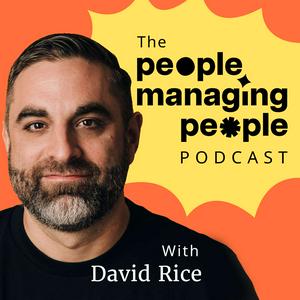
The People Managing People podcast equips forward-thinking leaders to thrive in the AI era—reshaping teams, systems, and strategy without losing what makes work human. Hosted by David Rice, each episode brings real-world insights from innovators, executives, and people leaders on topics like AI in practice, people-first leadership, performance systems, and workplace culture.
Podcast websiteListen to People Managing People, The Ramsey Show and many other podcasts from around the world with the radio.net app
Get the free radio.net app
- Stations and podcasts to bookmark
- Stream via Wi-Fi or Bluetooth
- Supports Carplay & Android Auto
- Many other app features

People Managing People: Podcasts in Family
 New Zealand

