

Listen to this podcast in the app for free: Download for free in the App Store
radio.net
Sleep timer
Save favourites
331 episodes
Is AI One Big Circular Deal? Inside the $3.6 Trillion Web | Stock Club 332
15/10/2026 | 43 mins.Emmet and Mike step back from individual stock picks this week to dig into something that's been quietly rattling markets: the circular nature of AI industry financing. OpenAI recently walked back its own annualized revenue figure from roughly $68 billion to $50 billion after admitting the larger number included gross revenue that gets immediately redistributed to partners, and the news knocked AI-adjacent stocks across the board.They break down the web of commitments connecting Nvidia, OpenAI, Oracle, Microsoft, and Amazon, where the same dollars seem to flow from investor to AI lab to cloud provider to chipmaker and back again. Citing a Financial Times analysis of the sector, they discuss findings that around 176 deals worth a combined $3.6 trillion exist between roughly 200 entities, with the majority flagged as highly circular. They also cover the scale of hyperscaler debt issuance, OpenAI's delayed IPO timeline, and why market breadth has narrowed so sharply around a handful of AI-exposed names.The episode closes with the regular Following Prophet segment, where Emmet reviews the model portfolio's track record through its third consecutive negative rebalance.Companies & Topics DiscussedOpenAINvidia (NASDAQ:NVDA)Oracle Corporation (NYSE:ORCL)Microsoft Corporation (NASDAQ:MSFT)Amazon.com, Inc. (NASDAQ:AMZN)AnthropicCHAPTERS0:00 Intro: The $10 Bill Analogy for AI's Circular Economy0:59 Welcome & Catching Up3:10 Why This Episode, Why Now4:24 OpenAI's Revenue Walkback: $68B to $50B7:28 OpenAI's IPO Delay & Fundraising Pressure9:44 The FT's "Joining the Dots of Big AI" & the $3.6 Trillion Web11:19 How the Nvidia-OpenAI-Oracle-Microsoft Loop Works14:25 Market Breadth: 40% of the S&P 500 in 10 Names16:02 Hyperscalers Taking on Debt20:47 OpenAI's Gross Margins & Projected Cash Burn23:22 The Amazon Comparison: Building a Moat Through Losses28:11 Will Humanity Keep Pace With AI?32:21 China's Open-Weight Model Approach37:09 Wrapping Up: What We Actually Know37:48 Following Prophet: Three Losing Rebalances in a Row43:18 OutroAt MyWallSt, we believe great investing is about patience, discipline, and owning outstanding businesses. Our team researches global stocks, publishes transparent performance, and helps investors build long-term wealth without hype or guesswork. Horizon is our long-term buy-and-hold service, while Prophet is a five-minutes-a-month system that has trounced the average market returns over 17 years.#MyWallSt #StockClub #AI #AIBubble #OpenAI #Nvidia #StockMarket #Investing #TechStocksNetflix (NFLX): Bull vs Bear, Is This a Buy After Falling 50%?
08/10/2026 | 58 mins.This week Stock Club tries something new: instead of each picking a different stock, Emmet and Mike go head to head on the same one. Mike makes the bear case against Netflix (NASDAQ:NFLX), and Emmet, a 22-year shareholder, argues the bull case, both from today's price after the stock has fallen roughly 50 percent from its all-time high in June 2025.
Mike lays out the risks: stagnant viewership growth, a weak Emmy season without a breakout hit since Stranger Things, saturation in Netflix's most profitable markets, competition for attention from TikTok and YouTube, and the pressure of rising content costs in live sports. Emmet counters with Netflix's position as what he calls the world's default TV channel, improving unit economics, double-digit revenue growth across every region in Q2 2026, a fast-growing ad tier approaching $3 billion in revenue this year, and a valuation that's fallen from roughly 40 times earnings to under 20.
They wrap with their take on the collapsed Warner Bros. Discovery acquisition and why walking away from that deal might have been one of management's smartest moves this year.
#MyWallSt #StockClub #Netflix #NFLX #BullVsBear #StreamingWars #StockAnalysis #ValueInvesting
Stocks Mentioned: Netflix, Inc. (NASDAQ:NFLX)
0:00 Intro: A New Bull vs Bear Format
1:05 Why Talk About Netflix Now?
2:22 The Bear Case Begins: Why Has the Stock Fallen?
3:13 Stagnant Viewership & a Weak Emmy Season
7:37 Saturated Markets: The Growth Problem
9:49 Competing for Attention: TikTok, YouTube & Younger Viewers
18:11 Netflix's Stock Journey: $20 to $130 to $67
19:27 Live Sports Costs & Margin Pressure
21:30 The Streaming Fatigue Problem
28:18 The Bull Case Begins: 22 Years as a Shareholder
33:17 Three 40,000-Foot Observations on Netflix
40:11 The 2026 Selloff as a Buying Opportunity
44:34 Q2 2026 Results: Revenue, Margins & Guidance
46:20 International Growth Across Every Region
49:18 Advertising: The Next Growth Engine
52:36 Why Walking Away From Warner Bros. Discovery Mattered
56:46 Closing Thoughts & Listener Feedback Request
At MyWallSt, we believe great investing is about patience, discipline, and owning outstanding businesses. Our team researches global stocks, publishes transparent performance, and helps investors build long-term wealth without hype or guesswork. Horizon is our long-term buy-and-hold service, while Prophet is a five-minutes-a-month system that has trounced the average market returns over 17 years.Could Eli Lilly (NYSE:LLY) Become the First $10 Trillion Stock?
01/10/2026 | 50 mins.Emmet turns this week's episode into a guessing game, teasing five clues before revealing a 150-year-old company that's become one of the most important businesses in the world: Eli Lilly (NYSE:LLY).
Founded in Indianapolis in 1876, Lilly introduced the world's first commercially available insulin in 1923, pioneered recombinant DNA medicine with Humulin in 1982, and brought the world Prozac in 1986.
Today it's a $1.1 trillion company, and both Bill Mann and Porter Stansberry have separately pitched it as a candidate to become the world's first $10 trillion business.
Emmet breaks down why: Mounjaro and Zepbound drove Q2 2026 revenue up 48 percent to $23 billion, the obesity drug market may address a global population the World Health Organization estimates at 890 million adults, and Lilly's new oral pill Foundayo (orforglipron) just added a convenient alternative to injections. He also covers the experimental triple-agonist drug Retatrutide, Lilly's $5.6 billion Houston manufacturing buildout, and the math behind what a true ten-x over 20 years would actually require.
This months following Prophet, spotlighting this month's standout addition to the model portfolio, Ross Stores.
Stocks Mentioned
Eli Lilly and Company (NYSE:LLY)
Ross Stores, Inc. (NASDAQ:ROST)
At MyWallSt, we believe great investing is about patience, discipline, and owning outstanding businesses. Our team researches global stocks, publishes transparent performance, and helps investors build long-term wealth without hype or guesswork. Horizon is our long-term buy-and-hold service, while Prophet is a five-minutes-a-month system that has trounced the average market returns over 17 years.
#MyWallSt #StockClub #EliLilly #LLY #GLP1 #WeightLossDrugs #TrillionDollarStock #Pharma #StockPicksCoupang (CPNG) & Nike (NKE): 2 Stocks Down 50% That We Still Like
17/09/2026 | 52 mins.Emmet and Mike each pick a stock that's been hammered, down at least 50 percent from its highs, and make the case for why the sell-off has gone too far. Emmet starts with Coupang (NYSE:CPNG), often called the Amazon of South Korea, built around a Rocket Delivery network that gets orders to customers in as little as 15 minutes. Shares have been cut in half since a major customer data breach last November triggered regulatory fines of roughly $410 million, but Emmet digs into the most recent numbers, including payment volume and active user counts, to make the case that the damage to the actual business has been far smaller than the stock price suggests.
Mike then makes the case for Nike (NYSE:NKE), which has fallen even further from its highs and is being removed from the S&P 100 index this month. He walks through where the strategy went wrong, drawing comparisons to brand missteps at Michael Kors and Under Armour, and explains why he still sees a path back for one of the most recognized logos on the planet.
#MyWallSt #StockClub #Coupang #CPNG #Nike #NKE #StockPicks #ValueInvesting #TurnaroundStocks
Stocks Mentioned:
Coupang, Inc. (NYSE:CPNG) — Emmet's pick
NIKE, Inc. (NYSE:NKE) — Mike's pick
0:00 Intro: Skipping Next Week & AI Slowdown Talk3:35 Emmet's Pick: Coupang, the "Amazon of South Korea"15:29 The November Data Breach & Its Fallout17:22 Coupang's Q2 2026 Results24:40 Has Coupang Actually Recovered?28:36 Mike's Pick: Nike's Turnaround Story31:06 What Went Wrong: Nike's Strategic Missteps45:20 Nike vs Coupang: Market Cap & Valuation47:54 The $10,000 Split: Coupang or Nike?52:15 Outro2 AI-Proof Stocks We're Watching: Waste Management (WM) & Viking (VIK)
10/09/2026 | 41 mins.This week Emmet and Mike do the opposite of every other Stock Club episode lately: they go looking for businesses that have nothing to do with artificial intelligence.
Mike makes the case for Waste Management (NYSE:WM), arguing that strict environmental and zoning laws have made it nearly impossible to open a new US landfill since the 1980s, leaving Waste Management and a small handful of incumbents with a nearly uncontested, consolidating market. He also flags Republic Services (NYSE:RSG) and Waste Connections (NYSE:WCN) as additional companies that benefit from the same dynamic.
Emmet pick this week is Viking Holdings (NYSE:VIK), the river and ocean cruise operator built around older, affluent travelers. He walks through Viking's latest quarter, including double digit revenue growth, occupancy north of 90 percent, and advance bookings that already cover most of this year's capacity and a growing share of next year's, along with the leadership handover from founder Torstein Hagen to new CEO Leah Talactac.
These are the kind of businesses that keep compounding quietly while the market obsesses over chips and data centers. Long term investors might want at least one or two names in their portfolios that don't come with an AI story attached.
#MyWallSt #StockClub #WasteManagement #Viking #NonAIStocks #StockPicks #LongTermInvesting #DividendStocks
Stocks Mentioned
Waste Management, Inc. (NYSE:WM)
Viking Holdings Ltd (NYSE:VIK)
Republic Services, Inc. (NYSE:RSG)
Waste Connections, Inc. (NYSE:WCN)
At MyWallSt, we believe great investing is about patience, discipline, and owning outstanding businesses. Our team researches global stocks, publishes transparent performance, and helps investors build long-term wealth without hype or guesswork. Horizon is our long-term buy-and-hold service, while Prophet is a five-minutes-a-month system that has trounced the average market returns over 17 years.
More Business podcasts



Trending Business podcasts






About Stock Club
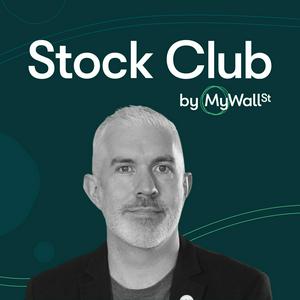
Welcome to the Stock Club podcast, where we bring you weekly episodes on the most significant changes in the world of investing. Delve into the inner workings of investing, stock news and strategies, all geared towards helping you become a better investor. Join the MyWallSt team, as they sit down to share the latest investing stories. If you want to stay ahead in the game, this podcast is for you.
Podcast websiteListen to Stock Club, Shared Lunch and many other podcasts from around the world with the radio.net app
Get the free radio.net app
- Stations and podcasts to bookmark
- Stream via Wi-Fi or Bluetooth
- Supports Carplay & Android Auto
- Many other app features
Get the free radio.net app
- Stations and podcasts to bookmark
- Stream via Wi-Fi or Bluetooth
- Supports Carplay & Android Auto
- Many other app features

Stock Club
Scan code,
download the app,
start listening.
download the app,
start listening.
Stock Club: Podcasts in Family
 New Zealand