
Listen to this podcast in the app for free: Download for free in the App Store
radio.net
Sleep timer
Save favourites
754 episodes

Summer School: Elizabeth Gilbert on Truth-Telling, Mercy, and the Art of Being Yourself
12/08/2026 | 57 mins.Hey friends, Chase here.
Every summer, I revisit conversations from the archive that have stood the test of time. Not because I'm nostalgic, but because the best ideas don't expire. They deepen.
This is the sixth and final installment of Summer School 2026—episodes I personally returned to most this year when I was stuck, blocked, or facing a very particular need.
This one with Elizabeth Gilbert is the closer for a reason.
I kept finding myself spending so much time navigating my internal landscape that it felt like it was taking me away from everything I wanted to do out in the world. And then I remembered something Liz said that rearranged the frame: she considers mental health her full-time job. Writing—being a professional creator—is a hobby she does on the side.
That line alone is worth revisiting every summer.
Liz Gilbert is the bestselling author of Eat, Pray, Love (more than 12 million copies), a Time 100 most influential person, novelist of City of Girls, and the rare creative who can talk about fear, mercy, grief, and truth-telling without flinching—and without performing enlightenment. She's a force of nature. Spend a few minutes with her and you'll know why.
In this conversation, she makes the case that the way out of pain is through honesty. That grace can take you places hustling can't. That mercy is the foundation of any healthy creative life. And that you make the world safe for yourself by telling the truth in it.
Grace can take you places where hustling can't.
Summer School: Elizabeth Gilbert on Truth-Telling, Mercy, and the Art of Being Yourself
Liz opens with City of Girls—a novel about promiscuous girls in 1940s New York theater who behave recklessly with their sexuality and aren't ruined by it. A palate cleanser, she jokes, from Anna Karenina: one orgasm and then you're under the train. Underneath the glamour is a deeper subject: how do you become yourself? How do you just be—not a role, not a brand, not a performance of "good girl"?
Her aspiration is almost revolutionary: to be the most relaxed person in every room she's in. To show what it might look like for a woman—for anyone—to be at ease in a world of nearly universal anxiety.
How do you get there? Not by hustling harder. Through foundational, almost unbelievable honesty—truth to yourself and truth to others. Spending most of the day saying no. Ending the hustle so grace has room to work.
Her great love and teacher, Rayya (Ria in the transcript), lived by a line Liz now lives by too: the truth has legs. It's the only thing left standing in the room at the end of the day. Everything else blows up into drama. Since you're going to end up at the truth anyway—why not start there?
If you've ever felt that taking care of your inner world is somehow stealing time from your "real work," this episode will reframe that entirely. The care is the real work.
What You'll Hear in This Episode
Why City of Girls is about becoming yourself—and why "just being" is rarer than we admit
Liz's aspiration to be the most relaxed person in the room—and why honesty makes that possible
"The truth has legs"—and how Rayya schooled her in radical truth-telling
How withheld truth eventually breaks the body and mind—and why die-or-tell-the-truth becomes the only choice
Why people-pleasing is really self-protection, not generosity
Creativity and fear: being just 1% more curious than you are afraid
A working definition of a creative life: decisions based more on curiosity than fear
Mercy as the foundation—for self, for others, for the inevitable disappointment of making imperfect work
Mental health as the full-time job; writing as the side practice
The daily dialogue with Love that has saved her life for 20 years—and why writing slows the mind
What to do when you're creatively stuck: walk away and do something with your hands
Truth Has Legs
Liz is clear: try to have a completely honest relationship with at least one person in your life—and it's best if that person is yourself.
When she was younger, she thought she couldn't tell the truth because the world wasn't safe for it. Later she learned the reverse: you make the world safe for yourself by telling the truth in it.
Around 30, the first major truth she couldn't say—ending her marriage—nearly destroyed her. Sleep gone. Appetite gone. Twenty pounds lost. Mental health broken. Physical health broken. Die or tell the truth. She finally told it. Instead of killing her, it brought her to life. And if she'd said it two years earlier, it would have been a greater gift to him as well.
People-pleasing, in her frame, isn't kindness. It's manipulation for perceived safety. The other person deserves to know who they're actually talking to.
And truth-telling isn't a one-and-done graduation. Life keeps offering another chance to be brave. The only way out is through honesty. Do it again. Trust builds. It gets easier—not because the stakes drop, but because you finally believe the method.
Rayya's cancer journey deepened this. When Liz couldn't cope by clinging to her partner as salvation, she had to become the steady one. Wisdom she doesn't share, she says, starts to hurt—like unused talent turns into pain. So she shares. Not out of marketing duty to readers. Out of self-preservation and love.
Mercy, Curiosity, and Mental Health as the Job
Asked for compressed creative advice, Liz answers in one word: mercy.
Mercy for yourself. Mercy for others. Mercy for the inevitable disappointment when what you make isn't the tourmaline butterfly you dreamed—when day one excitement becomes day two self-hatred. The only people who get to day three are the people who have mercy.
Ann Patchett's image: smash the gemstone butterfly on day one, then make the weird little thing out of chewing gum and baseball cards and twigs—and say, good job, self. No one's ever made one like that before.
That's compassion: ending the argument against reality. This is what we've got. Flap flap. A piece falls off. Keep going.
On fear, Liz's saving grace is curiosity—just 1% more curious than afraid. That's enough. Her definition of a creative life isn't watercolor class. It's any life where your decisions are routinely based more strongly on curiosity than fear. Then the life itself becomes the work of art.
And here's the Summer School lightning bolt: an enormous percentage of Liz's days is spent managing her mental health—the "dysfunctional family" inside her mind. Writing is what she does on the side. She was managing her mental health on the plane that morning. There are very few days off from saving her own life.
Her primary practice for twenty years: a daily dialogue with Love (capital L)—writing the words she always wanted someone to say. I'm right here. I've got you. You can't tire me out. Love doesn't need the room to be different. Love doesn't issue a five-point improvement plan. Love is company in the darkest hour.
Writing slows the mind enough to receive that. When creativity is stuck? Don't force the tormented artist fantasy. Walk away. Garden. Fix a bicycle. Power-wash a driveway. Get out of your head and into your hands. Inspiration returns after embodiment—not after more self-punishment.
Timecodes So You Can Jump Around
00:00 – Welcome and why this episode closes Summer School 2026
04:24 – Liz joins; City of Girls, becoming yourself, and the aspiration to be relaxed
13:32 – Honesty, saying no, and "grace can take you places hustling can't"
15:12 – Rayya, addiction, and "the truth has legs"
19:00+ – The first major truth at 30: breakdown, then coming alive
22:23 – Truth-telling and creativity; Eat, Pray, Love as a story of learning to tell the truth
30:00+ – Rayya's illness, grief, and why unshared wisdom becomes pain
36:14 – Fear, curiosity, and the definition of a creative life
38:51 – Mercy: the foundation (and the tourmaline butterfly)
43:40 – Mental health as the full-time job; writing as the hobby
45:00 – The daily dialogue with Love
51:38 – Scrapping a book, gardening, and what to do when you're stuck
54:21 – Paint bicycles / power-wash driveways: walk away into the present
Why This Conversation Still Matters
We still live in the anxiety virus Liz named—exported globally, amplified by politics, climate dread, and the demand to be a thing at all times. Creators still treat self-care as optional overhead between "real" output. Hustle culture still pretends grace is lazy.
This conversation is the antidote.
Mental health isn't what you do after you're successful. It's the work that makes everything else possible. Truth isn't a brand strategy. It's how you stop poisoning your own body with secrets. Mercy isn't soft. It's the only way anyone ever reaches day three.
That's why this episode earned the final Summer School slot. The year asked a lot of our inner landscapes. Liz's answer is still the one that helps me return to the world without abandoning myself: tell the truth. Tend the mind. Prefer curiosity over fear. Make the imperfect butterfly. Keep company with Love.
Class dismissed—until next summer.
Keep Going Deeper
If this conversation resonates:
City of Girls
Big Magic
Eat, Pray, Love
Liz online: elizabethgilbert.com
Follow Liz: Instagram | X/Twitter | Website
Questions to Reflect On
Where am I hustling for a result that only grace—and honesty—can deliver?
What truth do I already know I'm going to end up telling—and what would it cost to start with it?
Am I making the world safer for myself through honesty, or waiting for the world to feel safe first?
Where has people-pleasing become self-protection dressed up as kindness?
In my creative work, am I on day two (self-hatred) or practicing the mercy that gets me to day three?
If mental health were my full-time job this week, what would change about how I schedule my days?
When I'm stuck, am I forcing the art—or am I willing to power-wash a driveway and return to the present?
The Core Idea
You don't graduate from truth-telling. You practice it. You don't earn rest by producing enough. You save your own life daily so you have a life worth creating from.
Liz's invitation—as the last lesson of this Summer School season—is both soft and severe: tell the truth until the room is safe. Put mercy under every creative attempt. Be just slightly more curious than afraid. Tend the warring neighborhood in your mind like it's the job. Write love to yourself when no one else can hold the need. And when the work won't move—move your body instead.
If there's one lesson worth carrying forward from this final Summer School session, it's this:
Mental health is the work. Creativity is what you get to do when you've tended it—and the only way out of the hard parts is through honesty.Summer School: Mel Robbins on Anxiety, Action, and the 5-Second Rule
05/08/2026 | 1h 18 mins.Hey friends, Chase here.
Every summer, I revisit conversations from the archive that have stood the test of time. Not because I'm nostalgic, but because the best ideas don't expire. They deepen.
This is another installment of Summer School—episodes I personally went back to this year when I was stuck.
This one with Mel Robbins is near the top of that list.
At 41, Mel was unemployed, drowning in debt, and so overwhelmed she could barely get out of bed. Then she discovered something that sounds almost too simple to take seriously: the 5-Second Rule. Count backwards—5-4-3-2-1—and move before your brain talks you out of it.
This conversation was recorded roughly eight years ago, well before Mel hit the stratospheric pace the world knows her for now. A mutual friend introduced us. We sat down in the CreativeLive studios. She taught a barnstormer of a class. And the episode stuck with me—because when doubt, delay, and inertia show up, this is the kind of hardcore, no-B.S. toolkit that actually helps you move.
Mel calls herself the fucked-up friend who figured some things out and got wise. She doesn't want you to make the same mistakes. She's done the hard work on habit, confidence, self-doubt, and how anxiety becomes a habit that robs you of joy, money, connection, and power.
You're one decision away from a totally different life.
Summer School: Mel Robbins on Anxiety, Action, and the 5-Second Rule
Mel's path wasn't linear. Temp job. Law school by inertia. Public defender in Manhattan. A law firm she hated. Postpartum depression. A decision at her own baby shower that she would never again answer "What do you do?" with "I'm a lawyer." Then radio, media, CNN, speaking—and a TED Talk that accidentally let the 5-Second Rule slip out as an afterthought.
She didn't invent the rule as a brand strategy. She invented it in 2008 to beat the snooze button when her life was falling apart: failing restaurant business, financial strain, marriage on the ropes, kids missing the bus, no confidence left in the tank.
What makes this episode Summer School material is how practical it is. Mel doesn't just diagnose stuckness. She hands you a tool for the five-second windows where hesitation usually wins—and then she zooms out to the deeper question: action only matters if you know what you want. Passion, she says, is another word for energy. Follow what energizes and expands you. Master the little stuff first, or you'll never answer the big stuff.
If you've ever known exactly what to do and still couldn't make yourself do it, this conversation is for you.
What You'll Hear in This Episode
Why Mel's whole life felt like "one gigantic mistake" she then scrambled—using anxiety—to fix
How high tolerance for "suckiness" keeps us trapped until a shock finally forces change
An unflinching conversation about anxiety and panic, self-monitoring, and getting help when you need it
Why "you don't have to think the way you think"—and how worry becomes a habit that costs you money, health, and relationships
The 5-Second Rule explained: how counting backwards interrupts habit loops and kicks the prefrontal cortex online
How one decision (just getting out of bed) can change how you see yourself—and start momentum that rebuilds a life
Why knowledge can be a trap if you never acquire the tools to make yourself act
Listening to your gut—including Mel's decision to keep audio rights when she self-published
How to define what you want by tracking what energizes vs. depletes you
Why mastering the little stuff is the only path to the big stuff—and why there's enough success for everybody
The 5-Second Rule (and Why It Works)
Mel is blunt: the rule sounds profoundly stupid. That's why it took people a while to take it seriously.
Here's the move. The moment you catch yourself hesitating, doubting, worrying, chickening out, shrinking, or shutting up—count backwards: 5-4-3-2-1. Then move.
Counting backwards interrupts habit loops encoded in the more automatic parts of the brain and lights up the prefrontal cortex—the part involved in focus, courage, strategic thinking, and learning new behavior. Counting up doesn't work the same way; you can keep going forever. After one, your mind is socialized to go.
She discovered it by accident trying to stop hitting snooze. Eight years later (at the time of this recording), she still used it every morning to get out of bed—and for exercise, tough conversations, client scope creep, drinking urges, tone of voice, middle-of-the-night bathroom trips, negotiations, everything.
The deeper point: your life happens in five-second windows. In five seconds you can control what you think, decide what you'll do, and change something that then changes everything.
And you're often one decision away from a different life—not because that one decision is magic, but because action changes how you see yourself. Get up three mornings in a row when you usually don't, and you're no longer only the person who sleeps in. You're someone who can keep a promise to yourself. That identity shift compounds.
Mel's clearest line on the real problem: most people aren't missing strategy. They're missing the action push. You know how to lose the weight, grow the business, save the marriage, make the call. You can't make yourself do it. The 5-Second Rule is a starting ritual for becoming that person for yourself—your own pushy best friend.
What Do You Actually Want?
Tools without direction become busywork. Mel keeps returning to this: using 5-4-3-2-1 for its own sake isn't enough if you don't know what you're aligning toward.
The common mistake: we fixate on some huge person, place, or thing—a unicorn future that's supposed to rescue us from our current misery. The gap between here and there makes us feel more lost.
Her emerging tool (she was still researching it then): treat passion as energy. In any situation, notice within five seconds—does this person, project, or choice energize me or deplete me? Expand me or shrink me? That body wisdom is the map.
Hard things can still energize you. Easy things can deplete you. Money comes second. The question is: if it depletes you, how do you move it or say no? If it energizes you, how do you do more of it?
Mel noticed even her exploding speaking career started depleting her on travel mornings—while meeting people and answering emails energized her. So she recalibrated toward what expanded her. One five-second alignment at a time, working with your wiring instead of against it.
Her hard truth: if you can't master the little stuff—getting up, exercising, curbing the habit, making the scary call—you will never answer the big stuff of who you are and how to listen to yourself. Achievement without fulfillment is just checking boxes forever.
And once you're in your lane—energized, expanded—you have capacity to be generous. There's enough success and happiness for everybody. Cheer for other people. Stay calibrated against your own energy map when the internet keeps showing you everyone else's game.
Timecodes So You Can Jump Around
00:00 – Welcome and why this episode is part of Summer School
03:27 – Mel joins; early career, inertia, and a high tolerance for suckiness
13:54 – Postpartum depression, quitting law, and making a hard decision
18:00+ – Anxiety, panic, self-monitoring, and getting help when you need it
31:37 – Introducing the 5-Second Rule
38:38 – Where Mel's life was when she invented it—and how one decision changes everything
44:15 – Ego vs. values: self-publishing, bestseller lists, and keeping audio rights
51:16 – How to define what you want (and the trap of the unicorn goal)
53:47 – Passion as energy: the deplete-vs-energize decision tool
58:35 – Master the little stuff or you'll never get the big stuff
01:00:55 – Generosity, staying in your lane, and enough success for everyone
01:04:11 – Diversity in personal development, getting attacked, and pushing through fear
Why This Conversation Still Matters
We are drowning in information about what to do. Strategy is everywhere. Inspiration is infinite. The bottleneck is still the same: the five seconds between knowing and doing.
Anxiety culture hasn't gotten quieter since this episode aired. Comparison hasn't gotten kinder. The gap between the life you want and the inertia you're in still grows when you wait to feel ready.
Mel's toolkit remains useful because it's not about becoming fearless. It's about interrupting hesitation long enough to act—and then aiming that action at what actually expands you. Feel the fear. Count backwards. Move. Check your energy. Repeat.
That's why I keep returning to this one when I'm stuck. Not for a pep talk. For a push.
Keep Going Deeper
If this conversation resonates:
The 5 Second Rule by Mel Robbins
Mel online: melrobbins.com
Follow Mel: Instagram | X/Twitter | Facebook | Website
Questions to Reflect On
Where do I already know what to do—but keep failing at the action push?
What five-second hesitation keeps showing up in my work, health, or relationships?
Am I waiting to feel ready before I move?
Where has "acquiring knowledge" become a substitute for doing the thing?
On my client list, calendar, and inner circle: what energizes me vs. depletes me?
What little stuff am I avoiding that is blocking the bigger answers about who I am?
Where could generosity replace scarcity—cheering for others while staying in my lane?
The Core Idea
You don't need a new identity overnight. You need one decision, then another, in the five-second windows where your brain tries to shrink you.
Mel's invitation is brutally simple: stop waiting for motivation to arrive fully formed. Interrupt the habit. Count backwards. Move. Align with what energizes you. Build confidence from evidence, not affirmations. And remember—there's enough room for everybody.
If there's one lesson worth carrying forward from this Summer School session, it's this:
You're one decision away from a totally different life—and that decision can start in the next five seconds.Summer School: Ryan Holiday on Stoicism, Marketing, and Creating Work That Lasts
29/07/2026 | 1h 25 mins.Hey friends, Chase here.
Every summer, I revisit conversations from the archive that have stood the test of time. Not because I'm nostalgic, but because the best ideas don't expire. They deepen.
This is another installment of Summer School—the set of episodes I personally return to the most when I'm stuck and need something true to lean on.
This one with Ryan Holiday is high on that list. I've gone back to it multiple times this year alone.
Ryan is a legend—author, media strategist, New York Times bestselling writer, and the person who brought Stoic philosophy into popular culture for a generation of creatives and entrepreneurs. This conversation is from 2017, before he'd fully hit the stride we know him for now. He'd already published something like six books in five years. He was already a force. And yet you can hear, in this episode, exactly where his work was headed.
What stands out isn't just marketing tactics. It's framing. Good marketing isn't only writing good copy or taking a nice product photo. It's making work that starts a discussion. It's asking better questions before you begin. And it's using your own mindset—perception, action, will—to keep going when the creative path gets hard.
Those tools were spot on then. They're truer now.
Nobody cares what you're thinking about doing. Talk about your ideas after you've started them and then show people what you've done.
Summer School: Ryan Holiday on Stoicism, Marketing, and Creating Work That Lasts
Ryan dropped out of college at 19 to work with Robert Greene, became director of marketing at American Apparel, and later built Brass Check, advising clients like Google, Tim Ferriss, and Tony Robbins. Then he did something that looked, on paper, like career suicide: he wrote Trust Me, I'm Lying—a book about how marketers, companies, and politicians manufacture and manipulate attention online.
Instead of burning his marketing career down, it opened writing as a profession. He began identifying as a writer first—keeping a hand in marketing so he wouldn't only comment from the sidelines.
That tension runs through the whole episode: how information spreads, what it means to compete for attention, and how to build work that doesn't disappear after the launch week.
At the center is Perennial Seller—the art of making and marketing work that lasts. Not the fidget-spinner hit. Not the trend piece. The Original Pantry Cafe that never closes. The book that sells more copies year after year because it solves a real problem. The boot that gets better the longer you wear it.
If you're a creator, entrepreneur, or leader trying to make something that matters—and survive the noise long enough for it to land—this episode is still one of the sharpest in the archive.
What You'll Hear in This Episode
Why Ryan left New York for a cattle ranch outside Austin—and how distance, physical work, and humility made him better at the cerebral work
How Trust Me, I'm Lying mapped the attention economy years before "fake news" became a daily phrase
Why modern marketing is less about perfect product shots and more about starting conversations
A practical crash course in Stoicism: perception, action, and will
Ego vs. confidence—and how to market without marketing to yourself
Austin Kleon's line: you can't be the noun without doing the verb
What makes a perennial seller—and why industries obsess over "new" while most of their money comes from what lasts
The "other 50%": craft gets you in the door; packaging, positioning, relationships, and community finish the race
Two questions before every project: Who is this for? What does this do for them?
Three Stoic Disciplines for Creatives
Ryan's version of Stoicism is deliberately practical. Not academic debate—the art of living. Philosophy for the role you're already in: photographer, founder, writer, leader.
He walks through three disciplines:
1. Perception
How do you look at the situation? Someone is rude. Your company is in trouble. Your work isn't getting seen. Do you decide it's unfair, impossible, purely negative—or do you look for what you can actually use?
The Stoics' move: there's no inherent good or bad—there's how we look at things. We don't control most of what happens to us. We do control the last crucial part: what we tell ourselves it means.
Marcus Aurelius did that work through writing—Meditations as a private practice of catching your own mind in the act.
2. Action
Seeing differently isn't enough. What do you do with the information?
Ryan's favorite cut: Casey Neistat telling someone pitching a business idea, essentially—don't tell me the idea. Tell me when you've started it, then show me what you've made. Thinking about running a marathon doesn't count. Starting does.
This is the discipline that kills the fantasy. Ideas are cheap. Execution is the only proof.
3. Will
How do you handle the moments when life kicks your ass and you can't reverse them?
Ryan tells the Edison story: factory on fire, son shell-shocked, Edison telling him to get his mother—she'll never see a fire like this again. Even what you can't control can still transform you. Hardship is often the filter that keeps everyone who doesn't want it as badly as you do from finishing.
If it were easy, there'd be more amateurs—and less value.
Perennial Seller (and the Other 50%)
The face-palm insight behind Perennial Seller: the New York Times bestseller list doesn't track perennial sellers—yet a huge share of publishing income comes from books that came out years or decades ago. Industry attention chases "new." Durable value often lives elsewhere.
Ryan's frame for durable work is almost annoyingly clear: This is a blank that does blank for blank.
Who is it for—really? Not "everyone" or "smart people." Actual humans. Where they live. What they do.
What does it do for them? His editor's line: it's not what a book is—it's what a book does.
Then comes Chase's "other 50%," which Ryan amplifies: making the thing is a marathon. Finishing it doesn't mean you've won. There's a second marathon waiting—marketing, packaging, relationships, platform, the bridge from your desk into someone else's life. "If you build it, they will come" has killed a lot of great work. You're not just competing with peers who launched this week. You're competing with time-tested work that already lives on Netflix, in bookstores, in cultural memory.
Title, cover, logo, copy, collaborators—these aren't afterthoughts. They're part of the creative expression. Books have covers because people judge them. Your work does too.
And if you're already hunting for shortcuts before you've started? That's a signal. Principles over formulas. The shortcuts get exploited the moment they work for everyone.
Timecodes So You Can Jump Around
00:00 – Welcome and why this episode is part of Summer School
04:52 – Ryan Holiday joins; life on a ranch outside Austin
09:14 – From renegade marketer to writer: Trust Me, I'm Lying and how attention spreads
15:05 – Why marketing today means starting a discussion
16:58 – Stoicism as a practical art of living
21:54 – Discipline one: perception
25:34 – Discipline two: action (start it, then show it)
28:47 – Discipline three: will (Edison's fire and transforming hardship)
31:36 – Ego vs. confidence; marketing without marketing to yourself
37:01 – Fall in love with the verb, not the noun
40:14 – Perennial Seller: the art of making work that lasts
47:08 – "This is a blank that does blank for blank"
51:07 – Habits of people who make great work (editors, collaborators, objectivity)
54:47 – The other 50%: craft plus packaging, relationships, and community
01:04:35 – Frameworks: Who is this for? What does this do?
01:19:05 – Daily Stoic, memento mori, and closing thoughts
Why This Conversation Still Matters
In 2017, Ryan was already describing an attention landscape where your best work competes with cats, outrage, porn, fake news, and infinite other options in the feed. That landscape didn't calm down. It accelerated.
What still cuts through is the opposite of trend-chasing: work built on timeless problems, principles that survive platform changes, and the humility to keep doing the verb while everyone else celebrates the noun.
When I'm stuck—when the world feels noisy and my own next project feels either too precious or too thin—I come back to this episode for the same reminders:
Control how you see it. Take action. Let the hard parts transform you. Ask who it's for and what it does. Don't confuse finishing the making with finishing the work. Fall in love with the craft more than the identity. And don't wait until you feel safe to do the honest version of the thing.
That's why it's Summer School material. The platforms changed. The books multiplied. The stakes got louder. The questions held.
Keep Going Deeper
If this conversation resonates:
Perennial Seller: The Art of Making and Marketing Work That Lasts
The Obstacle Is the Way
Ego Is the Enemy
Trust Me, I'm Lying
Daily Stoic: dailystoic.com
Ryan online: ryanholiday.net
Follow Ryan: Website | X/Twitter | Facebook
Questions to Reflect On
Am I still stuck in "thinking about" the project—or have I started something I can show?
Where am I treating a hard situation as a verdict, instead of as information I can act on?
Am I marketing to an audience—or marketing to myself?
Have I fallen in love with the noun (author, founder, photographer) more than the verb?
If I had to fill in "This is a ___ that does ___ for ___," could I do it clearly—today?
Where have I finished the making and abandoned the second marathon: positioning, packaging, relationships, community?
Am I building on timeless problems—or on platforms and tactics that may not survive the next cycle?
The Core Idea
Work that lasts isn't the work that wins the news cycle. It's the work that keeps solving something real for someone specific—long after the launch adrenaline fades.
Ryan's invitation in this conversation is both simple and demanding: sharpen your perception, take action before you announce, let difficulty refine you, kill the ego that wants applause without evidence, and build for durability instead of novelty.
If there's one lesson worth carrying forward from this Summer School session, it's this:
Make something that starts a conversation—and lasts long enough to deserve one.Summer School: Ben Uyeda on Escalation, Purpose, and Building Bigger Without Losing Yourself
22/07/2026 | 1h 12 mins.Hey friends, Chase here.
Every summer, I revisit conversations from the archive that have stood the test of time. Not because I'm nostalgic, but because the best ideas don't expire. They deepen.
This is another installment of Summer School—episodes I return to when I'm stuck. When a pattern I've been conditioned to see suddenly needs to be broken, I go back to the people who help me think differently.
This one with Ben Uyeda is near the top of that list.
Ben is a designer, entrepreneur, and creative force of nature who left a successful architecture firm and an Ivy League teaching gig to bring high-design ideas to the masses through media. His designs—widely shared, often free—have reached tens of millions of people and are being built around the world. And his most recent project? A 65-room hotel on 180 acres in the California desert, adjacent to Joshua Tree National Park, built with a team but rooted in the same hands-on curiosity that started with a concrete vase on YouTube.
When this episode first aired, I called it one of the most shocking conversations of the year—not because Ben tried to shock anyone, but because I didn't expect it to blow me away. It did. It still does.
His superpower is orthogonal thinking. Where most of us see the world through the patterns we've been trained into, Ben keeps asking the next question—about scale, purpose, risk, money, mastery, and what creatives actually want when they say they want "more."
This conversation changed how I think about career growth. I think it can change yours too.
"Forget scaling. What I think is really intriguing is this idea of escalation." — Ben Uyeda
Summer School: Ben Uyeda on Escalation, Purpose, and Building Bigger Without Losing Yourself
Ask Ben how he describes what he does, and he keeps it almost stubbornly simple: he designs things and he makes them. Those things range from a small concrete vase to a dining table to homes—and all the way up to Reset Hotel: 65 rooms on 180 acres near Joshua Tree.
The leap sounds impossible until you understand his model.
Most creatives, Ben argues, get trapped in a false choice. Either you're the solo maker—writing the book, building the table, running the photo shoot—or you're the manager of something massive, taking in everyone's opinions and slowly losing contact with the craft. He thinks the more interesting path sits between them: escalate.
Scaling is repeating one thing at higher volume for better margins. Escalation is using each project as practice for a bigger adventure—vase to furniture to staircase to house to hotel—with new skills, collaborators, and risk at every step.
There is no clean line from designing a vase to building a hotel. But there are incremental steps. In Ben's case, roughly five years from vase to house. Another five from house to hotel. Each jump maybe 50x to 100x in scale. The next project isn't the destination. It's skill-building—and an opportunity to meet the people you'll need when the economic risk gets larger.
That distinction is the heart of this episode. And if you've ever chased "scale" when what you really wanted was growth, challenge, grit, relationships, and a life that still feels like yours, this one will hit hard.
What You'll Hear in This Episode
How Ben describes his work—from concrete vases to a desert hotel, and why he focuses on the doing
Why small creative projects feel like Zen practice—and why bigger ones require learning to pass the ball
The tension every creator knows: curiosity and economic safety often feel like they're pulling in opposite directions
Scaling vs. escalating—and why most creatives think they want scale when they actually want challenge, skill, and connection
The paperclip-to-house Craigslist story as a model for adventurous creative careers
Why nature is becoming a luxury good—and how that thesis shaped Reset Hotel
Ben's multi-year process for building a point of view: observations, post-its, journaling, and knowing when you're secure enough to ask bigger questions
How to borrow pattern recognition from outside your field (Ben's favorite: food)
What AI changes—and what it doesn't: reputation, responsibility, and embracing creative fear instead of waiting until you feel safe
The story of Reset Hotel, Industry Night for creatives, and why physical immersion may be the next horizon
Scale vs. Escalate
This is the idea I keep coming back to—and the one that originally made this episode unforgettable.
Typical entrepreneurial advice says: find a minimum viable product, then scale. For creatives, Ben says, that model often fails. Scaling optimizes for volume, repetition, and efficiency. Escalation optimizes for adventure: trade the paperclip for the lighter, the lighter for something bigger, and keep going—not by doing the same trade forever, but by graduating the game.
Chase's own lived experience lines up with Ben's: escalation built the best things in his life—relationships, skills, grit, humanity. Scaling often decoupled him from those same things.
That's the trap. People hear "economic upside" and chase repetition. What many of them actually want is escalating challenge—backstory, resources, personal development, network, connection—the exact texture of a project like building a hotel with your hands, your partners, and your reputation on the line.
Ben didn't know this as sage wisdom going in. He learned it. Early ambition and big swings "worked," but felt like speedrunning a video game—fast completion with a strange emptiness afterward. Over time he learned something more useful about himself: his long-range visionary chess game is limited, but his commitment and belief once he chooses a path are incredibly strong. That self-knowledge became the architecture for taking on Reset.
Nature as Luxury—and How a Hotel Got Built from a Thesis
Ben's confidence in the hotel didn't come from a weekend of inspiration. It came from years of noticing.
One signal: between roughly 2013 and 2016, monthly active users on Instagram and visits to national parks both exploded. The attention economy was booming—and simultaneously creating unprecedented demand for its opposite: walking through Yosemite or Joshua Tree, somewhere with little or no cell service.
His larger thesis: as digital consumption becomes frictionless, we start craving the analog. The more algorithmically efficient our feeds get, the more we want to throw the phone aside, touch grass, hike, watch a real sunset. Because digital experiences got so good at being artificial, nature itself starts to feel like a scarce luxury—not just a pretty view from a coastal city, but immersive emptiness, dark skies, raw land.
That thesis, plus an audience built by sharing design ideas, plus collaborators from craftspeople to investors, plus a shipping-container house project that opened new conversations—those pieces compounded into Reset.
Ben is blunt that this kind of vision doesn't arrive as effortless brilliance. It's multi-year. Curious. Plodding. Built from obvious observations written on post-it notes until they start to arrange themselves into a next move.
His practical advice for creatives trying to think at that altitude:
Don't pour all your curiosity into tools and tactics alone. Also ask the scarier questions: What's my place in this discipline? What's my place in the broader economy?
Earn enough security to think. For Ben, around $100k of income was the point where economic stress dropped enough for bigger questions to enter the process—not as luxury branding, but as creative fuel.
Look outside your industry. Food is his favorite lens because he has emotional distance plus deep daily connection. Farm-to-table, farmers markets becoming aspirational, celebrities posting chickens instead of Bugattis—he's watching a backlash against efficiency and mass production. Then he asks: what's the design-and-craft version of that for me?
Talk it out with peers. The work is often solo. The therapy and pattern recognition are better in community—ideally in person, without a competitive chip on your shoulder.
Timecodes So You Can Jump Around
00:00 – Welcome and why this episode is part of Summer School
03:55 – Ben Uyeda joins the show
05:12 – How Ben describes what he does: design things, make them, from vase to hotel
07:33 – Are you bananas? Risk, scale, and building a hotel with your bare hands
12:51 – Forget scaling: why escalation is the more interesting creative model
14:12 – From YouTube vase to 65-room hotel—and the skill (and people) built along the way
16:27 – Chase on the difference between escalating challenge and chasing scale
18:42 – Did Ben know this going in—or learn it the hard way?
21:09 – Instagram growth, national parks, and the demand for the analog
24:24 – Why nature is becoming a luxury good
27:31 – How to build a creative thesis over years (not a weekend)
39:27 – Cheat codes: borrow pattern recognition from food (and other industries)
49:00 – AI fear, reputation, responsibility, and what still can't be automated
57:30 – Reset Hotel: dark skies, building the right way, and the first new ground-up hotel in the area in 15 years
01:07:36 – Where to follow the project—and Industry Night for creatives
Why This Conversation Still Matters
If anything, this episode is more urgent now than when we first recorded it.
The creator economy still rewards the idea that the goal is to make one thing and multiply it forever. Platforms still optimize for volume. AI is accelerating that pressure—making certain end products cheaper and more abundant, and making a lot of talented people scared.
Ben's counsel isn't "don't worry." It's the opposite. Be scared. Talk to friends. Diversify your thinking. Double down on reputation and responsibility—being the person clients call because you fix problems, even when the brief is imperfect. Accept that fear doesn't vanish when you "make it." Often it gets worse, because you feel like you have more to lose.
And that's the trap: postponing the wild, scary, purpose-shaped adventure until you feel safe. Safety delayed often becomes safety that never lets you move.
Meanwhile, the deeper trend he named—digital ubiquity creating hunger for physical, immersive, scarce experiences—keeps compounding. Reset Hotel is that thesis made concrete. Industry Night—his informal peer-to-peer gathering for creatives—is another version of the same idea: horizontal connection in a culture that keeps selling top-down scale.
Whether you escalate toward something as large as a hotel or simply toward a braver version of your next project, the question remains the same: are you chasing repetition, or are you chasing a life?
Keep Going Deeper
If this conversation resonates:
Reset Hotel: stayreset.com · @reset.hotel
Ben online: benuyeda.com · Instagram · HomeMade Modern on YouTube
Earlier conversation: Escalate & Evolve: A Blueprint for Career and Life with Ben Uyeda
Follow Ben: Instagram | Website | YouTube
Questions to Reflect On
Am I optimizing for scale (repeat one thing) or escalation (grow into bigger adventures)?
What would my "next size up" project be—not 100x overnight, but one honest step beyond what I've already made?
Where am I chasing economic certainty in a way that quietly starves my curiosity?
What obvious cultural observation have I been noticing—and what would it mean if I took it seriously for my own work?
Am I pouring all my curiosity into tools and tactics while avoiding the harder questions about my place in the economy?
Where am I postponing a meaningful risk until I "feel safe"—and what might that delay really cost?
In an age of AI and infinite digital content, what physical, scarce, or immersive experience could only come from me?
The Core Idea
Most creatives don't actually want to become a machine that repeats the same win forever. They want a life that escalates: bigger challenges, deeper skills, richer relationships, and work that still feels like craft even when the coordination gets complex.
Ben's path—from free design ideas online to a modernist hotel on the edge of Joshua Tree—isn't a prescription to go build hospitality. It's a reminder that purpose compounds through projects. Each one prepares you for the next. Each one brings in the people you'll need later. And the goal isn't to arrive as fast as possible. It's to grow into someone who can hold more risk without abandoning who they are.
If there's one lesson worth carrying forward from this Summer School session, it's this:
Don't confuse scaling with growing. The creative life you're probably hungry for is escalation—one braver project at a time.Summer School: Tony Robbins on Peak Performance, Precision Medicine, and Transforming Your Quality of Life
15/07/2026 | 55 mins.Hey friends, Chase here.
Every summer, I revisit conversations from the archive that have stood the test of time. Not because I'm nostalgic, but because the best ideas don't expire. They deepen.
This is another installment of Summer School—episodes I go back to when I'm stuck, looking for the person in my network who's already lived the answer.
This one with Tony Robbins is a perfect example.
I've been navigating some peak performance challenges around my physical body—joints breaking down from a life as an athlete. Tony has spent years deep in the breakthroughs happening in precision medicine and regenerative health. I originally brought him on the show to learn what was possible. I'm bringing the conversation back for Summer School because those questions matter even more now.
Tony is a legend: #1 New York Times bestselling author, life and business strategist, entrepreneur, philanthropist, and peak performance expert. He's coached world-class athletes, entertainers, Fortune 500 CEOs, and U.S. presidents. He's also a friend. I've been front row at his multi-day seminars. I've used his techniques—from mental training to visualization to priming—and yes, I've walked on fire with him.
But this conversation goes beyond mindset.
It goes into the habits that separate people who are successful and fulfilled… and into Life Force, Tony's book on the regenerative medicine breakthroughs that can transform the quality of your life—and the lives of the people you love.
"Success without fulfillment is the ultimate failure." — Tony Robbins
Summer School: Tony Robbins on Peak Performance, Precision Medicine, and Transforming Your Quality of Life
Tony's obsession is a simple question with a lifelong answer: what actually changes the quality of people's lives?
He frames the work as pattern recognition, pattern utilization, and pattern creation—learning from the best so you don't waste 10 or 20 years figuring it out the hard way. Then standing on those shoulders long enough to create your own.
That lens shows up everywhere in this episode: in habits, in health, and in mindset.
After being told some of his own health challenges were irreversible, Tony experienced firsthand how regenerative technology didn't just help him heal—it made him stronger. And the bigger point he makes is that these breakthroughs aren't reserved for the ultra-wealthy. As technology doubles in power and halves in cost, access keeps expanding.
Medicine isn't the whole story, though. Tony also deconstructs the patterns of top performers—because your habits and your mindset still determine whether any of it matters.
What You'll Hear in This Episode
Why Tony does this work—and how growing up with pain made him obsessed with helping people reclaim themselves
The habits of people who are both successful and fulfilled, starting with a mission bigger than yourself
Why progress equals happiness, and why comfort quietly kills growth
How to prime your day on purpose: cold water, gratitude, three-to-thrive, sincere compliments, and doing the hardest thing first
The personal story behind Life Force—family illness, a pituitary tumor, a torn rotator cuff, spinal stenosis, and the stem cell turning point
What's changing in regenerative medicine: stem cells, gene editing, diagnostics, sleep science, and more
How to use Life Force as a guidebook, not a 600-page homework assignment
Why mindset still decides the outcome—including the surprising power of belief, placebos, and your "emotional home"
Patterns of Peak Performance
One of the most useful parts of this conversation is how concrete it gets. Identifying patterns that already work for peak performers can save years of trial and error. In this episode, three keep coming up:
1. Have a mission
Have something you care about more than yourself. It could be your family, your craft, your business, your community—anything real.
Tony's blunt about this: when people have something more important than themselves, they don't run out of energy or excitement. When it's only about you, comfort creeps in. And comfort is where growth dies.
His one-word formula for happiness is the same one he's taught for decades: progress.
If you're not making progress, you're not growing. And if you're not growing, you're not giving. Growing and giving is the game.
2. Prime with gratitude
Most people assume their thoughts are simply "their thoughts." Tony's point is that your thoughts are primed by your environment—so you might as well prime yourself on purpose.
His morning starts with cold water (not because he loves it, but because it trains the brain: when I say go, we go). Then a 10-minute priming practice built around gratitude, a prayer-type focus, and "three to thrive"—three outcomes he sees and feels as already done.
Why gratitude? Because you can't be grateful and angry at the same time. You can't be grateful and fearful at the same time. Most people, as he puts it, have a highway to stress and a dirt road to happiness. Priming is how you reverse that wiring.
He also leaves someone a sincere audio compliment each day—not generic praise, but something specific that deepens the relationship.
You can learn his free priming process at tonyrobbins.com/priming.
3. Do the hardest thing first
Difficult work needs your best energy. Tony's rule is simple: crush the hardest thing early, create momentum, and let everything else get easier.
How you start and end your day both matter. Of the two, he says starting well may matter most—because it frames everything that follows.
Timecodes So You Can Jump Around
00:00 – Welcome and why this episode is part of Summer School
04:23 – Tony Robbins joins the show
05:03 – What gets Tony up in the morning: impact, reclaiming yourself, and pattern recognition
11:37 – Habits of the most successful and fulfilled people
13:16 – Progress equals happiness; growing and giving as the game
14:44 – Priming your day: cold plunge, gratitude, three-to-thrive, hardest thing first
20:35 – Why Tony wrote Life Force—and the personal experiences behind it
22:21 – The cancer story that shifted him from victimhood to biohacking
25:20 – Pituitary tumor diagnosis, second opinions, and learning to question standard answers
28:53 – Snowboard crash, torn rotator cuff, spinal stenosis—and the stem cell turning point
31:37 – Regenerative medicine breakthroughs worth knowing
38:54 – How to approach Life Force as a guidebook
43:19 – Access and cost: why these tools aren't only for the wealthy
47:00 – Mindset, placebos, and upgrading your emotional home
52:38 – Closing thoughts
Why This Conversation Still Matters
It's easy to treat health, energy, and longevity as tomorrow's problem—something you'll deal with when you have more time, more money, or a clearer diagnosis.
This conversation makes that delay harder to justify.
Tony's point isn't that you need every breakthrough tomorrow. It's that ignorance isn't bliss. Ignorance is pain. And in the worst cases, it's preventable loss. The diagnostic tools alone—especially if you're 40 or older—can change the trajectory of a life before a crisis shows up.
At the same time, he keeps bringing it back to something simpler and more immediate: how you start your day, what you care about more than yourself, and whether you're actually making progress. The regenerative medicine is extraordinary. The habits and mindset are what make any of it usable.
That's why this episode earned a Summer School seat. The science has only accelerated since we first recorded it. The human part—fulfillment, discipline, belief—hasn't gotten any less essential.
Keep Going Deeper
If this conversation resonates:
Life Force: How New Breakthroughs in Precision Medicine Can Transform the Quality of Your Life & Those You Love — Tony's guidebook to regenerative medicine, diagnostics, and the mindset that makes healing possible. (100% of profits are donated to feed people in need and fund research on Alzheimer's, cancer, and heart disease.)
Free priming practice: tonyrobbins.com/priming
Follow Tony: Instagram | X/Twitter | Website
Questions to Reflect On
What do I care about more than myself—and is that mission actually driving my days?
Where have I confused success with fulfillment?
Am I priming my mornings on purpose, or being primed by accident?
What's the hardest thing I keep delaying—and what would change if I did it first?
Am I waiting for a health crisis before I get curious about prevention, diagnostics, or recovery?
Where has "I don't have access" become a story that keeps me from doing the homework?
What 3–5 things could I do right now—habits, sleep, diagnostics, mindset—to raise the quality of my life and protect the people I love?
The Core Idea
Peak performance isn't just about grinding harder. It's about recognizing the patterns that create an extraordinary life—then using them, and eventually creating your own.
Your body is part of that equation. So is your mind. So is having something you care about enough that you refuse to get comfortable.
Tony's invitation is simple and demanding: don't wait until you're forced to pay attention. Learn what's available. Prime your days on purpose. Grow. Give. And don't let an old story about what's "possible for people like me" keep you from tools that could change—or even save—a life.
If there's one lesson worth carrying forward from this Summer School session, it's this:
Success without fulfillment is the ultimate failure—and progress, in body and mind, is still the most reliable path to both.
More Business podcasts





Trending Business podcasts
















About The Chase Jarvis LIVE Show
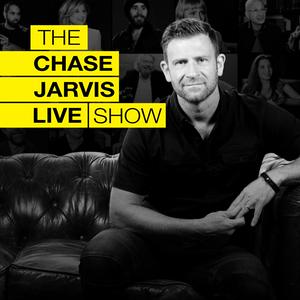
Chase Jarvis is a visionary photographer, artist and entrepreneur. Cited as one of the most influential photographers of the past decade, he is the founder & CEO of CreativeLive. In this show, Chase and some of the world's top creative entrepreneurs, artists, and celebrities share stories designed to help you gain actionable insights to recognize your passions and achieve your goals.
Podcast websiteListen to The Chase Jarvis LIVE Show, Making Cents and many other podcasts from around the world with the radio.net app
Get the free radio.net app
- Stations and podcasts to bookmark
- Stream via Wi-Fi or Bluetooth
- Supports Carplay & Android Auto
- Many other app features
Get the free radio.net app
- Stations and podcasts to bookmark
- Stream via Wi-Fi or Bluetooth
- Supports Carplay & Android Auto
- Many other app features

The Chase Jarvis LIVE Show
Scan code,
download the app,
start listening.
download the app,
start listening.
 New Zealand
