
Listen to this podcast in the app for free: Download for free in the App Store
radio.net
Sleep timer
Save favourites
249 episodes
Meeting the needs of all students through personalized Learning - Kim Hinton
18/10/2026 | 16 mins.What if we focused less on labels and more on removing barriers to learning?
In this episode of The Innovator’s Mindset Podcast, George Couros talks with Kim Hinton, Director of Special Education at CKEC, about creating learning environments where expertise is shared, instructional decisions are made collaboratively, and every learner has greater opportunities to succeed.
Kim shares how her team is bringing different perspectives and areas of expertise together rather than working in separate silos. The conversation explores how leaders can rethink professional learning, strengthen collaboration between educators, and use technology intentionally to address the specific barriers learners face.
George and Kim also discuss an important idea: practices designed to support individual learners can often make learning better and more accessible for everyone.
Questions for Reflection:
How can we better bring different areas of expertise together when making instructional decisions?
Instead of starting with a specific tool or strategy, what would change if we first asked, “What barrier to learning are we trying to remove?”
How can practices designed to support individual learners ultimately create better learning opportunities for everyone?
___________
👉 Share your thoughts in the comments or connect with me on social media using #InnovatorsMindset
🌐 More at: https://georgecouros.com
🎙 Full audio podcast: https://linktr.ee/gcouros
Follow George Couros:
X: https://x.com/gcouros
Instagram: https://instagram.com/gcouros
Facebook: https://www.facebook.com/georgecourosauthor/
LinkedIn: https://ca.linkedin.com/in/george-couros-a5146519
📚 Books by George Couros:
Forward, Together:
https://a.co/d/99RGvl3
The Innovator's Mindset: https://www.amazon.com/dp/0986155497?ref=exp_gcouros_dp_vv_d
What Makes a Great Principal: https://www.amazon.com/dp/1948334739?tag=onamzgeorge0f-20
Because of a Teacher: https://www.amazon.com/dp/194833433X?ref=exp_gcouros_dp_vv_d
Because of a Teacher 2: https://www.amazon.com/dp/194833450X?tag=onamzgeorge0f-20
Innovate Inside the Box: https://www.amazon.com/dp/1948334127?ref=exp_gcouros_dp_vv_d
Music from Bensound - http://bensound.com/Why I Write to Learn, Not Just to Share
15/10/2026 | 18 mins.Find the full article here: https://georgecouros.substack.com/p/3-blog-series-that-never-became-books
What if writing isn’t simply a way to share what you know, but one of the best ways to figure out what you think?
In this episode of The Innovator’s Mindset Podcast, George Couros reflects on nearly two decades of blogging and almost 2,000 published posts. What started as a short-term project to better understand blogging from the perspective of a learner ultimately helped him find his voice, deepen his thinking, and eventually write multiple books.
George revisits three blog series that never became books, including his work on rethinking grading and assessment, his response to Jonathan Haidt’s ideas on technology, and his “Myths of Technology” series. Along the way, he explores why writing about an idea before presenting it can sharpen our thinking, why disagreement can be an opportunity for deeper learning, and why publishing our ideas allows them, and us, to evolve.
The bigger question is not simply, “Do you want to write a book?” It is, “Do you want to become a writer?”
Sometimes we write to share what we have learned. Sometimes we write so that we can learn.
___________
👉 Share your thoughts in the comments or connect with me on social media using #InnovatorsMindset
🌐 More at: https://georgecouros.com
🎙 Full audio podcast: https://linktr.ee/gcouros
Follow George Couros:
X: https://x.com/gcouros
Instagram: https://instagram.com/gcouros
Facebook: https://www.facebook.com/georgecourosauthor/
LinkedIn: https://ca.linkedin.com/in/george-couros-a5146519
📚 Books by George Couros:
Forward, Together:
https://a.co/d/99RGvl3
The Innovator's Mindset: https://www.amazon.com/dp/0986155497?ref=exp_gcouros_dp_vv_d
What Makes a Great Principal: https://www.amazon.com/dp/1948334739?tag=onamzgeorge0f-20
Because of a Teacher: https://www.amazon.com/dp/194833433X?ref=exp_gcouros_dp_vv_d
Because of a Teacher 2: https://www.amazon.com/dp/194833450X?tag=onamzgeorge0f-20
Innovate Inside the Box: https://www.amazon.com/dp/1948334127?ref=exp_gcouros_dp_vv_d
Music from Bensound - http://bensound.com/AI, Student Safety, and the Human Skills We Cannot Afford to Lose
11/10/2026 | 30 mins.How do we prepare students to use AI responsibly while protecting the human connections that make learning meaningful?
George Couros talks with Dr. Scarlet Clouse, Dean of the College of Education and Director of the Kay Bailey Hutchison Institute, and Brandon Ligon, Director of AI Education and Learning Innovation, at Angelo State University. George will keynote the university’s free AI and Cyber Summit in San Angelo, Texas, on October 15.
Together, they discuss AI literacy, cybersecurity, student safety, and why students should help lead conversations about the future of technology. They also consider how AI can support creativity and learning without losing the value of working through a challenge ourselves. It’s a conversation about helping people make informed choices and using technology to strengthen, rather than replace, their human gifts.
Looking for a keynote on school leadership, innovation, or building stronger school communities? Explore George Couros’s speaking topics: https://georgecouros.com/speaking/
Check out the summit here: https://www.angelo.edu/events/calendar/event/88954-angelo-state-university-ai-and-cyber-summit-2026
___________
👉 Share your thoughts in the comments or connect with me on social media using #InnovatorsMindset
🌐 More at: https://georgecouros.com
🎙 Full audio podcast: https://linktr.ee/gcouros
Follow George Couros:
X: https://x.com/gcouros
Instagram: https://instagram.com/gcouros
Facebook: https://www.facebook.com/georgecourosauthor/
LinkedIn: https://ca.linkedin.com/in/george-couros-a5146519
📚 Books by George Couros:
Forward, Together:
https://a.co/d/99RGvl3
The Innovator's Mindset: https://www.amazon.com/dp/0986155497?ref=exp_gcouros_dp_vv_d
What Makes a Great Principal: https://www.amazon.com/dp/1948334739?tag=onamzgeorge0f-20
Because of a Teacher: https://www.amazon.com/dp/194833433X?ref=exp_gcouros_dp_vv_d
Because of a Teacher 2: https://www.amazon.com/dp/194833450X?tag=onamzgeorge0f-20
Innovate Inside the Box: https://www.amazon.com/dp/1948334127?ref=exp_gcouros_dp_vv_d
Music from Bensound - http://bensound.com/3 Things I Learned From School Opening Days This Summer
08/10/2026 | 15 mins.After spending the summer working with school districts and leadership teams across North America, I walked away with a lot of ideas about how we bring educators together and start the school year well.
In this episode of The Innovator’s Mindset Podcast, I share three things that stood out to me from school opening events this summer:
Why starting with students and celebrating your own staff's talents can completely change the day's energy.
Why leaders need to be willing to step outside their own comfort zones if they expect their staff to do the same.
Why the best time for an “Opening Day” event might actually be a month AFTER school starts.
That last idea really challenged my thinking. Sometimes people don’t need as much inspiration to start as they do encouragement to keep going.
I also share what these experiences reminded me about being observant, learning from the people around us, and continually looking for better ways to serve our school communities.
What is one thing your school or district does to bring people together at the beginning of the year?
Based on the following article: https://georgecouros.substack.com/p/3-things-i-learned-from-school-opening
___________
👉 Share your thoughts in the comments or connect with me on social media using #InnovatorsMindset
🌐 More at: https://georgecouros.com
🎙 Full audio podcast: https://linktr.ee/gcouros
Follow George Couros:
X: https://x.com/gcouros
Instagram: https://instagram.com/gcouros
Facebook: https://www.facebook.com/georgecourosauthor/
LinkedIn: https://ca.linkedin.com/in/george-couros-a5146519
📚 Books by George Couros:
Forward, Together:
https://a.co/d/99RGvl3
The Innovator's Mindset: https://www.amazon.com/dp/0986155497?ref=exp_gcouros_dp_vv_d
What Makes a Great Principal: https://www.amazon.com/dp/1948334739?tag=onamzgeorge0f-20
Because of a Teacher: https://www.amazon.com/dp/194833433X?ref=exp_gcouros_dp_vv_d
Because of a Teacher 2: https://www.amazon.com/dp/194833450X?tag=onamzgeorge0f-20
Innovate Inside the Box: https://www.amazon.com/dp/1948334127?ref=exp_gcouros_dp_vv_d
Music from Bensound - http://bensound.com/
____
#Education #SchoolLeadership #Teachers #EducationalLeadership #ForwardTogether #InnovatorsMindset #ProfessionalLearningForward, Together: Building Trust and Community with Thomas Hosler
04/10/2026 | 23 mins.What does it take for school boards and education leaders to move their communities forward when people don't always agree on the path?
In this episode of The Innovator’s Mindset Podcast, I sit down with Thomas Hosler, CEO of the Ohio School Boards Association (OSBA), to discuss leadership, trust, vulnerability, and the important role school boards play in supporting public education and the communities they serve.
This conversation is especially meaningful as I prepare to keynote the 2026 OSBA Capital Conference in Columbus, Ohio, where I will open the First General Session on November 15 and share ideas from my newest book, Forward Together: Moving Schools from Conflict to Community in Contentious Times.
Tom and I explore why "Forward Together" is such an important idea for school boards and education leaders today. Moving forward doesn't require everyone to have the same perspective. It requires leaders who are willing to listen, build trust, extend grace, and create the conditions for productive conversations within their communities.
Tom shares insights from 25 years as a superintendent and his work leading OSBA, including why the organization wants to be the first call for boards looking to improve, not simply a resource when something goes wrong. We also discuss why vulnerability can be a strength in leadership, what it means to "fail forward," and why elected leaders shouldn't feel like they have to go it alone.
A major theme throughout our conversation is that strong communities aren't built only in moments of crisis. They are built proactively through relationships, consistent follow-through, and a willingness to understand the people we serve.
With Ohio's school board members and education leaders coming together at the Capital Conference, this conversation offers a preview of some of the ideas we'll explore in Columbus and a reminder that even when we bring different perspectives to the table, we can still find ways to move Forward, Together.
And, of course, we find a little time to talk about music, including The Police, Rush, and Gordon Lightfoot.
___________
👉 Share your thoughts in the comments or connect with me on social media using #InnovatorsMindset
🌐 More at: https://georgecouros.com
🎙 Full audio podcast: https://linktr.ee/gcouros
Follow George Couros:
X: https://x.com/gcouros
Instagram: https://instagram.com/gcouros
Facebook: https://www.facebook.com/georgecourosauthor/
LinkedIn: https://ca.linkedin.com/in/george-couros-a5146519
📚 Books by George Couros:
Forward, Together:
https://a.co/d/99RGvl3
The Innovator's Mindset: https://www.amazon.com/dp/0986155497?ref=exp_gcouros_dp_vv_d
What Makes a Great Principal: https://www.amazon.com/dp/1948334739?tag=onamzgeorge0f-20
Because of a Teacher: https://www.amazon.com/dp/194833433X?ref=exp_gcouros_dp_vv_d
Because of a Teacher 2: https://www.amazon.com/dp/194833450X?tag=onamzgeorge0f-20
Innovate Inside the Box: https://www.amazon.com/dp/1948334127?ref=exp_gcouros_dp_vv_d
Music from Bensound - http://bensound.com/
More Education podcasts




Trending Education podcasts








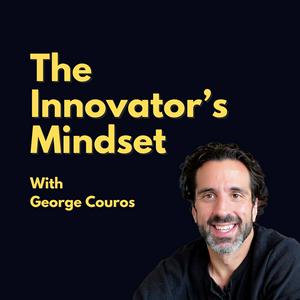
About The Innovator’s Mindset Podcast
I am a learner, author, speaker, and sometimes I make podcasts talking about any and all of these things. One day, I will rap in my podcasts officially making me a SoundCloud rapper.
Podcast websiteListen to The Innovator’s Mindset Podcast, Luke's ENGLISH Podcast - Learn British English with Luke Thompson and many other podcasts from around the world with the radio.net app
Get the free radio.net app
- Stations and podcasts to bookmark
- Stream via Wi-Fi or Bluetooth
- Supports Carplay & Android Auto
- Many other app features
Get the free radio.net app
- Stations and podcasts to bookmark
- Stream via Wi-Fi or Bluetooth
- Supports Carplay & Android Auto
- Many other app features

The Innovator’s Mindset Podcast
Scan code,
download the app,
start listening.
download the app,
start listening.
 New Zealand
