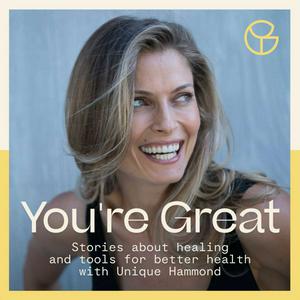
PodcastsEducationYou're Great with Unique Hammond

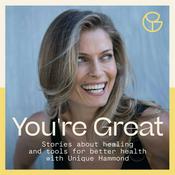
You're Great with Unique Hammond

Unique Hammond
You're Great with Unique Hammond
Latest episode

62 episodes

  • You're Great with Unique Hammond

    Dr. Hannah Lawler - Navigating wellness

    11/1/2026 | 53 mins.
    Guest: Dr. Hannah Lawler, Naturopathic Doctor (ND)
    Core Theme: Moving beyond the "pill for every ill" mentality to embrace nutrition (The Bean Protocol™), individualized hormone support, and the powerful signaling of the female cycle.
    Key Takeaways & Highlights
    1. The Luteal Phase "Truth Serum"
    Uni and Hannah discuss the emotional intensity often dismissed as "just PMS."
    The Luteal Narrative: The luteal phase (the week before your period) acts as a "BS filter." While it can feel like "lunacy," it often highlights real issues in life or relationships that we suppress during the rest of the month.
    Actionable Advice: Don’t make life-altering decisions (like divorce) during this phase, but document the feelings. Use them as data points to address once your hormones settle.
    2. Naturopathic vs. Conventional Medicine
    Dr. Lawler clarifies the rigorous path of an ND:
    Training: Four years of medical school, including biochemistry, anatomy, and pharmaceuticals, plus extensive training in nutrition, homeopathy, and hydrotherapy.
    The "Village Doctor" Approach: Hannah operates a concierge practice, making house calls. This allows her to see a patient’s environment—poking around the pantry to see what they think is healthy versus what actually supports their biology.
    3. The Foundation of Nutrition: The Bean Protocol
    Both Unique and Hannah emphasize that nutrition is not a "fad" but the literal building blocks of cells.
    Soluble Fiber (Beans & Psyllium): Essential for clearing recycled estrogen and toxins from the liver. This is the "insurance policy" for anyone on Hormone Replacement Therapy (HRT).
    Personal Responsibility: You cannot drive a "Ferrari" (your body) and put in the cheapest fuel. High-performance health requires high-quality, consistent inputs.
    4. Advanced Optimizations: Peptides & Genetics
    When the foundation of nutrition is set, Dr. Lawler looks at "levers" to move the needle:
    Peptides: Signaling molecules that tell cells to perform specific tasks (e.g., recovery, skin health, or mood). Hannah highlights GHK-Cu (copper peptide) for anti-aging and Thymosin Beta-4 for recovery.
    Genetics (3x4 Genetics): Understanding "bottlenecks," such as the COMT gene, which affects how you process caffeine and adrenaline. Knowing your genetics removes the "DIY" guesswork from health.
    5. Thyroid Health & The "Canary in the Coal Mine"
    The discussion touches on why Hashimoto’s is so prevalent today:
    Environmental Toxins: Halogens like fluoride, chlorine, and bromine can "plug" iodine receptors in the thyroid, leading to dysfunction.
    Root Cause: It’s never "just" the thyroid; it’s a response to stress, viruses, or environmental toxicity (like mold).
  • You're Great with Unique Hammond

    Dr. Jason Hawrelak- Decoding the Microbiome

    17/11/2025 | 1h 11 mins.
    Episode 61 Focus: Special Guest Dr Jason Hawrelak ND.

    We discuss why health is an active daily process rather than an occasional state, the subtle damages of the Western diet, the distinction between sugar and fruit, and personalized approaches to healing serious GI conditions.
    Mouse Study Revelation: Research suggests that mice eating a junk food diet only on the weekends suffered almost as much microbiome damage as mice eating junk food seven days a week, illustrating the importance of consistent, daily nourishment.
    The Gut-Brain-Immune Axis: The decisions we make daily—from food choices to stress and sleep—directly impact the microbiome, which, in turn, influences mood, immunity, and long-term disease risk.
    Saturated Fat, and gut health.
    Crohn's Disease and IBD: IBD symptoms (Crohn's, Colitis) show similar patterns of dysbiosis: too few beneficial, anti-inflammatory bacteria (like Faecalibacterium prausnitzii) and too many pro-inflammatory or pathogenic species (like certain E. coli strains).
    Dietary Emulsifiers: A major driver of IBD and inflammation is the consumption of dietary emulsifiers (e.g., carrageenan, polysorbate 80) found in ultra-processed foods. These compounds actively strip away the protective mucus layer, allowing microbes and toxins to interact with the immune system.
    Saturated Fat and Pathogens: Saturated fats (from dairy, lard, or coconut) behave differently in the gut:They encourage the growth of bacteria like Bilophila wadsworthia (a bile-loving bug) by increasing bile sulfur levels.
    Bilophila produces hydrogen sulfide gas, which is linked to IBD risk and visceral hypersensitivity (painful, oversensitive nerves in the gut).
    Saturated fat can also bind to and increase the absorption of endotoxin (a bacterial toxin), driving systemic inflammation.

    Optimal Protein: A plant-forward omnivore or pescatarian diet is optimal. A high-fiber diet mitigates many of the risks associated with moderate protein intake. For IBD flares, temporarily reducing red meat is often necessary to suppress hydrogen sulfide-producing microbes.

    Key Takeaways:

    The Single Most Important Action: Eat a diverse, high-fiber, plant-forward diet aiming for ∼50g of fiber daily.
    Be Aware of Toxins: Avoid ultra-processed foods, emulsifiers, and minimize pesticide exposure (eat organic when possible) to protect the gut lining.

    You can find out more about Dr Jason Hawrelak ND, BNat(Hons), PhD, FNHAA, MASN, FACN ProbioticAdvisor.com

    Interested in testing your gut microbes?

    We love TINY HEALTH- https://bit.ly/3RIOiKz

    Code: YOUREGREAT

  • You're Great with Unique Hammond

    Dr. Karen Hurd- To HRT or to NOT HRT.

    26/10/2025 | 52 mins.
    In Podcast 61, I sit with Dr. Karen Hurd to discuss HRT.
    Episode Focus: Re-examining the risks of Hormone Replacement Therapy (HRT) in light of new scientific rhetoric, The biological mechanism of hormonal damage, and the power of lifestyle in navigating menopause.

    1. The Core Scientific Risk: DNA Damage
    Dr. Hurd challenges the idea that "bioidentical" hormones are inherently safer than synthetic ones.
    The Mechanism of Action: Hormones (both endogenous/innate and exogenous/prescribed) are very small molecules known scientifically as nuclear receptors.
    Crossing Barriers: These molecules are so tiny that they can bypass normal cellular defenses by diffusing directly through the cell membrane (plasma membrane) and the nuclear envelope.
    The DNA Barrage: Once inside the nucleus, the hormone-transcription factor complex randomly attaches to the DNA3. This is not a one-time event; a daily pill or patch creates a constant barrage on the nuclear envelope.
    Mutating Genes: If this random attachment occurs at a critical site, such as the P53 gene (often affected in nearly 50% of hormonally receptive cancers) 5, it can disable the cell's stop mechanism (stop codon)6. The damaged cell then reproduces daughter cells carrying the same mutation, leading to tumors.
    The Power of Diet and Lifestyle
    The Natural Menopause: Menopausal symptoms (bone loss, brain fog, hot flashes) are often the result of entering menopause in a non-healthy state
    Estrogen Drivers: Hormones are naturally produced, but their excess can be driven by lifestyle. Caffeine is a more powerful driver of estrogen production than sugar.
    Adrenal Role: The adrenal glands are meant to take over producing weaker, protective estrogens after menopause16. Stressing the adrenals with caffeine, sugar, and over-exercising diverts resources away from hormone production, leading to symptoms like vaginal atrophy and hot flashes.
    The Bean Protocol Solution: Eating soluble fiber (like beans) does not stop innate hormone production; rather, the fiber acts by carrying out what the liver dumps into the gut.. This prevents the excessive recycling (up to 72 times daily) of hormones, allowing the body to naturally bring elevated estrogen levels back down to a safe, post-menopausal level
    You can learn more about working with Karen Hurd at www.karenhurd.com

    and you can learn more about my courses and working with me at www.youregreat.com

    Wishing you well on your human journey.
    X
  • You're Great with Unique Hammond

    Catherine's - Histamine healing story.

    21/9/2025 | 1h 2 mins.
    From diet culture to thriving.
    In this powerful episode of the Your Great Podcast, host Unique sits down with her client, Catherine's, to share an incredible transformation story. Catherine's came to Unique feeling "at war" with her body, struggling with eczema, chronic sickness, and food sensitivities that left her at rock bottom.
    But through the foundational principles of the Bean protocol™, Catherine moved beyond simply managing symptoms. She healed her relationship with food and her body, rediscovering vitality and joy. This isn't just a story about a diet; it's about a complete mindset shift, from feeling like a victim of your health to becoming the empowered hero of your own life.
    Listen in as Catherine reveals how she went from being sick more weeks than she was well, to having the energy to say "yes" to life, all by learning to nourish her body from within. If you've ever felt like healing is a struggle, this conversation will inspire you to look at your health journey with new eyes.

    You can find out how to work with Unique at https://www.youregreat.com/oneonone-consults
  • You're Great with Unique Hammond

    Luis Mojica- From Vegan to Omnivore.

    24/8/2025 | 49 mins.
    In this episode, host Unique and guest Luis Mojica discuss the concept of "food ideologies" and how they can become a person's identity, often to the detriment of their health.

    Podcast Summary: Food Ideology vs. Personal Health

    In this episode, Unique Hammond and her guest, Luis Mojica, discuss the concept of food as identity and how it can become a limiting factor in personal health journeys. Unique emphasizes that while the Bean Protocol was a tool that helped her heal from autoimmune conditions like Crohn's and endometriosis, she doesn't want it to be her sole identity.
    Both hosts share personal stories of how they subscribed to strict food ideologies—first vegetarianism, then veganism and macrobiotics—as a means of finding health. Luis recounts his journey from eating a highly processed diet to becoming a "militant vegan" after a traumatic experience at a factory farm. He initially thrived on a whole-foods vegan diet but later began to experience fatigue, brain fog, and weight gain. He realized his body was craving animal proteins and fats.
    They both highlight a key issue: when a food ideology becomes a person’s identity, it can lead to social and internal conflict if they need to change their diet for health reasons. Luis shares his experience of losing friends and a book deal after he started incorporating eggs and fish into his diet. Unique notes that many of her clients, particularly women, feel better after adding in legumes and some animal protein, but are afraid to do so openly due to social pressure.
    The conversation touches on the psychological and emotional components of eating. They discuss how a strict diet can sometimes be a trauma response, a way of exerting control or protecting oneself. They also note that a balanced diet, like the one offered by the Bean Protocol™, can create a sense of internal stability that allows people to address deeper emotional issues. Unique concludes by saying her upcoming book will frame the Bean Protocol ™ as an omnivore plan for healing, emphasizing that wellness requires effort, consistency, and a willingness to listen to one’s body.

    Scientific Correction:

    Clarification: The human body needs a total of 20 amino acids to build proteins, 9 of which are essential and must come from food. The body can create complete proteins from a variety of plant sources, provided the diet is varied enough to supply all the essential amino acids. The feeling of improved health from adding animal protein is likely due to the higher concentration and more easily digestible form of protein (a complete protein) and fat-soluble vitamins found in animal products, which may be more challenging to obtain in sufficient amounts on a vegan diet, not due to an inability to break down carbohydrates.

    A Note on Veganism:
    It's important to recognize that not everyone chooses a vegan lifestyle for health reasons. For many, the choice is driven by a deep ethical commitment to animal welfare and environmental sustainability. For these individuals, the diet is a core part of their moral belief system, and they may be willing to sacrifice their own health if needed for the life of an animal. This is a powerful and personal choice that goes beyond the conversation about food as medicine.

More Education podcasts

About You're Great with Unique Hammond

Your health isn’t a mystery; it’s a biological conversation. Join Unique Hammond—Nutrition Educator, Integrative Health Coach, and author of Your Tastebuds are A**holes—as she demystifies the path to true resilience. While the wellness world fights over "perfect" diets, Unique focuses on the foundations that actually work: bio-individual nutrition, hormonal health, and the power of the Bean Protocol.Through expert insights and raw, real-life healing stories, this podcast provides the evidence-based tools you need to take back the wheel. Whether you're navigating menopause, gut issues, or chronic stress, we’re moving past the fads to find the simple, sustainable habits that support your best self. It’s time to stop negotiating with your health and start living it.
Podcast website

Listen to You're Great with Unique Hammond, Kiwi English and many other podcasts from around the world with the radio.net app

Get the free radio.net app

  • Stations and podcasts to bookmark
  • Stream via Wi-Fi or Bluetooth
  • Supports Carplay & Android Auto
  • Many other app features
Social
v8.3.0 | © 2007-2026 radio.de GmbH
Generated: 1/20/2026 - 3:35:21 AM