

Listen to this podcast in the app for free: Download for free in the App Store
radio.net
Sleep timer
Save favourites
346 episodes
342 | Culture is Your Competitive Advantage with Mark Batterson | 10 Years of 4Sight
08/10/2026 | 39 mins.Is culture really a competitive advantage, or just something you deal with when there's time? After a decade of this work, Jenni's answer is that it's the whole thing — because growth doesn't create your culture problems, it exposes them. In this conversation, Jenni sits down with Mark Batterson, lead visionary of National Community Church in Washington, D.C., New York Times bestselling author, and author of Not My Circus, to talk about what thirty years of building culture on purpose actually looks like.
This episode kicks off 10 Years of 4Sight, a series marking 4Sight's 10th anniversary with the leaders Jenni has been privileged to serve alongside. Mark's team was one of the first to take a chance on her, and they've worked together on strategic planning, multi-site strategy, org design, and team dynamics across nearly the entire history of the company.
Mark's story started small and unglamorous. Coming off a failed church plant, he and a core group of 19 people began meeting in a D.C. public school. Average attendance that first year was 20-25. Monthly giving was around $2,000, and the rent was $1,600. It took five years to grow from 19 to 250. Three decades later, that same church has planted a network of churches, owns a debt-free city block on Capitol Hill, and still runs on a mindset Mark sums up simply: everything is an experiment.
Jenni and Mark dig into the culture barometer he uses to check himself, why values have to be lived creatively instead of codified and hung on a wall, and what it costs to build the kind of team culture that holds under growth. They share candidly about the seasons of leadership that require a leader to change, and why Mark decided to write a book he knew would cost him something.
What You'll Hear
Why healthy culture turns growth into fuel, and unhealthy culture turns growth into a threat
The NCC origin story: 19 people, a rented D.C. public school, and a long obedience in the same direction
Why leading one church for 30 years has meant leading 17 different churches, and how to tell which season you're in
What changed when Mark traded the title of Lead Pastor for Lead Visionary, and how he decided where his value actually sits now
Mark's culture barometer: when you walk into the room, does the anxiety level go up or down?
Leading with non-anxious curiosity, and the difference between a "here I am" leader and a "there you are" leader
Inside the Play and Pray Retreat, the three-day gathering for staff plus spouses and kids, and why Mark defends the line item
Why values only stick when you find creative, human ways to live them out
Giving leadership away, teaching-church thinking, and building a pipeline for the next generation
Mark's encouragement: reserve the right to get smarter later
Connect with Mark Batterson
Website: https://www.markbatterson.com/
Book: Not My Circus — releases October 20, 2026
Church: https://national.cc/
We need your help to get the LeadCulture podcasts in front of more leaders! There are three simple things you can do that truly help us:
Review us on Apple podcasts
Subscribe - we’re available wherever you listen to podcasts.
Share - let your friends know about the podcast by sharing your favorite episode on social media!341 | Discipline, Grace, and Friendship at Work with Marcylle Combs
24/09/2026 | 38 mins.Can you be friends with the people you lead? Most HR advice says no. In this conversation, Jenni sits down with Marcylle Combs, entrepreneur, executive mentor, and author of Never Hire Your Friends, to talk about why friendship at work, handled well, can be a leader's greatest asset.
Marcylle has spent more than three decades leading organizations. Her leadership story started with a hard moment. Early in her career as a young home health branch manager, she learned that her entire team had met with the company owner to complain about her. A wise colleague gave her two choices: sit down with every employee, or start firing them. Marcylle chose to listen. That moment turned a reluctant manager into a lifelong student of leadership, with a goal of being both the hardest and the best boss her people would ever have.
Jenni and Marcylle dig into what Marcylle calls "friendship management," the ongoing tension between discipline and grace, and why clear expectations are what make close relationships at work possible. They also talk about what emerging leaders need from those of us who have been leading for decades.
What you'll hear
Marcylle's leadership wake-up call, and why she chose to listen instead of clean house
How to hold people to a high standard while making sure they know you care
Why knowing when to give discipline and when to give grace takes mentoring, not just a policy manual
Why Never Hire Your Friends really means always hire your friends, and the three pillars behind it: honor, honesty, and humility
Setting ground rules for friendships at work, from "boss hat vs. friend hat" to what an email, a text, or a phone call signals
How senior leaders can better understand and mentor a younger generation whose experience is very different from their own
Marcylle's encouragement: the only person you can change is yourself, so keep learning and keep investing in others
Connect with Marcylle Combs
Website: https://www.marcyllecombs.com/
Book: Never Hire Your Friends
Podcast: 50% with Marcylle Combs
LinkedIn: https://www.linkedin.com/in/marcylle-combs-65978425
We need your help to get the LeadCulture podcasts in front of more leaders! There are three simple things you can do that truly help us:
Review us on Apple podcasts
Subscribe - we’re available wherever you listen to podcasts.
Share - let your friends know about the podcast by sharing your favorite episode on social media!340 | Trust Is Built in Systems of Repair with Dr. Rob McKenna
10/09/2026 | 39 mins.Trust is the thing every leader depends on and almost no one builds on purpose. In this conversation, Jenni sits down with Dr. Rob McKenna, founder of WiLD Leaders and author of Whole Leaders, Wild Trust, to talk about why trust is a byproduct of leader development, not a topic you can lecture your way into.
Dr. Rob has spent decades running longitudinal leadership studies, including a six-and-a-half-year study following 120 leaders in aerospace, plus research with several thousand engineers moving into leadership roles and a multi-year study of leaders in large church organizations. What emerged surprised him: as teams did the work of understanding their own competence, motivation, and purpose together, they started trusting each other — without anyone naming trust as the goal.
Jenni and Dr. Rob dig into why trust feels like air (essential, invisible, impossible to grab), what happens when a CEO's read on their culture is rosier than their employees', and the single question a leader can bring to their team on Monday morning that opens the door to real candor.
What you'll hear
Why leader development and trust building turn out to be the same work
Whether trust is genuinely harder to build today, and what social media may be doing to our appetite for candor
The trust quadrant: team trust on one axis, organizational trust on the other — and what it means to be in the "jungle" versus the "stronghold"
The uncomfortable pattern in the data: leaders of low-trust organizations tend to think things are better than they are, while high-trust CEOs are accurate or under-rate their own culture
Why the leaders most afraid to measure trust are usually the ones who already know it's low
Jenni on the delta between how leaders experience culture and how employees do
Connect with Dr. Rob McKenna
WiLD Leaders: wildleaders.org
Contact the team — contact@wildleaders.org
The Leading Under Pressure Inventory and other assessments — wildleaders.org/the-wild-toolkit
Book: Whole Leaders, Wild Trust
We need your help to get the LeadCulture podcasts in front of more leaders! There are three simple things you can do that truly help us:
Review us on Apple podcasts
Subscribe - we’re available wherever you listen to podcasts.
Share - let your friends know about the podcast by sharing your favorite episode on social media!339 | The Hidden Reason Middle Management Is Burning People Out with Adam Tarnow
27/08/2026 | 36 mins.In this episode, Jenni talks with leadership development specialist and author Adam Tarnow about why middle management feels like an impossible role, and why it may actually be the most important one in an organization. They unpack the tension of carrying responsibility without full control, and Adam shares a practical framework for navigating the stress of leadership without burning out. In this episode, Adam explains why the middle is where execution happens, why so many managers feel stuck in a “valley,” and how leaders can regain a sense of agency by focusing on what they can control. He also offers a simple sentence-based tool from his book The Fog of Work that helps leaders move from overwhelm to action.
Key Topics
Jenni introduces the episode by framing culture as either a strategic asset or a liability, especially during growth, merger, or crisis.
Adam shares why he wrote The Fog of Work and why middle managers became his focus after years of living in that role himself.
They discuss how middle management used to be a respected position, and how pop culture turned it into a punchline.
Adam explains why middle managers are often the “verbs in the sentence” of an organization - the people who make execution happen.
The conversation highlights the pressure of being a player-coach: managing your own work while leading others.
Jenni names the “they” problem - the tendency to blame vague forces instead of recognizing personal influence and agency.
Adam describes middle management as a valley where problems roll downhill and collect, creating stress, ambiguity, and accountability without full control.
He introduces the idea that the real question is not “How do I get out?” but “How do I get through?”
Adam shares the fog clearing sentence: “I don’t control blank, but I do control blank, so I will blank.”
They connect the middle of an organization to the middle of a story, where growth, character, and transformation happen.
Jenni and Adam both emphasize that leaders can improve culture by focusing on what they can influence directly, especially within their own teams.
The episode closes with encouragement for senior leaders to equip middle managers with practical tools, not just expectations.
We need your help to get the LeadCulture podcasts in front of more leaders! There are three simple things you can do that truly help us:
Review us on Apple podcasts
Subscribe - we’re available wherever you listen to podcasts.
Share - let your friends know about the podcast by sharing your favorite episode on social media!338 | Communication in Team Culture with Special Guest River
20/08/2026 | 12 mins.In this episode, Jenni Catron and her 11-year-old nephew River explore the fundamentals of team culture through engaging stories and insights. River shares his unique perspective on support, communication, focus, and the impact of individual roles in shaping a positive culture.
Takeaways:
Support is the most important aspect of culture.
Effective communication is crucial for team success.
Focus and commitment drive team performance.
Everyone has a role in shaping culture, regardless of age.
Positive culture can be maintained or ruined by individual actions.
Chapters:
00:00 Introduction to the episode and guest River
01:00 Why we call it Switch Week and family traditions
01:30 River introduces himself and his love for sports
02:27 River shares his thoughts on support in culture
02:56 Support in sports and teams
03:23 The importance of communication in team culture
04:21 Learning from communication in pickleball
05:16 Communication during baseball games
05:45 The impact of fast plays and clear communication
07:16 Focus and distraction in sports
08:11 The responsibility of leaders and team members in culture
09:12 The influence of positivity and encouragement
09:36 Recognizing individual roles in culture
10:31 Culture as a fragile ecosystem
11:00 River’s perspective on culture and youth influence
11:31 Closing thoughts and call to action
We need your help to get the LeadCulture podcasts in front of more leaders! There are three simple things you can do that truly help us:
Review us on Apple podcasts
Subscribe - we’re available wherever you listen to podcasts.
Share - let your friends know about the podcast by sharing your favorite episode on social media!
More Business podcasts









Trending Business podcasts















About Lead Culture with Jenni Catron
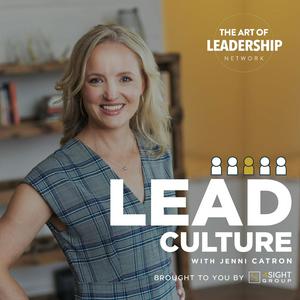
Healthy leadership creates healthy culture.On LeadCulture with Jenni Catron, you’ll gain practical leadership development insights to help you lead with clarity and build a thriving organizational culture. Drawing from decades of executive experience and conversations with trusted business leaders, Jenni equips CEOs, executives, entrepreneurs, and managers with tools to strengthen team health, align vision and values, and create workplaces where people and performance thrive.If you’re serious about growing as a leader and building a values-driven culture that lasts, you’re in the right place.
Podcast websiteListen to Lead Culture with Jenni Catron, Making Cents and many other podcasts from around the world with the radio.net app
Get the free radio.net app
- Stations and podcasts to bookmark
- Stream via Wi-Fi or Bluetooth
- Supports Carplay & Android Auto
- Many other app features
Get the free radio.net app
- Stations and podcasts to bookmark
- Stream via Wi-Fi or Bluetooth
- Supports Carplay & Android Auto
- Many other app features

Lead Culture with Jenni Catron
Scan code,
download the app,
start listening.
download the app,
start listening.
Lead Culture with Jenni Catron: Podcasts in Family
 New Zealand