
Listen to this podcast in the app for free: Download for free in the App Store
radio.net
Sleep timer
Save favourites
281 episodes
The Man Who Led 100+ CROs (Even OpenAI's) | John McMahon - 5x Post-IPO CRO / The GOAT
25/10/2026 | 1h 13 mins.John McMahon, a five-time public company CRO whose team at PTC created MEDDIC, joins Sam Jacobs, AJ Bruno, and Asad Zaman on building enterprise sales teams that last. Topics include the PTC lineage that has produced over 100 CROs, including OpenAI's Dali Rajic, why he hires on characteristics over resumes, whether a CRO who never carried a bag can lead, and how first-time CROs should work with their CEO. Plus, capped commissions at Anthropic, why AI makes lazy reps lazier, what conversational intelligence tools miss in deal qualification, and quick takes on Dali, Carlos at Harness, Dev Ittycheria, and Chris at Cognition.
Key Takeaways:
- Hire on characteristics, not resumes. John sorts candidates by skills, knowledge, experience and characteristics, and the last one is the hardest to teach: "I've always hired on characteristics. So I'll take someone with less experience but great characteristics." He looks for intelligence, drive, coachability, adaptability and integrity, because when a hire fails, "it's always a character flaw."
- Don't take the CRO seat before you're ready. John once refused a promotion Dali pushed him for: "I told him, I'm not gonna do that to you because you're not ready… you're gonna fail. Your ego's not gonna be able to take it." For John, readiness comes down to whether you can recruit, coach, and lead people who actually want to follow you.
- Talk to the CEO as a partner. Plenty of first-time CROs hold the C-level title without acting like the CEO's peer, and John coaches them to speak up: "You're the CRO. You have a fiduciary responsibility. Tell the CEO specifically what you think is wrong with the business." Blaming revenue problems on the product "is a non-starter," so come with a solution and talk like a business owner.
- AI hasn't changed the methodology. John sees AI mostly as a research tool, and "it makes the really good sales reps better, and it makes the lazy sales reps lazier." He is just as blunt about conversational intelligence: "All they're doing is verifying that something was said, but there's no true qualification." Qualifying still means knowing whether you're talking to a champion, a coach, or the enemy.
Connect with the Hosts & Guests:
Host: Sam Jacobs, CEO at Pavilion - https://www.linkedin.com/in/samfjacobs/
Host: AJ Bruno, CEO at QuotaPath - https://www.linkedin.com/in/ajbruno3/
Host: Asad Zaman, CEO at STA - https://www.linkedin.com/in/azaman1/
Guest: John McMahon, 5x Public Company CRO - https://www.linkedin.com/in/johnmcmahon1/
Topline is more than a podcast:
Subscribe to Topline Newsletter: https://toplinemedia.substack.com/
Check us out on YouTube for the #1 video podcast for founders, operators, and investors in B2B tech: https://www.youtube.com/@TOPLINE-Media
Join the free Topline Slack channel to connect with 600+ revenue leaders to keep the conversation going beyond the podcast: https://www.joinpavilion.com/topline-slack
Chapters:
00:00 Introducing John McMahon
02:18 The PTC Sales Leadership Tree
07:20 Hiring on Characteristics, Not Resumes
12:10 Should a CRO Have Carried a Bag?
16:50 Capped Commissions vs. Equity Upside
19:05 When Are You Ready to Be CRO?
22:56 How CROs Should Evaluate the CEO
34:52 AI and Sales Methodology
38:10 AI Call Tools Don't Qualify Deals
40:52 MEDDIC and Bigger Buying Groups
42:51 The Art and Science of Selling
48:47 Coaching Mark Roberge at HubSpot
59:31 Managing Heads Like a Bond Portfolio
01:03:42 Hiring Batting Average and Ramp Time
01:09:40 Rapid Fire: Dali, Carlos, Dev, ChrisSPOTLIGHT: Untangling Tech Debt and Finding Product-Market Fit with Russ Mikowski of SurePeople | Russel Mikowski, CEO @ SurePeople
22/10/2026 | 26 mins.Russ Mikowski, CEO of SurePeople and longtime revenue leader in tech, never planned to become a CEO. Recruited to lead a 10-year-old company into its next stage of growth, he faced technical debt, an unfocused ideal customer profile (ICP), and the challenge of turning the company's potential into a scalable business.
In this episode of Topline Spotlight, Russ joins Sam Jacobs and AJ Bruno to discuss the decisions behind SurePeople's transformation, including rebuilding parts of its product, narrowing its target market, and resisting custom requests that could pull the business off course.
Russ talks about:
- How to identify and focus on the customers your product serves best
- When rebuilding is a better option than refactoring
- Why saying no to the wrong opportunities can protect long-term growth
- How to keep a team aligned through organizational change
- Why great leaders attract and retain talent by removing obstacles
Chapters
00:00 Introduction to Topline Spotlight
01:54 Meet Russ Mikowski, CEO of SurePeople
03:00 SurePeople and the PRISM Assessment
05:51 Russ's Journey to CEO
08:55 Tackling Technical Debt and Rebuilding the Product
12:01 Narrowing the ICP and Finding Market Focus
14:50 Communicating Change and Aligning the Team
17:53 Leadership Lessons from a Mentor
24:00 Where to Find Russ Mikowski and SurePeople
Try SurePeople: surepeople.com$682M Public CEO: "The Magic of 80% Gross Margin" | CEO @ Yext, Michael Walrath
18/10/2026 | 1h 7 mins.Michael Walrath, CEO of Yext, is back on Topline to explain how Yext went from breakeven to 31% EBITDA margins on an 80% gross margin business, after halving its headcount and using its balance sheet to buy back roughly 35% of every share it ever issued. He joins Sam Jacobs, AJ Bruno, and Asad Zaman to argue that the old rules of business still apply: why VC math and founder math are different games, why employees lose the most when an overvalued startup like Airtable lands far below its peak valuation, and why this market feels like 2004. Plus, why Yext stopped doing earnings calls and replaced most stock comp with cash, why cutting the bottom half of a sales team can raise bookings, and how Yext is blurring the lines between AEs, account managers, CSMs and sales engineers.
Key Takeaways:
- Real profitability turns any growth into fuel. As Michael put it, "when you're actually profitable, like really profitable, then any growth becomes hugely accretive." With 80% gross margins and 31% EBITDA margins, "Every incremental dollar, I can spend 45 cents of it and not affect my margins in any way," so a left-for-dead software company can fund its own growth whatever the market says it's worth.
- Chase growth only where it actually exists. "Nothing's more powerful than growth at creating value. Nothing is more destructive to value than chasing growth when the growth isn't there," said Michael. Airtable avoided the trap by leaving its cash on the balance sheet, while Yext once spent 74% of revenue on sales and marketing into a declining growth rate.
- Cutting your weakest sellers can grow bookings. When 20% of reps make quota and the bottom half brings in 20% of bookings, the spreadsheet says cutting them costs you that 20%. "It's not even close to true. It's the opposite," said Michael (his numbers were illustrative). Yext now has fewer, better sellers, and is "effectively eliminating all distinction between go-to-market roles" in favor of teams that own books of customers.
- Stock comp can turn your own employees into sellers of your stock. Most people sold their RSUs the day they vested, and every quarterly issuance meant the company sold shares to cover taxes too. "The last thing you need are more sellers of your stock every quarter," said Michael, so Yext now pays most employees more cash and points long-term believers to its employee stock purchase plan.
Connect with the Hosts & Guests:
Host: Sam Jacobs, CEO at Pavilion - https://www.linkedin.com/in/samfjacobs/
Host: AJ Bruno, CEO at QuotaPath - https://www.linkedin.com/in/ajbruno3/
Host: Asad Zaman, CEO at STA - https://www.linkedin.com/in/azaman1/
Guest: Michael Walrath, CEO at Yext - https://www.linkedin.com/in/michael-walrath-b63166/
Topline is more than a podcast:
Subscribe to Topline Newsletter: https://toplinemedia.substack.com/
Check us out on YouTube for the #1 video podcast for founders, operators, and investors in B2B tech: https://www.youtube.com/@TOPLINE-Media
Join the free Topline Slack channel to connect with 600+ revenue leaders to keep the conversation going beyond the podcast: https://www.joinpavilion.com/topline-slack
Chapters:
00:00 Introducing Mike Walrath
03:13 VC Math vs Founder Math
04:46 Why Employees Lose the Most
09:05 Why This Market Feels Like 2004
12:04 31% EBITDA Makes Growth Accretive
16:12 Why Mike Is a Jobs Bull
19:48 What Airtable Got Right
28:19 Hot Startup Equity Is a Lottery
41:37 Yes, You Can Attract Talent
44:16 The Road to 30% EBITDA Margins
47:45 No Earnings Calls, No IR Team
51:52 Replacing Stock Comp With Cash
54:41 Cut the Bottom 50% of Sellers
57:19 Collapsing Go-to-Market Roles
01:01:22 From PE Guy Back to GrowthSPOTLIGHT: How Rick Smolen Built Confidence Leading Outside of Sales | Rick Smolen, CRO @ ShipHero
15/10/2026 | 26 mins.When Rick Smolen stepped into the CRO role at ShipHero, he took on responsibility for the entire customer lifecycle, from marketing and partnerships to customer success and support.
With a background primarily in sales, he had to learn how to lead functions outside his expertise without needing to have all the answers.
In this episode, Rick joins Sam Jacobs to discuss the leadership lessons that came with that transition, from asking better questions to building trust with his team. He also explains how to learn from failure, navigate setbacks, and focus on what you can control as a leader.
Rick talks about:
- Why curiosity makes you a stronger cross-functional leader
- How to challenge your team without micromanaging
- Why experimentation requires accepting failure
- What leaders should focus on when business results fall short
- How to prioritize important work that rarely feels urgent
Chapters
00:00 Introduction to Rick Smolen and ShipHero
01:10 What ShipHero Does
05:14 Rick's Career Journey
07:50 From Sales Leader to CRO: The Biggest Shift
10:49 Why Curiosity Makes You a Better Leader
16:23 Building a Leadership Team That Learns and Experiments
17:54 Evaluating Leadership Beyond Revenue
22:50 Rick's Book Recommendation: The 7 Habits of Highly Effective People
24:53 Where to Find Rick Smolen
Try ShipHero: shiphero.comAI Revenue Is Real. But Will It Last? | Amy Konary, Founder & Chair, Subscribed Institute @ Zuora
11/10/2026 | 53 mins.Amy Konary, Founder & Chair of The Subscribed Institute at Zuora, coined the term SaaS as an IDC analyst around 2000, when her first forecast sized the whole market at $40 million. She joins Sam Jacobs, AJ Bruno, and Asad Zaman for the first in-person Topline to ask whether AI company economics are a house of cards, and whether circular financing and double counting are real problems. Plus, why POCs have stopped being a pipeline signal, experimental revenue versus true ARR, a new leverage index for sticky revenue, tokens versus credits, and how close outcome pricing can really get.
Key Takeaways:
- Treat POCs as a weak pipeline signal. As Amy put it, "it used to be that hands-on product was a really good signal from a pipeline perspective, but everyone's doing POCs just to kick the tires, but actually has no mandate to buy." Many are free, production-ready builds, and very few convert.
- Usage alone won't tell you which revenue will last. Amy scores customers on scope and workflows, trust in the system's outputs, and how much of their own context they upload, because "you can have 2 customers with the exact same usage, but very different leverage." Low leverage means "That revenue is less durable."
- Pure usage pricing can leave you as exposed as seats did. "If you're just tracking usage, and usage is highly experimental, and usage decreases over time as people optimize the tools, you're in the same vulnerable position you were in with seats," said Amy, who expects hybrid models with a smaller, trackable outcome piece.
- Build for durability without rigidity. "So I think there's a difference between durability and rigidity," Amy said, and her metaphor is bamboo: one of the strongest construction materials, yet flexible, anchored by a clear focus on the customer's progress.
Connect with the Hosts & Guests:
Host: Sam Jacobs, CEO at Pavilion - https://www.linkedin.com/in/samfjacobs/
Host: AJ Bruno, CEO at QuotaPath - https://www.linkedin.com/in/ajbruno3/
Host: Asad Zaman, CEO at STA - https://www.linkedin.com/in/azaman1/
Guest: Amy Konary, Founder & Chair, The Subscribed Institute at Zuora - https://www.linkedin.com/in/amykonary/
Topline is more than a podcast:
Subscribe to Topline Newsletter: https://toplinemedia.substack.com/
Check us out on YouTube for the #1 video podcast for founders, operators, and investors in B2B tech: https://www.youtube.com/@TOPLINE-Media
Join the free Topline Slack channel to connect with 600+ revenue leaders to keep the conversation going beyond the podcast: https://www.joinpavilion.com/topline-slack
Chapters:
00:00 Introducing Amy Konary
01:43 From ERP Sales to Industry Analyst
03:33 How Amy Konary Named SaaS
08:03 How Salesforce Taught the Street SaaS
10:31 Building Durable Companies for AI
11:52 Does Gross Margin Still Matter?
15:10 Who Is Checking AI Company Math?
17:03 Circular Financing and Double Counting
18:30 Is AI a House of Cards?
21:49 Durability Versus Rigidity
29:19 Be Careful About Your POCs
33:40 The Leverage Index for Sticky Revenue
39:12 SaaS Companies Moving Into Services
41:59 Tokens, Credits and Outcome Pricing
48:32 P(doom) and Raising Kids With AI
More Business podcasts




Trending Business podcasts














About Topline
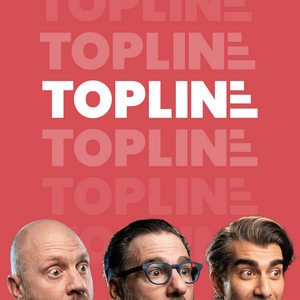
The #1 podcast for founders, operators, and investors in B2B tech. Tune in every week to hear Sam Jacobs, AJ Bruno and Asad Zaman discuss and debate the trends, news, and developments impacting the B2B tech world. Enjoy the hot takes, strong opinions, and dry humor.
Podcast websiteListen to Topline, The Diary Of A CEO with Steven Bartlett and many other podcasts from around the world with the radio.net app
Get the free radio.net app
- Stations and podcasts to bookmark
- Stream via Wi-Fi or Bluetooth
- Supports Carplay & Android Auto
- Many other app features
Get the free radio.net app
- Stations and podcasts to bookmark
- Stream via Wi-Fi or Bluetooth
- Supports Carplay & Android Auto
- Many other app features

Topline
Scan code,
download the app,
start listening.
download the app,
start listening.
Topline: Podcasts in Family
 New Zealand
