
Listen to this podcast in the app for free: Download for free in the App Store
radio.net
Sleep timer
Save favourites
634 episodes
Should You Discount End-of-Season Stock This Black Friday?
21/10/2026 | 13 mins.Should you do 25% off everything this Black Friday? That's what Stacey, who owns two children's shoe stores, asked inside My Million Dollar Store.
Stacey's shoes are made for her stores, she gets a couple of deliveries a year, and she'd rather have the cash than the boxes. In this episode, Sal explains why the discount percentage is the last thing to decide, and builds Stacey's Black Friday offer back from the outcome she needs: selling more pairs.
You'll hear:
- Why a flat 25% off everything brings in bargain hunters who buy one pair
- The multi-buy Sal would run instead, and the wording mistake to avoid
- Why new-season stock and full-price VIPs should stay out of the sale
Show notes and transcript: https://salenaknight.com/black-friday-offer/
My Black Friday Formula interviews you about your store and builds your Black Friday offers, products, emails and socials: https://salenaknight.com/bff3 Simple Marketing Tips For When You're Busy
01/10/2026 | 12 mins.Q4 has a way of filling every available minute.
Stock is arriving. Orders need to be packed. Staff need to be rostered. Customers need help. Christmas ranges need organizing. And somewhere in the middle of all of that, you're still supposed to send your weekly email and keep showing up on social media.
The problem isn't that retailers don't know marketing matters. The problem is that when the business gets busy, marketing is often the thing that gets pushed to "later."
And later rarely comes.
In this episode, Salena Knight shares three simple strategies to keep your marketing moving when you're already at capacity.
1. Set a sales target and check it every Monday
When Q4 gets busy, it's easy to stop looking at the numbers and simply hope sales come in. Instead, Salena recommends setting your target now and checking in on it every Monday.
Knowing where you are versus where you need to be gives you a much clearer idea of what action needs to happen that week.
2. Prioritize what actually makes money
Not everything on your to-do list is equally important.
Salena shares the example of a boutique owner who was overwhelmed with everything she needed to do. When they stripped the list back, it came down to two priorities: find staff and make money.
When time is limited, the tasks that directly contribute to revenue need to get a place in the calendar rather than waiting for a gap that may never come.
3. Double dip your marketing
You don't need to create brand-new content for every channel.
Take the newsletter you've already written and turn it into several social posts. Use the same promotion on your website, in-store signage, text messages, and email.
The content you've already created can work harder for you.
The bigger takeaway is that busy season isn't the time to try to do everything. It's the time to prioritize the marketing that actually moves the business forward.
And if you need help knowing what marketing needs to happen and when, Salena's free 12-week holiday marketing calendar maps out the key marketing activities from October 1 through Christmas.Don't Build a Bigger Black Friday List. Build More Black Friday Customers.
15/09/2026 | 11 mins.Why The Products That You Regret Buying Are More Important Than You Think
11/09/2026 | 13 mins.In this episode, Salena Knight explains why the products you regret buying can be some of the most valuable data in your retail or ecommerce business.
It is easy to focus on best sellers, products that sold out, and suppliers that performed well. But your clearance section, old stock, and products that have been sitting in the warehouse can tell you just as much - and sometimes more - about your buying decisions.
Salena walks through how to look beyond "it didn't sell" and identify what actually went wrong. Was the product itself the problem? Did you buy too much? Was the colour selection wrong? Was the price too high? Did demand only appear after a significant discount?
She also explains why clearing old stock isn't enough. If you don't understand the buying decision that created the excess inventory, you risk making the same decision again with a different product.
You'll learn how to:
Use old stock as buying data
Distinguish between a product problem and an overbuying problem
Look at sales performance alongside discounts and timing
Identify patterns across seasons and product ranges
Recognise assumptions that influence your buying decisions
Turn disappointing inventory into a lesson for future buying
Ask better questions before repeating a buying decision
The key takeaway: You've already paid for the stock. Make sure you get the lesson from it, too.How To Buy Products That Make More Money
27/08/2026 | 17 mins.You found the perfect product. You know your customers will love it. So you buy it.
But what if that isn't enough to make it a good buying decision?
In this episode, Salena challenges the way retailers think about inventory and explains why buying isn't just about finding products that fit your brand or that you believe will sell. Every dollar you put into stock is a dollar that can't be used somewhere else in your business, which means every product needs to earn its place.
Salena walks through how to think about inventory as an investment, why your revenue and profit goals should influence your buying decisions, and why the speed at which a product turns back into cash matters just as much as whether it eventually sells.
You'll also hear how one retailer discovered that the brand they thought was performing well wasn't the whole story. Once they looked more closely at the individual products, they found that bright prints were selling much faster than the plains and neutrals. That kind of insight can completely change what you choose to buy next.
If you're heading into a major buying season and want to make decisions based on more than instinct, this episode will help you look at your inventory through a much more commercial lens.
Register for the free Q3 Masterclass Series here.
More Business podcasts








Trending Business podcasts























About Bringing Business to Retail
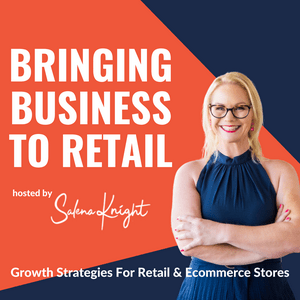
Bringing Business to Retail is the podcast for established retail and ecommerce store owners who want more profit, more repeat customers and a business that depends on them less.
Your store is growing. You want the profit to grow with it. But with stock to buy, customers to bring back and a team to lead, what deserves your attention first?
I'm Sal, a retail and ecommerce growth strategist who founded, built and sold a chain of retail stores. I help you look at what's happening in your business and decide what to change next.
Expect practical conversations about cash flow, inventory, pricing, promotions, retail marketing, customer retention and leading your team. Decisions you can take back to your shop floor or online store.
Follow Bringing Business to Retail, then choose an episode about the part of your business you want to improve.
Episodes and resources: https://salenaknight.com/podcast-2/
Podcast websiteListen to Bringing Business to Retail, The Property Academy Podcast and many other podcasts from around the world with the radio.net app
Get the free radio.net app
- Stations and podcasts to bookmark
- Stream via Wi-Fi or Bluetooth
- Supports Carplay & Android Auto
- Many other app features
Get the free radio.net app
- Stations and podcasts to bookmark
- Stream via Wi-Fi or Bluetooth
- Supports Carplay & Android Auto
- Many other app features

Bringing Business to Retail
Scan code,
download the app,
start listening.
download the app,
start listening.
 New Zealand
