
Listen to this podcast in the app for free: Download for free in the App Store
radio.net
Sleep timer
Save favourites
425 episodes
Can we personalise learning at scale? with Ashish Bansal (#367)
26/10/2026 | 50 mins.What if the most useful AI tutor is the one that refuses to give your child the answer?
In this episode, Ben and Steve sit down with Ashish Bansal, co-founder and CEO of StarSpark AI and former Google, Twitter and Amazon engineer, to ask what AI tutoring should really look like when learning, not engagement, is the goal. From his son gaming an online algebra course by memorising a seven-question bank, to why most AI chatbots are built for the wrong purpose entirely, Ashish makes the case for purpose-built, Socratic AI that makes students think harder, not less.
We cover:
- Why "solving is not tutoring" and great mathematicians don't automatically make great teachers
- What parents and technologists misunderstand about pedagogy and age-appropriate learning
- How StarSpark refuses to be an answer machine and uses Socratic questioning instead
- Sequencing question difficulty using Webb's Depth of Knowledge
- Why multiple choice encourages guessing, and how his son gamed an online algebra course
- The 80% problem: how learning gaps compound year after year in maths
- Personalised learning versus group instruction, and Bloom's two sigma problem
- Socrates, gurukuls and why our school systems are built around a cost model
- Flipping the classroom: AI teaches the concept, the teacher helps when students get stuck
- Why the school year is still nine months, and whether learning should be continuous
- Why general-purpose chatbots are built for engagement, not learning outcomes
- Purpose-built AI vs wrappers: grounding in textbooks, computer algebra systems and avoiding emotional dependence
- The Star Wars role-play that got one student through 119 maths problems in two days
- Practical things teachers can do with AI tomorrow to give every student more individual attention
Why you should listen
If you're a teacher, school leader or parent trying to work out whether AI will help young people learn or simply do their thinking for them, this conversation offers a rare inside view from someone who builds the technology and still puts pedagogy first. You'll come away with sharper questions to ask of any AI product and practical ideas you can try in your classroom straight away.
Chapters
00:00 Highlights
01:01 Welcome to the Edufuturists podcast
02:17 Community updates and XP School
04:08 Meet Ashish Bansal: from Google to StarSpark AI
05:33 How being a dad fuelled the mission
06:43 Why solving is not tutoring
09:02 What parents and technologists miss about pedagogy
11:25 Lessons from Google, Twitter and Twitch
14:08 Is AI stopping students from thinking?
15:50 No answer machine: building a Socratic tutor
17:41 Sequencing difficulty with Webb's Depth of Knowledge
18:41 Why multiple choice fails, and gaming Khan Academy
19:56 The fastest route vs the learning process
22:24 What does it actually mean to learn?
23:36 Personalised learning vs group instruction
24:29 AD: Brilliant Festival
25:33 The 80% problem: how maths gaps compound
26:59 Is personalisation the future of education?
27:50 Socrates, gurukuls and the cost model of schooling
29:50 Bloom's two sigma, Biesta and learning in community
32:18 The future of education: humans and AI together
35:45 Flipping the model: AI teaches, teachers unstick
36:50 Mastery, grade boundaries and the nine-month school year
38:40 AI adoption in schools: square peg, round hole
40:50 Chatbots built for engagement, not learning
43:14 Purpose-built AI vs wrappers
44:30 Not your friend: guardrails and the Star Wars story
47:02 What teachers can do with AI tomorrow
50:16 Quick-fire questions 51:58 Wrap up and thanks
Thanks so much for joining us again for another episode - we appreciate you.Ben & Steve x
Join us at Brilliant FestivalCheck out all about EdufuturistsWant to sponsor future episodes or get involved with the Edufuturists work? Get in touch
Uprising tickets are LIVEGrab your copy of the new Pick 'n' Mix Education book
Join the WolfpackBreaking Down Silos - A Brilliant Roundtable (#366)
19/10/2026 | 40 mins.What if the most valuable thing at an EdTech festival isn't the tech, but the conversation with the stranger sitting next to you?
In this episode, Ben and Steve are joined by three people who know the Brilliant Festival inside out: Andy Miah, Melanie Tagg and returning guest Trudi Barrow. Festival director Martyn Collins was unwell and couldn't join, so the panel stepped in to explain why Brilliant has become one of the UK's most distinctive education events. They cover why educators, tech companies, charities and employers need to be in the same room, why creativity and technology belong across the whole curriculum, and how to get the most out of a packed day.
The festival is free and runs on 10th November in Liverpool, and the link to book is below.
We cover:
- Why a northern, free-to-attend EdTech festival feels different from the big London shows
- How Brilliant puts frontline teachers, primary and early years practitioners in direct conversation with CEOs and tech providers
- Chester Zoo, Johnny Vegas and why cross-sector collaboration sparks the best ideas
- Why children don't live in silos, and why EdTech can't be a bolt-on in 2026
- The shift from "what is the technology?" to "is it improving learning outcomes?"
- The disconnect between school skills and employer expectations
- Connect, Collaborate and Create, a new closing session hosted by Edufuturists
- Inside the Brilliant Awards: 20 categories and an exceptionally high bar
- This year's themes: AI, SEND and inclusion, esports, industry engagement and STEAM
- Practical advice for getting the most out of the day
Get your free Brilliant Festival tickets
Chapters
0:00 Welcome to the Edufuturists podcast
01:05 Astronaut costumes and Starbucks training sessions
03:12 Meet Andy Miah, University of Salford
04:47 Meet Melanie Tagg, Futuresource Consulting
07:27 Meet Trudi Barrow, CLEAPSS
09:16 Is there something special about a northern event?
10:08 Hopes for Brilliant 2026: bigger, broader, more frontline voices
11:20 Access to senior people and bridging the skills gap
14:05 Chester Zoo and the magic of cross-sector conversations
15:26 Putting the A into STEAM
17:49 Martyn Collins and a community bigger than one person
18:28 AD: Brilliant Festival
19:33 Why educators, tech and employers need to be in the same room
21:06 Children don't live in silos
22:47 Beyond the tech: learning outcomes, training and guardrails
25:41 The pace of change and taking the pulse of the nation
27:33 Connect, Collaborate and Create: the new closing session
31:10 How to navigate a packed festival day
33:42 Inside the Brilliant Awards
36:31 Themes for 2026: AI, SEND, esports, industry and STEAM
38:41 Final advice: comfy shoes, open minds, talk to everyone
40:55 Book signings and Pick & Mix Education
42:32 Wrap up and thanks
#BrilliantFestival #EdTech #Edufuturists #FutureOfEducation #AIinEducation #STEAM #EdTechUK #Liverpool #EducationConference #SEND #TeacherCPD #Esports
Thanks so much for joining us again for another episode - we appreciate you.Ben & Steve xCheck out all about EdufuturistsWant to sponsor future episodes or get involved with the Edufuturists work? Get in touchGrab your copy of the new Pick 'n' Mix Education book
Join the WolfpackOne Size Fits All Means One Size Fits None - Edufuturists Big Review Part 19 (#365)
12/10/2026 | 40 mins.#Edufuturists #FutureOfEducation #AIinEducation
What if the biggest problem in education isn't workload, personalisation or even AI, but the things we've simply never stopped to question?
In this episode, Ben and Steve are back in the studio for The Big Review Part 18, looking back at eight recent conversations on the future of education. From heart-led leadership and the myth of AI personalisation to Pick 'n' Mix Education in real life, evidence-based teaching and inclusive learning for neurodivergent children, they pull out the big ideas, the moments that stuck with them, and the threads connecting them all: human first, professional second.
We cover:
- Why the hardest part of teaching might not be workload, and why teachers need safety to try new things
- Leading with heart: character, humility over ego, and psychological safety in schools and organisations
- Why we should stop calling it "personalisation" and put human wisdom at the centre of AI strategy
- Being interviewed about Pick 'n' Mix Education: one size fits all means one size fits none
- Why education and school are not the same thing, and why parents need a permission slip to choose differently
- Trudi Barrow on creative fidelity, the DfE AI toolkit, and getting our Sundays back
- Pick 'n' Mix Education in real life: hybrid, online and home learning with Minerva Virtual Academy families
- What if nothing we do in education has ever been tested like a new drug? Randomised trials, AI tutors and social mobility
- Fleeing Ukraine, navigating autism, and building inclusive learning systems used by hundreds of thousands of learners
- A sneak peek at upcoming guests, including Hamilton musical director Julian Reeve
Why you should listen
If you only have time for one episode, make it this one. It's a fast, honest tour through some of the most important questions facing schools, colleges and families right now, and a perfect starting point for diving into the 350+ episodes in the Edufuturists back catalogue.
Chapters
0:00 Welcome to The Big Review Part 18
01:16 Why we keep doing this: the best CPD there is
03:11 Building the rocket ship: organised chaos and the new Edufuturists website
04:30 The hardest part of teaching isn't workload with Grant Wootten
09:05 Character, heart and leadership with Dave Jones and Stephen Klemich
11:15 Leading with love: humility over ego
14:38 Stop calling it personalisation with Laura Knight
16:56 Human first, professional second
17:43 Brilliant Festival (ad)
18:44 AI reviews in schools: culture, not tick boxes
20:23 Ben and Steve in the hot seat: David Cameron on Pick 'n' Mix Education
21:07 One size fits all means one size fits none
23:18 A permission slip for parents: education isn't the same as school
24:29 Edufuturist of the Year 2026 Trudi Barrow
27:46 AI policy gaps, the DfE toolkit and creative fidelity
29:41 Live at Minerva Virtual Academy's fifth anniversary
31:39 Pick 'n' Mix Education in real life
34:03 Testing education like medicine with Dr Yusuf Ben-Tarifite
36:13 Social mobility, randomised trials and AI versus human tutoring
38:01 Inclusive STEAM learning with Mykhailo from UNOWA
40:48 Fleeing Ukraine, autism and navigating change
42:06 Coming up: Ashish Bansal, Julian Reeve and more
43:05 Wrap up, Wolfpack and Uprising 2027
#EducationPodcast #EducationLeadership #PickAndMixEducation #EdTech #InclusiveEducation
Grab your free ticket for Brilliant Festival on 10th November in Liverpool
Thanks so much for joining us again for another episode - we appreciate you.Ben & Steve xCheck out all about Edufuturists at our new websiteWant to sponsor future episodes or get involved with the Edufuturists work? Get in touchGrab your copy of the new Pick 'n' Mix Education book
Join the WolfpackInclusion Can't Wait for an EHCP with Mykhailo Kalitkin (#364)
05/10/2026 | 32 mins.What if inclusion can't wait for a diagnosis, a plan or a nine-month waiting list, and every week we wait is a week a child loses?In this episode, Ben and Steve are joined by Mykhailo Kalitkin, a Ukrainian education entrepreneur who has spent more than 20 years working in education. After his son Kirill was diagnosed with autism and given a prognosis that he would never speak, Mykhailo set out to change what was possible. Kirill now studies in an international school. After relocating from Ukraine to Poland and then Portugal because of the war, Mykhailo is turning his family's story into inclusive education and STEM projects used across more than 40 projects worldwide. He explains why schools are losing the fight with entertainment, why buying technology on its own never works, and why inclusion has to look at the whole child, not just their academic gaps.About our guestMykhailo Kalitkin is an education entrepreneur, scientist and founder with a background in physics and more than two decades of experience in education. Originally from Ukraine and now based in Portugal, he works across inclusive education and STEM. He has led national-scale programmes in Armenia, Kazakhstan (with the World Bank) and Ukraine, and developed a six spheres of development framework for assessing and supporting students with special educational needs.We cover:- How his son's autism diagnosis, and a prognosis that he would never speak, reshaped Mykhailo's life and work- Rebuilding a family and a business after relocating twice because of the war- Why falling STEM attainment means schools are "losing the fight with entertainment"- His core philosophy of spaces, knowledge and innovation, and why schools fail when they buy only technology- How AI took his business from 200 employees to 60 in-house- A Lego-style approach to implementation, and why good equipment should show scratches after a year- The case for learning from inclusion systems around the world, from Kazakhstan to Canada- The six spheres of development framework: cognitive, social, sensory, daily living, physical and speech- EHCPs, Individual Support Plans and the UK SEND white paperWhy you should listenIf you work in SEND, inclusion, STEM or school leadership, this episode offers a rare international view of what inclusive education can look like at scale. It comes from a parent who built the system he needed for his own son and then offered it to others. It is a reminder that the goal is not only academic progress but a child who is happy and successful in school.Chapters0:00 Highlights0:50 Welcome to the Edufuturists podcast2:23 Community events update from Steve3:13 Thanking our community leaders and the Wolfpack4:48 Meet Mykhailo and his son Kirill7:06 From "he will never speak" to an international school8:51 The journey behind the projects9:18 STEM education and losing the fight with entertainment11:10 A family story turned into a global project12:27 From one child to children all over the world14:29 Spaces, knowledge and innovation: the core philosophy16:43 How AI changed the shape of his business17:58 A Lego approach to implementation19:53 Why we need inclusive education frameworks22:50 Learning from Kazakhstan, Canada and beyond23:59 Context matters: Finland vs England25:31 The six spheres of development framework27:37 EHCPs, ISPs and the SEND white paper30:12 Impact: projects, teachers trained and hours of practice31:44 Reaching 1,000 schools in Armenia33:34 Ukraine's inclusive reform and what relocating families discovered35:33 Quick-fire questionsFind out more about UNOWAThanks so much for joining us again for another episode - we appreciate you.Ben & Steve xCheck out all about EdufuturistsWant to sponsor future episodes or get involved with the Edufuturists work?Get in touchGrab your copy of the new Pick 'n' Mix Education bookJoin the WolfpackIs Face-to-Face Learning Really as Good as We Think It Is? with Yusuf Ben-Tarifite (#363)
27/09/2026 | 42 mins.What if the biggest problem in education isn't AI, it's that almost nothing we already do has ever been tested for evidence the way a new drug would be?
In this episode
In this episode, Ben and Steve sit down with Dr Yusuf Ben-Tarifite - A&E doctor, social mobility researcher, and founder of Ava - to talk about what happens when you apply medical-grade evidence standards to education. From email-blasting a thousand consultants to get work experience, to building the UK's first randomised control trial comparing AI tutoring against video, Yusuf makes the case that education's real crisis isn't too much AI scepticism; it's not enough rigour applied everywhere else.
We cover:
- Yusuf's journey from a Hertfordshire state school to Oxford medicine, and why he founded Aspiring Medics a week before Freshers' Week
- The Diana Award, Prince William, and "leaving the ladder down" for others
- Ava's mission: equality of opportunity, not just support for disadvantaged students
- Why AI is a continuum, not a chatbot and how Ava uses it as a Socratic tutor and interview coach
- Building an actual evidence base: doubling Oxbridge odds, and the UK's first randomised trial of AI vs video tutoring
- The real hope for AI in education and the risk of turning students into "AI zombies"
- Why writing and thinking are the same skill, and what that means for assessment
- "I call bullshit": how often is high-quality face-to-face teaching actually happening?
- The GCSE resit numbers that expose a one-size-fits-all system already failing thousands
- Why cognitive discomfort, like progressive overload in the gym, is the point of learning, not a bug
- The shrinking half-life of technical skills, and what it means for lifelong learning
Chapters
0:00 Highlights
0:58 Welcome
3:20 Introducing Dr Yusuf: A&E doctor, researcher and founder of Ava
3:57 From a Hertfordshire state school to Oxford medicine
5:33 Who Ava is for: narrowing the gap, or equality of opportunity for all?
7:15 The AI revolution and democratising education8:17 The Diana Award, Prince William, and "leaving the ladder down"
10:25 What still drives him after the recognition
11:44 From Aspiring Medics to Oxbridge: his North Star for social mobility
13:33 Mirroring the Edufuturists journey, and the shrinking half-life of skills
16:18 Why social mobility is complicated and why tech alone won't fix it
18:04 Inside Ava: a "training course" for university applications
19:38 The "who you know" problem, and levelling the playing field
20:56 AI as a Socratic tutor and why "the genie can't go back in the bottle"
22:49 Building the evidence base: doubling Oxbridge odds, and the UK's first AI vs video trial
23:44 Beyond the hype: the real hope for AI in education, and the risk of "AI zombies"
26:33 Outsourcing the doing, not the thinking
28:13 Teaching cognitive biases, and why writing is thinking
29:58 Is high-quality face-to-face learning really happening as often as we assume?
31:47 The longitudinal evidence question, and a one-size-fits-all model that's already failing
33:04 Why AI should face the same scrutiny as every other intervention
34:07 The COVID hangover, and why we're asking the wrong question about online learning
36:10 Is there a gap between policy and technology?
37:35 Cognitive discomfort: why learning should feel like exercise
41:28 Has the fundamental nature of learning really changed?
42:43 Quickfire Questions
Find out more about AVACheck out all about EdufuturistsWant to sponsor future episodes or get involved with the Edufuturists work? Get in touch Grab your copy of the new Pick 'n' Mix Education book
Join the Edufuturists Wolfpack
More Education podcasts





Trending Education podcasts



















About Edufuturists
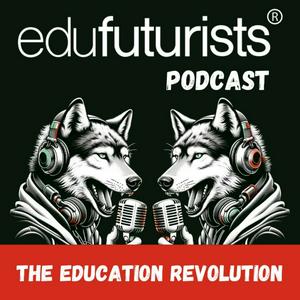
We are led to believe that the education system will continually evolve to meet the needs of learners and society. This has not happened. We need a revolution!
Podcast websiteListen to Edufuturists, Learning Easy English and many other podcasts from around the world with the radio.net app
Get the free radio.net app
- Stations and podcasts to bookmark
- Stream via Wi-Fi or Bluetooth
- Supports Carplay & Android Auto
- Many other app features
Get the free radio.net app
- Stations and podcasts to bookmark
- Stream via Wi-Fi or Bluetooth
- Supports Carplay & Android Auto
- Many other app features

Edufuturists
Scan code,
download the app,
start listening.
download the app,
start listening.
 New Zealand