

Listen to this podcast in the app for free: Download for free in the App Store
radio.net
Sleep timer
Save favourites
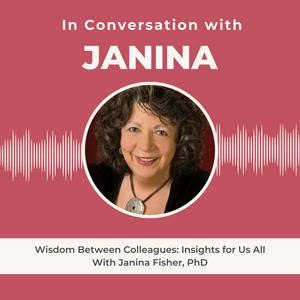
In Conversation with Janina Fisher: Wisdom Between Colleagues; Insights For Us All
Janina Fisher, PhD
Latest episode
34 episodes
When Good Therapists Cross Boundaries
19/08/2026 | 46 mins.In this reflective episode of In Conversation with Janina Fisher, Janina sits down with pioneering trauma clinician, researcher, and author Dr. Christine Courtois to look back on the evolution of trauma treatment—and the work that still lies ahead.
From the early days when childhood trauma and dissociation were largely dismissed by the mental health field, Janina and Christine revisit the groundbreaking ideas that transformed psychotherapy, including Courtois's enduring reminder that "remembering is not recovering." Together, they explore why healing requires far more than uncovering memories.
Their conversation courageously examines one of the profession's least-discussed topics: sexual boundary violations by therapists. Drawing from painful firsthand experiences as a clinical director, Courtois reflects on how these violations occur, why even skilled clinicians can become vulnerable, and why openness, supervision, and ongoing self-awareness are essential to protecting both therapists and clients.
Along the way, Janina and Christine discuss the importance of phase-oriented treatment, the growing integration of neuroscience and somatic therapies into trauma care, the challenges of treating dissociation, and the urgent need for trauma-informed education within graduate training programs. Their dialogue is both a tribute to how far the field has come and a passionate call to continue improving how clinicians understand and respond to complex trauma.
Healing is more than remembering
Boundaries protect healing
Stabilization is not a delay—it is treatment
Trauma therapy is relational
Graduate programs devote far too little attention to trauma and dissociation
Dissociation deserves greater recognition
Neuroscience and somatic approaches are reshaping the field
The field of trauma has made remarkable progress—but the work continues
Christine A. Courtois, PhD, ABPP, a board-certified counseling psychologist, retired from 35 years of clinical practice in Washington, DC, is now a licensed psychologist, author and consultant/trainer on trauma psychology and treatment in Lewes, Delaware. She is known for her work on adult survivors of incest and other developmental trauma in childhood and complex trauma and its treatment.
Dr. Courtois has published numerous chapters and journal articles as well as a dozen books. Sexual Boundary Violations in Psychotherapy co-edited with Drs. Lu Steinberg and Judie Alpert and the revised edition of Treating Complex Traumatic Stress Disorders, co-edited with Dr. Julian Ford were published in 2020. The revised edition of Treatment of Complex Trauma: A Sequenced, Relationship-Based Approach co-authored with Dr. Ford, will be published later this year. In addition to other professional books, she has written a consumer book entitled It’s Not You, It’s What Happened to You.
Dr. Christine Courtois Books
Healing the Incest Wound: Adult Survivors in Therapy (Norton Professional Books)
https://www.amazon.com/dp/0393705471?lv=shuf&channelId=500&plpRedirect=mhFallback
Sexual Boundary Violations in Psychotherapy: Facing Therapist Indiscretions, Transgressions, and Misconduct by Arlene Lu Steinberg (Editor), Judith L. Alpert (Editor), Christine Courtois (Editor)
https://www.amazon.com/dp/143383460X?lv=shuf&channelId=500&plpRedirect=mhFallback
Treatment of Complex Trauma: A Sequenced, Relationship-Based Approach by Christine A. Courtois (Author), Julian D. Ford (Author), John Briere (Foreword)
https://www.amazon.com/dp/1462506585?lv=shuf&channelId=500&plpRedirect=mhFallbackAll Communication is Communication
12/08/2026 | 36 mins.A thoughtful exploration of neurodivergence, creativity, and the transformative power of seeing clients not as problems to solve, but as people whose worlds are worth entering.
In this engaging and deeply insightful conversation, Janina Fisher sits down with drama therapist and neurodivergence specialist Liz McDonough to explore what becomes possible when therapists let go of assumptions and learn to follow the client’s lead. Drawing on nearly two decades of experience working with autistic and neurodivergent children, teens, and young adults, Liz shares how play, creativity, special interests, improvisation, and even puppets can become powerful pathways to connection, emotional expression, and healing.
Together, Janina and Liz challenge traditional ideas about communication, emotional processing, and therapy itself. They discuss why many neurodivergent clients struggle in conventional talk therapy, how therapists can move beyond agendas and expectations, and why curiosity is often more important than expertise. Through stories of puppet characters, improv groups, video games, and beloved fictional worlds, Liz demonstrates how meaningful therapeutic work happens when clinicians enter the client’s world rather than asking the client to enter theirs.
This conversation is a reminder that healing does not always begin with words. Sometimes it begins with a shared interest, a playful moment, or the willingness to see communication in forms we might otherwise overlook.
Key Takeaways:
Meet clients where they are
Special interests are therapeutic resources
Communication is bigger than words
Play creates safety
What looks like resistance may be communication
Growth happens through co-creation, not correction
Curiosity is more valuable than certainty
www.lizmft.com
Liz McDonough, LMFT, is a therapist, drama therapist, educator, consultant, and speaker specializing in supporting neurodivergent individuals and the professionals who work with them. Drawing on a unique background that bridges a theatrical career in New York with more than two decades as a licensed marriage and family therapist, Liz is known for her creative, strengths-based approach to helping neurodivergent people thrive in school, the workplace, and their communities.
A late-diagnosed ADHDer herself, Liz combines lived experience with clinical expertise, bringing warmth, humor, and practical insight to her teaching and consulting. She has presented nationally at conferences including the Psychotherapy Networker Symposium and the AAMFT Systemic Therapy Conference, and works with educators, therapists, and organizations to create more accessible, inclusive, and joyful environments.
Liz holds a B.A. in Drama from NYU's Tisch School of the Arts and a Master's degree in Counseling Psychology from the California Institute of Integral Studies. She has taught at the graduate level, supervised associate therapists toward licensure, and provides neurodiversity consultation internationally.
Liz lives in Durham, North Carolina, where she's often singing, hiking, or dreaming up her next creative idea—sometimes all at once.What If the Chemistry of Love Is Also the Chemistry of Trauma?
05/08/2026 | 47 mins.In this episode of In Conversation with Janina Fisher, Janina sits down with pioneering neuroscientist Sue Carter, whose groundbreaking work has transformed how we understand attachment, bonding, and the biology of human connection. Best known for her decades of research on oxytocin, Sue reflects on the scientific journey that led her from early studies of attachment and imprinting to uncovering the profound role hormones play in shaping relationships, caregiving, stress regulation, and resilience.
Together, Janina and Sue explore how our earliest relational experiences are not only psychological but deeply biological. Sue shares the surprising story of how her own experience of childbirth sparked questions that changed the trajectory of her career, leading to discoveries about oxytocin’s influence on stress, social bonding, and even trauma. Their conversation bridges neuroscience and clinical practice, illuminating how the body’s caregiving systems shape our capacity for connection throughout life.
Attachment is both emotional and biological
Oxytocin is far more than the “love hormone”
The body changes profoundly through caregiving
Trauma affects relational biology
Bonding is not limited to biology alone
Healing requires understanding the body, not just the mind
C. Sue Carter, PhD, is the Rudy Professor Emerita of Biology and Director Emerita of the Kinsey Institute at Indiana University. A pioneering researcher in the biology of attachment and social connection, her work has transformed our understanding of the hormones and neurobiological systems that shape bonding, caregiving, stress regulation, and human relationships. Through her groundbreaking studies of the socially monogamous prairie vole, Dr. Carter was the first to identify the physiological foundations of pair bonding and monogamy, helping to establish the scientific basis for contemporary research on oxytocin, vasopressin, and the biology of love and attachment. Her work continues to influence the fields of neuroscience, psychology, psychiatry, and trauma treatment.
https://kinseyinstitute.org/about/staff/carter-c-sue.htmlWhat If Your Therapist Doesn’t Know They’re “Unsafe”?
22/07/2026 | 42 mins.In this powerful conversation, Janina Fisher is joined by therapists, educators, and longtime collaborators Debra Chatman-Finley and Gliceria Pérez to explore the intersection of trauma, race, identity, and clinical practice.
Reflecting on a collaboration that began during the upheaval of 2020, the three discuss how experiences of racism, discrimination, and systemic inequity create ongoing conditions of threat that can profoundly shape the nervous system. Drawing parallels between chronic childhood trauma and the hypervigilance many Black and Brown individuals navigate every day, they examine how trauma is often rooted not only in discrete events but in environments where safety can never be assumed.
Together, they explore implicit bias in psychotherapy, the importance of therapists doing their own self-reflective work, and the ways race and culture are always present in the therapy room—even when they go unspoken. With honesty, warmth, and mutual respect, this conversation offers an invitation to move beyond good intentions toward deeper awareness, curiosity, and genuine connection.
Whether you're a clinician, student, or someone seeking to better understand the impact of race on lived experience, this episode offers valuable insights into what it means to create safety, build trust, and engage in meaningful conversations across difference.
Key Takeaways
Trauma can be an ongoing condition, not just a single event
Living under chronic threat changes the nervous system
Implicit bias affects every therapist
"Doing the work" starts with self-reflection
Race is always in the room
Safety cannot be assumed
Curiosity matters more than perfection
Honest conversations create connection
About the Guests
Debra Chatman-Finley is a Licensed Professional Counselor in private practice in Montclair, NJ, and a former Adjunct Professor at New York University, where she taught Racial and Social Microaggressions in Clinical Practice. She previously served as Director of Clinical Services for a domestic violence agency and is a graduate and former Associate Faculty of The Multicultural Family Institute. Trained in EMDR, Brainspotting, and Trauma-Informed Stabilization Treatment (TIST), with a Certification in Traumatic Stress from the Trauma Center at the Justice Resource Institute, Debra has devoted her practice to the impact of race in the therapeutic process and the effects of racial trauma—particularly on African American women and their parenting. She co-facilitates a monthly BIPOC Safety, Belonging and Dignity Gathering for The Academy of Therapy Wisdom, provides clinical consultation for BIPOC clinicians, and has led numerous workshops on racism, dissociation, implicit bias, and racial trauma in clinical practice.
Gliceria Pérez is a bilingual/bicultural therapist in private practice in New Jersey, working passionately with BIPOC and other marginalized communities from a social justice perspective. She is trained in EMDR, Sensorimotor Psychotherapy (Levels One and Two), and Trauma-Informed Stabilization Treatment (TIST), completed the Certificate Program in Traumatic Stress Studies at the Justice Resource Institute, and is currently pursuing Brainspotting certification. A former Director of Residential Services at a domestic violence program and Adjunct Faculty at NYU's Silver School of Social Work, Gliceria currently runs two support groups for Women of Color, co-facilitates the monthly BIPOC Safety, Belonging, and Dignity Gathering for the Academy of Therapy Wisdom, and co-leads the Awesome Clinicians of Color Book Club.
Together, Debra and Gliceria are developing a podcast and writing about their non-Eurocentric facilitation of a support group for Women of Color.
Janina's Links
Website: https://janinafisher.com/
Instagram: https://www.instagram.com/drjaninafisher/?hl=en-gb
New book: https://www.amazon.com/Embracing-Our-Fragmented-Selves-Therapists/dp/1683738918What If Calm Feels Worse Than Crisis?
15/07/2026 | 40 mins.In this candid and thought-provoking episode of In Conversation with Janina Fisher, Janina sits down with somatic therapist, educator, and founder of The Embody Lab, Dr. Scott Lyons, for a wide-ranging conversation about trauma, embodiment, and what it means to be fully alive.
Together, they reflect on the personal experiences that shaped their paths into trauma work, exploring how helping others can sometimes begin as a survival strategy of its own. Along the way, they unpack the nuanced differences between trauma and difficult life experiences, discuss the impact of growing up with dysregulated caregivers, and examine how our nervous systems learn to adapt in order to survive.
Janina and Scott also trace the evolution of somatic trauma therapy—from the early days when body-based approaches were often dismissed to the growing recognition that healing must involve more than insight alone. They explore why no single method can address the complexity of trauma, the importance of meeting each person as an individual rather than applying a formula, and how collaboration across disciplines is shaping the future of trauma treatment.
Blending humor, personal stories, and decades of clinical wisdom, this episode is a powerful reminder that healing is not about becoming someone new—it is about reconnecting with the parts of ourselves that had to be hidden in order to survive.
Dr. Scott Lyons is an international keynote speaker, serial entrepreneur, licensed Clinical
Psychologist, and Doctor of Osteopathy (Spain). He is the Founder and CEO of The Embody
Lab, the world’s largest online learning platform for body-based trauma therapies, reaching
more than two million practitioners across 30+ countries.
A recognized innovator in transformative wellness, Dr. Lyons is the creator of Somatic Stress
ReleaseTM, founder of Primal Reset Supplements, and architect of more than 40 advanced
professional trainings spanning trauma therapy, embodied leadership, integrative health, and
human performance. His work integrates neuroscience, somatics, and executive development
— earning him recognition from Oprah Daily as “The Beyoncé of Trauma Therapy.”
Beyond his clinical and educational leadership, Dr. Lyons serves as an executive coach and
wellness consultant to founders, CEOs, and high-level leaders, bringing a rare blend of
psychological depth, physiological precision, and strategic vision.
He is the bestselling author of Addicted to Drama: Healing Dependency on Crisis and Chaos in
Yourself and Others and host of The Gently Used Human and Hot Seat Therapy, his YouTube
series exploring transformation in real time.
https://www.drscottlyons.com/
https://theembodylab.com/
Book:
Addicted to Drama: Healing Dependency on Crisis and Chaos in Yourself and Others
Key Takeaways
1. Trauma and adversity are not always the same thing
2. Many helping professionals are drawn to healing through their own survival adaptations
3. Somatics is about more than trauma
4. There is no single "right" trauma therapy
5. Trauma often involves adapting away from our authentic selves
6. The future of trauma treatment is collaboration
7. Accessibility matters
8. Healing begins when we are met as we truly are
More Health & Wellness podcasts
 ZOE Science & NutritionEducation, Health & Wellness, Nutrition, Science
 Sleep Magic: Sleep Hypnosis & Meditation for Sleep PodcastAlternative Health, Education, Health & Wellness, Self-Improvement
 On Purpose with Jay ShettyBusiness, Health & Wellness, Mental Health
 The School of GreatnessBusiness, Education, Entrepreneurship, Health & Wellness, Mental Health, Self-Improvement
 The ImperfectsEducation, Health & Wellness, Mental Health, Self-Improvement
 Maintenance PhaseEducation, Health & Wellness, History
 Nothing much happens: bedtime stories to help you sleepFiction, Health & Wellness
 Get Sleepy: stories for sleepAlternative Health, Drama, Fiction, Health & Wellness, Kids & Family, Stories for Kids
 Huberman LabHealth & Wellness, Life Sciences, Science
 All In The MindHealth & Wellness, Life Sciences, Mental Health, Science
Trending Health & Wellness podcasts
 Boundless LifeEducation, Fitness, Health & Wellness, Self-Improvement
 The Whakapapa EffectEducation, Health & Wellness, Religion & Spirituality, Self-Improvement, Spirituality
 The Checkup with Doctor MikeHealth & Wellness, Medicine
 Andrew Green Sleep HypnosisHealth & Wellness
 The Luminescence Podcast with Schuyler GrantHealth & Wellness
 The Wellness Collective with Nat KringoudisHealth & Wellness
 Inner LightHealth & Wellness
 We Need To Talk with Toni StreetHealth & Wellness
 The Empty BowlHealth & Wellness
 My Friend's Erotic StoriesHealth & Wellness, Relationships, Sexuality, Society & Culture
 The Angry Therapist PodcastHealth & Wellness, Mental Health
 The Dr Vonda ShowFitness, Health & Wellness, Medicine
 Sleep Meditation for WomenHealth & Wellness, Mental Health
About In Conversation with Janina Fisher: Wisdom Between Colleagues; Insights For Us All
In Conversation with Janina Fisher features intimate, unscripted dialogues between Dr. Janina Fisher and leading voices in trauma therapy. Each episode explores the nuances of healing—from attachment wounds and somatics to IFS, memory reconsolidation, and anti-oppressive care. Thoughtful, relational, and deeply human, these conversations offer insight and inspiration for clinicians and curious minds alike.
Podcast websiteListen to In Conversation with Janina Fisher: Wisdom Between Colleagues; Insights For Us All, ZOE Science & Nutrition and many other podcasts from around the world with the radio.net app
Get the free radio.net app
- Stations and podcasts to bookmark
- Stream via Wi-Fi or Bluetooth
- Supports Carplay & Android Auto
- Many other app features
Get the free radio.net app
- Stations and podcasts to bookmark
- Stream via Wi-Fi or Bluetooth
- Supports Carplay & Android Auto
- Many other app features

In Conversation with Janina Fisher: Wisdom Between Colleagues; Insights For Us All
Scan code,
download the app,
start listening.
download the app,
start listening.
 New Zealand