
Listen to this podcast in the app for free: Download for free in the App Store
radio.net
Sleep timer
Save favourites
51 episodes
Scott & Mark Learn To... Scroll TikTok
21/10/2026 | 28 mins.In this episode, Scott Hanselman and Mark Russinovich try something new as Mark reacts to TikTok videos exploring the decline of reading, shrinking attention spans, and the impact of AI on critical thinking. What starts as a lighthearted experiment turns into a deeper debate about technology, education, and what it means to be human in an AI-driven world.
Takeaways:
How social media is changing our attention spans and reading habits
Why critical thinking matters in an AI-driven world
The risks of relying too heavily on AI to think for us
Who are they?
View Scott Hanselman on LinkedIn
View Mark Russinovich on LinkedIn
Watch Scott and Mark Learn on YouTube
Listen to other episodes at scottandmarklearn.to
Discover and follow other Microsoft podcasts at microsoft.com/podcastsScott & Mark Learn To... SemanticStart
07/10/2026 | 43 mins.In this episode, Scott Hanselman and Mark Russinovich dive into Mark’s new SemanticStart project, exploring how semantic search can make finding Windows apps, tools, and settings more intuitive. Along the way, they experiment with AI-assisted coding, discuss how agents could interact with local tools, and debate a bigger question: does prompting an AI actually count as programming?
Takeaways:
How semantic search combines keywords, embeddings, and enriched data
Why AI is changing the way developers build and prototype software
Whether prompting an AI should actually be considered programming.
Who are they?
View Scott Hanselman on LinkedIn
View Mark Russinovich on LinkedIn
Watch Scott and Mark Learn on YouTube
Listen to other episodes at scottandmarklearn.to
Discover and follow other Microsoft podcasts at microsoft.com/podcastsScott & Mark Learn To... Fool's Gold
23/09/2026 | 36 mins.In this episode, Scott Hanselman and Mark Russinovich dive into the security risks surrounding increasingly capable open-weight AI models and Mark’s latest research into a new defense called Fool’s Gold. Mark explains how safety guardrails can be removed from open models and explores an alternative approach: training models to provide convincing but deliberately flawed information when those protections are bypassed. They discuss how the technique works, whether it affects legitimate model behavior, and what it could mean for the future of AI safety as open models continue to advance.
Takeaways:
Why open-weight AI models can create new security risks
How Mark’s Fool’s Gold approach uses decoy responses as a defense decoy responses as a defense
Techniques that can protect against harmful use without degrading normal model performance
Who are they?
View Scott Hanselman on LinkedIn
View Mark Russinovich on LinkedIn
Watch Scott and Mark Learn on YouTube
Listen to other episodes at scottandmarklearn.to
Discover and follow other Microsoft podcasts at microsoft.com/podcastsScott & Mark Learn To...Enjoy the Journey
09/09/2026 | 20 mins.In this episode, Scott Hanselman and Mark Russinovich explore when to let AI solve a problem and when figuring it out is half the fun. They celebrate 30 years of Sysinternals by looking back at how the tools have evolved and how AI is changing software engineering and troubleshooting. Along the way, they debate efficiency versus learning by doing and consider a future where tools may increasingly be built for AI rather than humans.
Takeaways:
How Sysinternals has evolved over the past 30 years
How AI is changing software engineering and troubleshooting
Why future developer tools may be designed for AI, not humans
Who are they?
View Scott Hanselman on LinkedIn
View Mark Russinovich on LinkedIn
Watch Scott and Mark Learn on YouTube
Listen to other episodes at scottandmarklearn.to
Discover and follow other Microsoft podcasts at microsoft.com/podcasts
Produced by Hangar StudiosScott & Mark Learn To...Game
26/08/2026 | 33 mins.In this episode, Scott Hanselman and Mark Russinovich talk about gaming, from the countless hours they’ve spent playing over the years to why they gravitate toward very different types of games. Scott makes the case for immersive single-player experiences like Crimson Desert, while Mark explains why Battlefield is his go-to for switching his brain off. Along the way, the conversation turns to the future of AAA games, AI-generated content, and whether knowing something was created by AI changes how we value it.
Takeaways:
Different games serve different purposes for each player
Can AI-generated games deliver the same value as something created primarily by people
Does knowing the work and craftsmanship behind a game changes the experience
Who are they?
View Scott Hanselman on LinkedIn
View Mark Russinovich on LinkedIn
Watch Scott and Mark Learn on YouTube
Listen to other episodes at scottandmarklearn.to
Discover and follow other Microsoft podcasts at microsoft.com/podcasts
Produced by Hangar Studios
More Business podcasts


Trending Business podcasts









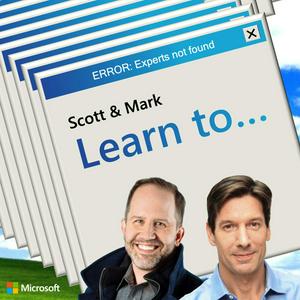
About Scott & Mark Learn To...
Join tech industry veterans Scott Hanselman and Mark Russinovich as they dive into the challenges and innovations of today’s fast-paced world. Whether you’re an experienced developer or simply curious about technology, each episode offers a fresh perspective on emerging trends, familiar topics, and insights that go beyond the strictly technical. From the latest in AI to effective ways to influence without authority, Scott and Mark set out to 'learn' something new in every episode, and they’re bringing you along for the ride. Join Scott and Mark for engaging discussions, expert advice, and a shared journey of learning and discovery. There's always something new to learn!
Listen to Scott & Mark Learn To..., Prof G Markets and many other podcasts from around the world with the radio.net app
Get the free radio.net app
- Stations and podcasts to bookmark
- Stream via Wi-Fi or Bluetooth
- Supports Carplay & Android Auto
- Many other app features
Get the free radio.net app
- Stations and podcasts to bookmark
- Stream via Wi-Fi or Bluetooth
- Supports Carplay & Android Auto
- Many other app features

Scott & Mark Learn To...
Scan code,
download the app,
start listening.
download the app,
start listening.
Scott & Mark Learn To...: Podcasts in Family
 New Zealand
