

Listen to this podcast in the app for free: Download for free in the App Store
radio.net
Sleep timer
Save favourites
55 episodes
My Ántonia (an excerpt), Willa Cather (1918)
18/08/2026 | 47 mins.“I was something that lay under the sun and felt it … and I did not want to be anything more. I was entirely happy. Perhaps we feel like that when we die and become a part of something entire, whether it is sun and air, or goodness and knowledge. At any rate, that is happiness; to be dissolved into something complete and great.”
When Willa Cather was only a child, her parents picked her up and headed west, along with her six siblings, to follow in the footsteps of her father’s family. They left behind a large and prosperous estate amongst the rolling, verdant hills of Virginia for the vast, treeless expanse of the plains. Their destination, Red Cloud, Nebraska, claimed only 1,000 residents at the time.
While My Ántonia is not strictly autobiographical, it plays the tune of a song written in her mind during those years of transition. Having already published two novels, Alexander’s Bridge and O Pioneers!, both to critical acclaim, she followed Sarah Orne Jewett’s urging to pour her childhood experience in Nebraska onto the page. This was the right advice at the right time, for, as H.L. Mencken observed, “[Cather] has got such a grip upon her materials—upon the people she sets before us and the background she displays behind them—that both take on an extraordinary reality. I know of no novel that makes the remote folk of the western prairies more real than My Ántonia makes them, and I know of none that makes them seem better worth knowing.”
The novel centers on the lives of Jim Burden and Ántonia Shimerda, two young people who find a natural friendship as they adjust to new lives: Jim, having arrived on the plains to live with his grandparents after the death of his parents; and Ántonia, who arrived as an immigrant with her family, ill-equipped to manage the hardness of frontier life. The story is told through Jim’s eyes, and one is struck with the steady interplay of comfort (his grandmother’s care, the sturdiness of his new home) and uncertainty (the risk of rattlesnakes, the expanse of tall grasses to the horizon that feel like the edge of the earth) of his situation. And so it is with life.
“That is happiness; to be dissolved into something complete and great.” Cather selected this line from My Ántonia as her epitaph, to be carved onto the face of her tombstone as a representation of her truest sentiment and the lasting claim that the region held on her soul.
Please enjoy…
Headline Image: Sunset of the Prairies | Albert Bierstadt, c. 1860-1880]
This is a public episode. If you would like to discuss this with other subscribers or get access to bonus episodes, visit classicsreadaloud.substack.com"After the Race," James Joyce (1914)
08/08/2026 | 15 mins.“Rapid motion through space elates one; so does notoriety; so does the possession of money.”
Although the short stories that comprise James Joyce’s Dubliners are now regarded as among the finest in the English language, Joyce had tremendous difficulty finding a publisher for them at the time: They were complete by 1907, but the full collection did not appear in print for another seven years. Joyce spent the intervening period dealing with over a dozen rejections, including a printer who burned all but one copy of the manuscript, which he had to re-obtain from them via subterfuge. It is a minor miracle that the collection survived long enough to see publication at all.
Given the harsh and sometimes violent reactions, one might expect a collection full of obscenity and vulgarity, of the sort that resulted in the censorship of Joyce’s later novel, Ulysses. However, Dubliners is never crude or gratuitous, even when it deals with the underbelly of Dublin society. What, then, explains the backlash? What could have so enraged the earliest members of Joyce’s public?
We may find part of the answer in “After the Race,” one of the collection’s earlier stories. Along with a few other early works, it saw initial publication in the Irish Homestead, a journal associated with the Irish Home Rule movement. They were soon pulled, however, after being deemed unsuitable for the paper’s readers. Perhaps the publication’s editors could sense Joyce’s disapproval of the strain of nationalism that was popular with his contemporaries, even through the subtlety of his writing.
“After the Race” centers on Jimmy Doyle, a young Irish man afforded the privilege of speeding around in luxurious cars with wealthy friends from the European continent. Although he feels elated to be seen among such elite company, he is soon in over his head and, in his longing to fit in amongst the heavy-hitters, is taken for the proverbial ride. Many have speculated that Joyce was projecting his own concerns over the Continent’s treatment of his homeland as the suckers at the poker table.
Political critique aside, Joyce’s writing is as rich and vivid as ever, making this story a delight for any reader, regardless of time or place.
Please enjoy...
Subscribe to Classics Read Aloud to receive future readings, including commentary and interesting “et cetera” tangent links, right to your inbox: https://classicsreadaloud.substack.com/subscribe
This is a public episode. If you would like to discuss this with other subscribers or get access to bonus episodes, visit classicsreadaloud.substack.com"Our Mark Twain," Helen Keller (1929)
31/07/2026 | 35 mins.“The great Mississippi River seemed forever flowing, flowing through his speech, through the shadowless white sands of thought. His voice seemed to say like the river, ‘Why hurry? Eternity is long; the ocean can wait.’”
Many societies are in the habit of elevating important cultural figures to the status of near-mythical heroes, and the United States is certainly no exception. So deep is the reverence for our great politicians, athletes, and artists that it can be easy to forget that they were human beings, complete with just as many complexities and nuances as anybody else. Understanding them as people often requires a considerable amount of investigation.
Such is very much the case for Mark Twain, who was already being lauded as one of the nation’s greatest writers and satirists during his lifetime and has only become more so since his death (find one of his short stories, “The Celebrated Jumping Frog of Calaveras County,” read aloud here). Perhaps it was in an effort to escape this towering image that he built Stormfield, the remote Connecticut mansion where he lived for the last two years of his life, which he initially called “Autobiography House.” As if in recognition of the fact that his public image had become something apart from who he was, he decorated one of the rooms with caricatures of himself.
One of the most insightful looks at the man behind the mythology comes from a similarly valorized figure in American culture: Helen Keller. Ironically, “Our Mark Twain,” an account of their friendship that she wrote for The American Magazine, deals not with the popular image of Twain but with “Mr. Clemens” as he appeared to those with whom he shared his final home. The result is more than a little melancholy, which may come as a surprise to those who are only familiar with Twain as the great humorist, but therein lies much of its value.
Stormfield burned to the ground some time after Twain’s death, leaving only a single stone wall behind, but Keller’s vivid writing preserves not only the estate itself but, more importantly, the human being who lived there.
Please enjoy…
Headline Image: Connecticut Landscape by John Henry Twachtman, c. 1890
An excerpt from My Ántonia by Willa Cather, 1918
“After the Race” by James Joyce, 1904
This is a public episode. If you would like to discuss this with other subscribers or get access to bonus episodes, visit classicsreadaloud.substack.com“Summer” from Jean Gourdon’s Four Days, Émile Zola (1874)
24/07/2026 | 27 mins.Just as the joyful exuberance of spring eventually gives way to the trying heat of summer, the innocent enchantments of childhood give way to the formative trials of adult life. Émile Zola was intimately familiar with such tests: Over 20 years after Jean Gourdon’s Four Days, he published J’Accuse...!, an open letter defending French army officer Alfred Dreyfus from charges of treason and accusing his persecutors of antisemitism, risking his career and personal safety in the process. He was charged with libel and had to spend over a year in England to avoid imprisonment.
Like Dreyfus, Jean Gourdon finds himself serving in the army in the second chapter of his story, though his tribulations come on the battlefield instead of in the courtroom. Courtesy of Zola’s vivid descriptions, one feels the sweltering summer heat almost as powerfully as the carnage of warfare. A trial by fire, indeed.
Perhaps, even decades before he felt called to live by such principles himself, Zola understood the importance of doing one’s duty in the face of any kind of danger the world can summon. Perhaps Gourdon, who remains faithful to the family he is building back home through all of his experiences, served as an unattainable ideal for his creator, who would go on to father multiple children out of wedlock. That would help to explain the novella’s dream-like, poetic style, which stands in stark contrast to the author’s usual approach.
Whatever the case may be, Zola’s deep understanding of the human condition and transportive powers of language are sure to make this chapter a moving experience no matter where and when it is experienced.
Please enjoy...
Subscribe to Classics Read Aloud to receive future readings, including commentary and interesting “et cetera” tangent links, right to your inbox: https://classicsreadaloud.substack.com/subscribe
This is a public episode. If you would like to discuss this with other subscribers or get access to bonus episodes, visit classicsreadaloud.substack.comThe Kiss, Anton Chekhov (1887)
17/07/2026 | 47 mins.I am just settling back in after walking the Camino de Santiago with my family. A new reading will be published next week. In the meatime, please enjoy a gem from the archives. Anton Chekhov’s “The Kiss” remains my favorite reading to date.
If you missed these stories the first time around, now is a great time to listen or explore the archives on your own (searchable by date recorded, by author, and by theme).
The writer Anton Chekhov was also the doctor Anton Chekhov. Between these two worlds, he supported his extended family with the practice of medicine and supported his artistic passions with the pen, declaring, “Medicine is my lawful wife and literature is my mistress.”
Anyone can guess which one he found more alluring.
In his short story “The Kiss,” Chekhov aligns our attention with a rather lonely, insecure Russian officer named Ryabovitch. In today’s parlance, you could say the poor guy suffers from “low T.” Through an unorthodox chance encounter, Ryabovitch’s sleeping imagination is sparked, igniting a dormant verve. He suddenly discovers a confidence, albeit fleeting, that he may not, after all, be left out of a normal sort of life. This awakening of the spirit is reflected in a number of small details—the trilling of a nightingale, the tingling sensation, almost of peppermint, on the cheek, the sense of time folding in on itself. That is the very allure of Chekhov’s style…the creative moment emerges from the mundane.
The playwright and critic Maurice Valency remarked of Chekhov, “His great talent lay in his sensitive depiction of life around him, the physical and psychic landscape in which he lived.” While Valency made this remark after, rather derogatorily, declaring Chekhov to have no philosophical point of view, the description is apt. (Although it must be said that Valency himself was known best for his stage adaptations of the work of others…how’s that for a point of view?)
Chekhov certainly had an angle. Once one reads but a handful of his short stories, it becomes abundantly clear that he was burdened with realism and buoyed by romanticism. Indeed, in reaction to seeing his plays continually brought to life as tragedies, he protested with his philosophical prod towards optimism:
“All I wanted was to say honestly to people: ‘Have a look at yourselves and see how bad and dreary your lives are!’ The important thing is that people should realize that, for when they do, they will most certainly create another and better life for themselves.”
I think you’ll agree that “The Kiss” delivers exactly that…a beckoning towards a better life, a more enduring happiness.
Please enjoy…
Headline Image: Blue Landscape by Marc Chagall, 1949
This is a public episode. If you would like to discuss this with other subscribers or get access to bonus episodes, visit classicsreadaloud.substack.com
More Education podcasts
 Keep The ChangeBusiness, Education, Self-Improvement
 The Rich Roll PodcastEducation, Health & Wellness, Self-Improvement, Society & Culture
 Everyday MāoriEducation, Language Learning
 The Mel Robbins PodcastEducation, Health & Wellness, Mental Health, Relationships, Self-Improvement, Society & Culture
 6 Minute EnglishEducation, Language Learning
 How to Be a Better HumanEducation, Self-Improvement
 Begin Again with Davina McCallEducation, Health & Wellness, Mental Health, Self-Improvement, Society & Culture
 The Ella EraEducation, Self-Improvement, Society & Culture
 Platypus Economics with Justin WolfersBusiness, Courses, Education, Science, Social Sciences
 IMO with Michelle Obama and Craig RobinsonEducation, Self-Improvement, Society & Culture
Trending Education podcasts
 Japanese podcast for beginners (Nihongo con Teppei)Education, Language Learning
 The Art of AccomplishmentBusiness, Education, Health & Wellness, Management, Mental Health, Self-Improvement
 Unfiltered with Dave LeteleEducation, Health & Wellness, Self-Improvement
 Coffee Break ItalianCourses, Education, Language Learning
 Conversations with TylerEducation, Society & Culture
 Confident Business EnglishEducation, Language Learning, Self-Improvement, Tutorials
 French Mornings with ElisaEducation, Language Learning
 English Learning PodcastEducation, Language Learning
 How I WriteArts, Books, Education, Society & Culture
 Finding Freedom with Peter CroneEducation, Health & Wellness, Mental Health, Religion & Spirituality, Self-Improvement, Spirituality
 Learn Japanese with Masa sensei!Courses, Education
 Learning English For WorkEducation, Language Learning
 Dreaming Spanish Podcast – Chats in Beginner SpanishEducation, Language Learning
 How Do They Afford That?Business, Education, Investing, Tutorials
 The Secret Sessions with Rhonda ByrneEducation, Self-Improvement
 醍醐WAYBusiness, Careers, Comedy, Education, Health & Wellness, Investing, Language Learning, Management, Marketing, Self-Improvement, Stand-Up Comedy, Tutorials
 The Tony Robbins ChannelBusiness, Education, Marketing
 Trauma RewiredEducation, Life Sciences, Science, Self-Improvement
 BEING HER with Margarita NazarenkoEducation, Health & Wellness, Relationships, Sexuality, Society & Culture
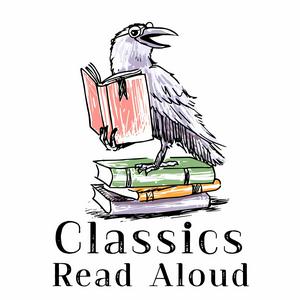
About Classics Read Aloud
You're never too young or too old to enjoy being read to. classicsreadaloud.substack.com
Podcast websiteListen to Classics Read Aloud, Keep The Change and many other podcasts from around the world with the radio.net app
Get the free radio.net app
- Stations and podcasts to bookmark
- Stream via Wi-Fi or Bluetooth
- Supports Carplay & Android Auto
- Many other app features
Get the free radio.net app
- Stations and podcasts to bookmark
- Stream via Wi-Fi or Bluetooth
- Supports Carplay & Android Auto
- Many other app features

Classics Read Aloud
Scan code,
download the app,
start listening.
download the app,
start listening.
 New Zealand