

Listen to this podcast in the app for free: Download for free in the App Store
radio.net
Sleep timer
Save favourites
217 episodes
217. The Art of Doing Nothing
02/10/2026 | 22 mins.Your dog is flat out at home for about ten minutes a day. The rest of the time they're on your heels, bringing you a toy or sighing at the back door, and the minute you take them somewhere new they behave like they've never left the house. LWDG Group Expert Claire Denyer and I get into the art of doing nothing, and why the dog who can switch off at home is the dog who switches on for you when the lead comes out. You'll hear why an obedience stay at the pub isn't the same as a settle, the mistake almost everyone makes the second their dog finally lies down, and the advice my uncle gave me that involved a park, a pack of sandwiches and no training at all. Claire lives with a house full of Labradors aged two to twelve, and every one of them settles every single day. If your dog treats every new place like the best day ever, start here.
Thanks for being here.
If this episode gave you something, a laugh, a lightbulb, or just the feeling that someone gets it, that's exactly why we make it.
📚 Not sure where to start with your gundog training? Grab the LWDG Gundog Progress Gap Map. Work out where you exactly where you are and what to work on next, no more guessing needed.216. The Dog Training Problems You Can Ignore, and the Ones That Come Back to Bite You
17/09/2026 | 25 mins.So there's a thing I see all the time with our members, (and if I'm honest, I do it myself) , which is you look at your dog and see the bit that's not quite working, and you just go and do training that is working instead. Foundation certificate, there's a wobble in something and the answer is "we'll go to novice anyway," and the wobble's still there; it never went anywhere, you just stopped looking at it.
This week I LWDG Group Expert Claire Denyer, and I pull that apart and work out where the line actually sits, because not everything you're avoiding matters, and some of it really, really does. Claire's got example after example: the boring stuff at home you let slide because it's "just the house," the fearful dog everyone wants to wrap in cotton wool when what they actually need is the opposite, and the bit about symptoms versus root causes properly stopped me in my tracks.
If you've been hoping a problem's going to sort itself out, don't skip this one.
Thanks for being here.
If this episode gave you something, a laugh, a lightbulb, or just the feeling that someone gets it, that's exactly why we make it.
📚 Not sure where to start with your gundog training? Grab the LWDG Gundog Progress Gap Map. Work out where you exactly where you are and what to work on next, no more guessing needed.215. Hot Weather Dog Training: What to Do When It Is Too Hot to Walk
04/09/2026 | 24 mins.Half past nine at night and it is still too warm to take them out. The ground is baked solid, the tarmac has been a hot plate all day, and every group you are in is telling you something different about water, about heat, and about whether you should be training at all right now. LWDG Group Expert Abi Reed has spent this whole summer working around exactly that, getting up at twenty five to five to beat the sun and moving everything else indoors. She walks through what heat is actually doing to your dogs, why the car is the part almost everybody forgets, what water really does and does not fix, and how much genuine training fits inside the one metre of space around you. If you have cancelled walks this summer and felt like a bad owner for it, this one will settle that. Hot weather does not mean no training. It means different training.
Thanks for being here.
If this episode gave you something, a laugh, a lightbulb, or just the feeling that someone gets it, that's exactly why we make it.
📚 Not sure where to start with your gundog training? Grab the LWDG Gundog Progress Gap Map. Work out where you exactly where you are and what to work on next, no more guessing needed.214. How to Get Your Gundog Back on Track After a Summer That Stopped Everything
21/08/2026 | 21 mins.Every plan you had for your dogs this summer is probably still sitting where you left it, underneath thirty degrees of heat nobody could train through. That is not a lost season. It is a pause, and LWDG Group Expert Claire Denyer has a lot to say about how you pick it back up. Stay for the heat conversation too, because if our summers keep doing this, getting our dogs ready for warm weather stops being optional. And Bark to School kicks off Sunday. Free, all of us, four days. Come and get your rhythm back.
KEY TAKEAWAYS
Generic advice can only ever stay generic. The moment somebody watches you train, the answer gets specific and the stalemate breaks.
A hot summer did not undo your training. It paused it, and pausing is not the same as going backwards.
If our summers keep looking like this one, preparing our dogs for heat becomes part of training rather than a footnote to it.
Small cohorts exist for a reason.
RESOURCES MENTIONED
Family Dog Services six-month gundog training programme, details on the Family Dog Services website
Claire and John can be reached at claire@familydogservices.co.uk or john@familydogservices.co.uk
Bark to School, free registration at ladiesworkingdoggroup.com/bts
Field and Fireside, providing giveaway prizes during Bark to School
LINKS
LWDG Membership: https://ladiesworkingdoggroup.com/
Bark to School (free): https://ladiesworkingdoggroup.com/bts
Free content library: https://ladiesworkingdoggroup.com/free-content/
Thanks for being here.
If this episode gave you something, a laugh, a lightbulb, or just the feeling that someone gets it, that's exactly why we make it.
📚 Not sure where to start with your gundog training? Grab the LWDG Gundog Progress Gap Map. Work out where you exactly where you are and what to work on next, no more guessing needed.213. Ticks, Lyme Disease & What Your Dog Needs You to Know
07/08/2026 | 46 mins.This episode of Found It, Fetched It features pharmacist and Lyme Resource Centre trustee Arlene Braley and vet Ian Wright (chair of ESCCAP) discussing tick prevention and tick-borne disease risks for dogs and people. Arlene shares her son’s long, severe illness after an unrecognised tick-borne infection, motivating her Lyme charity work and emphasis on knowledge and early action. Ian explains UK tick species and life cycle; peak activity now spans much of the year; practical avoidance (staying on paths, protective clothing, repellents); pet prevention products suited to lifestyle; and the importance of post-walk tick checks. They outline correct tick removal with proper tools and avoiding stressing the tick. Arlene describes human Lyme signs (EM rash, summer flu-like illness, fatigue, headaches, migratory joint pain), the need to document rashes and history, relevant NICE/Royal College guidance, and that there is no prophylactic antibiotic after a bite; they also mention the Tick Surveillance Scheme and available resources and tick-removal tools.
00:00 Ticks Are Everyone’s Problem
01:07 Meet The Guests
04:02 Arlene’s Lyme Story
07:27 Tick Threats Beyond Lyme
09:22 Tick Life Cycle Explained
11:20 Avoiding Bites Outdoors
12:33 Pet Preventatives That Work
15:24 Tick Checks And Hotspots
17:41 Tick Season Is Longer Now
18:48 Safe Tick Removal Basics
20:59 Symptoms After A Missed Tick
23:10 Early Detection Matters
23:53 Chronic Lyme In Pets
25:17 Tick Prevention Planning
27:29 Humans And Tick Risk
28:54 Wait And Watch Signs
29:18 Rash And Early Symptoms
32:34 Disseminated Lyme Symptoms
34:20 Advocating With Your GP
38:02 Treatment Guidance Basics
39:44 Tools And Tick Removal
41:43 Surveillance And Outdoor Safety
44:43 Wrap Up And Resources
Link to ESCCAP : https://www.esccapuk.org.uk/page/Ticks/7/
Thanks for being here.
If this episode gave you something, a laugh, a lightbulb, or just the feeling that someone gets it, that's exactly why we make it.
📚 Not sure where to start with your gundog training? Grab the LWDG Gundog Progress Gap Map. Work out where you exactly where you are and what to work on next, no more guessing needed.
More Education podcasts
 The Mel Robbins PodcastEducation, Health & Wellness, Mental Health, Relationships, Self-Improvement, Society & Culture
 The Jefferson Fisher PodcastEducation, Relationships, Self-Improvement, Society & Culture
 Keep The ChangeBusiness, Education, Self-Improvement
 Good Life ProjectBusiness, Education, Health & Wellness, Self-Improvement, Tutorials
 Learning English ConversationsEducation, Language Learning
 All Ears English PodcastBusiness, Education, Language Learning
 6 Minute EnglishEducation, Language Learning
 The Jordan B. Peterson PodcastEducation, Science, Society & Culture
 The Rich Roll PodcastEducation, Health & Wellness, Self-Improvement, Society & Culture
 anything goes with emma chamberlainEducation, Personal Journals, Self-Improvement, Society & Culture
Trending Education podcasts
 The Art of AwakeningAlternative Health, Education, Health & Wellness, Religion & Spirituality, Self-Improvement, Spirituality
 SOLVED with Mark MansonEducation, Self-Improvement
 Learning English from the NewsEducation, Language Learning
 LATE BLOOMERSEducation, Self-Improvement
 BEING HER with Margarita NazarenkoEducation, Health & Wellness, Relationships, Sexuality, Society & Culture
 THE ED MYLETT SHOWBusiness, Education, Entrepreneurship, Self-Improvement
 Dreaming Spanish Podcast – Chats in Beginner SpanishEducation, Language Learning
 Conversations with TylerEducation, Society & Culture
 A Wake Up CallEducation, Health & Wellness, Mental Health, Self-Improvement, Society & Culture
 Thinking in EnglishEducation, Language Learning
 Everyday Ayurveda and Yoga at Hale PuleAlternative Health, Education, Health & Wellness, Self-Improvement, Tutorials
 Motivation Daily by MotiversityEducation, Health & Wellness, Self-Improvement
 Learning Spanish for Beginners PodcastEducation, Language Learning
 Dear GabbyEducation, Health & Wellness, Mental Health, Religion & Spirituality, Self-Improvement, Spirituality
 Pride and Prejudice by Jane Austen - Free AudiobookEducation, Fiction
 Easy English: Learn English with everyday conversationsEducation, Language Learning, Places & Travel, Society & Culture, Tutorials
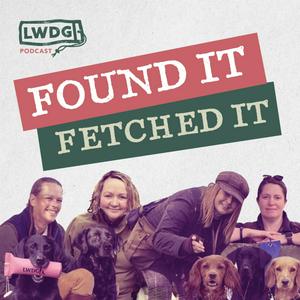
About Found It, Fetched It - Gundog Training for Family Life
Every fortnight, the Ladies Working Dog Group sits down with gundog experts, guest trainers, behaviourists and fellow handlers to talk about life with a high-drive gundog or working breed — the wins, the stuck weeks, and the stuff nobody warns you about when you bring one home.This isn't traditional gundog training, and it isn't generic pet advice. It's for women handling dogs bred to work, raising them as family pets, who want guidance that actually fits that reality.Part of the Ladies Working Dog Group — training, community and support for women with working-breed dogs. More at thelwdg.com.
Podcast websiteListen to Found It, Fetched It - Gundog Training for Family Life, The Mel Robbins Podcast and many other podcasts from around the world with the radio.net app
Get the free radio.net app
- Stations and podcasts to bookmark
- Stream via Wi-Fi or Bluetooth
- Supports Carplay & Android Auto
- Many other app features
Get the free radio.net app
- Stations and podcasts to bookmark
- Stream via Wi-Fi or Bluetooth
- Supports Carplay & Android Auto
- Many other app features

Found It, Fetched It - Gundog Training for Family Life
Scan code,
download the app,
start listening.
download the app,
start listening.
 New Zealand