
Listen to this podcast in the app for free: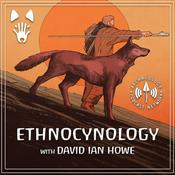 Download for free in the App Store
radio.net
Sleep timer
Save favourites
56 episodes
Tolkien and Dogs With Ash and Tilly - Ep 47
24/10/2026 | 1h 12 mins.In this episode, David is joined by fellow APN hosts Ashleigh Airey and Tilly Siebrecht to discuss all things Tolkien, but mainly the dogs in the Tolkien Legendarium.
The first discusses how they got into Tolkien and the Peter Jackson trilogy as kids, and how it grew into a lifelong love of the stories, and the episode quickly details from there.
Once they return from a break, the 3 hosts then get on track about the dogs of the Tolkien universe, including Huan from The Silmarillion, the wargs of Isengard, and the various wolves controlled by Sauron, as well as the dogs owned by Farmer Maggot.
They then wrap up by discussing lots more about Tolkien and the 3 trilogies, plus the new Rings of Power show.
Transcripts
For a rough transcript head over to: https://www.archaeologypodcastnetwork.com/ethnocynology/47
Links:
davidianhowe.com
Davidianhowe.com/store
ArchPodNet
APN Website: https://www.archpodnet.com
APN on Facebook: https://www.facebook.com/archpodnet
APN on Twitter: https://www.twitter.com/archpodnet
APN on Instagram: https://www.instagram.com/archpodnet
APN Shop
Affiliates
Motion
Hosted by Simplecast, an AdsWizz company. See pcm.adswizz.com for information about our collection and use of personal data for advertising.Flintknapping, Dogs, and David's Reading List - Ep 46
10/10/2026 | 47 mins.In this episode of Ethnocynology, David does a solo and audio exclusive of his recent weekend Knapping and goes over his reading list.
Dog sitting for Donny Dust, David spent the past weekend Flintknapping day and night in Donny’s shop and discusses how fun and engaging it is to craft stone tools, and discusses how it’s really interesting to rewatch the videos of yourself knapping, as you really start to notice how much you think and how an ancient homages would’ve thought when they were doing the same.
David also talks about the more than half dozen books he has read in the past few months in order to begin writing his book. Among the reading list is:
The Wide Wide Sea - Hampton Sides
Eavesdropping on Animals — George Bumann
The Rise of Wolf 8 — Rick McIntyre
The reign of Wolf 21 — Rick McIntyre
Thinking like a Wolf — Rick McIntyre
Our oldest companions— Pat Shipman
This Vast Enterprise — Craig Fehrman
Beyond words — Carl Safina
The social dog behavior and cognition— Kaminski and Marshall—Pescini
Transcripts
For a rough transcript head over to: https://www.archaeologypodcastnetwork.com/ethnocynology/46
Links:
davidianhowe.com
Davidianhowe.com/store
ArchPodNet
APN Website: https://www.archpodnet.com
APN on Facebook: https://www.facebook.com/archpodnet
APN on Twitter: https://www.twitter.com/archpodnet
APN on Instagram: https://www.instagram.com/archpodnet
APN Shop
Affiliates
Motion
Hosted by Simplecast, an AdsWizz company. See pcm.adswizz.com for information about our collection and use of personal data for advertising.An Interview with Wolf Observer and Author, Rick McItnyre - Ep 45
26/09/2026 | 58 mins.In this episode of Ethnocynology, David Ian Howe sits down with legendary Yellowstone wolf observer and author Rick McIntyre to discuss what decades of watching wild wolves have taught him about their complex social lives. Rick shares stories of some of Yellowstone’s most famous wolves, including Wolf 8 and Wolf 21, exploring leadership, adoption, family bonds, personality, cooperation, conflict, and even mercy.
The conversation also travels back into the Ice Age to ask what the first human hunter-gatherers may have seen in wolves and how that relationship could have eventually produced the domestic dog. Rick discusses how wolves may have entered human communities, why their family-oriented social structure made them uniquely compatible with people, and how wolves and early humans may have learned to hunt, cooperate, and live alongside one another.
Transcripts
Transcript
Links:
davidianhowe.com
Davidianhowe.com/store
History of Dog course
ArchPodNet
APN Website: https://www.archpodnet.com
APN on Facebook: https://www.facebook.com/archpodnet
APN on Twitter: https://www.twitter.com/archpodnet
APN on Instagram: https://www.instagram.com/archpodnet
APN Shop
Affiliates
Motion
Hosted by Simplecast, an AdsWizz company. See pcm.adswizz.com for information about our collection and use of personal data for advertising.Archaeologists and Classicists Discuss The Odyssey - Ep 44
12/09/2026 | 1h 14 mins.Christopher Nolan’s The Odyssey has been out for a few weeks, but how does it hold up to a panel of archaeologists and classicists?
In this episode, I’m joined by archaeologist, author, and YouTuber Raven Todd DaSilva, classicist, researcher, and PhD student Cosima Carnegie, and classicist and ancient dog expert Dr. Alyce Cannon to break down Nolan’s The Odyssey from the perspectives of archaeology, ancient history, and the original Homeric epic.
So how accurate is Christopher Nolan’s The Odyssey? And more importantly: does it actually matter? Let us know!
Links:
davidianhowe.com
Davidianhowe.com/store
History of Dog course
Raven - / digitiwithraven
Cosi: / cosisodyssey
https://cosisodyssey.substack.com/
Alyce: / historydoggos
ArchPodNet
APN Website: https://www.archpodnet.com
APN on Facebook: https://www.facebook.com/archpodnet
APN on Twitter: https://www.twitter.com/archpodnet
APN on Instagram: https://www.instagram.com/archpodnet
APN Shop
Affiliates
Motion
Hosted by Simplecast, an AdsWizz company. See pcm.adswizz.com for information about our collection and use of personal data for advertising.PROMO - 'Rock Art: An American Story' with Stephen Alvarez - Rock Art 171
29/08/2026 | 44 mins.Ethnocynology with David Ian Howe is taking a break this week, so please enjoy this episode of the Rock Art Podcast! In this episode, Alan speaks with Stephen Alvarez about his new book, Rock Art: An American Story, exploring the enduring significance of rock art across North America. They discuss Indigenous perspectives, the sacredness of rock art sites, and how ancient imagery continues to connect people with place, culture, and history. The conversation also considers the challenges of interpreting and dating rock art, and the importance of respecting and protecting these remarkable records of the past.
Transcripts
Transcript
Links
Rock Art Podcast - Episode 171
Rock Art: An American Story by Stephen Alvarez with Kate Nelson
davidianhowe.com
Davidianhowe.com/store
ArchPodNet
APN Website: https://www.archpodnet.com
APN on Facebook: https://www.facebook.com/archpodnet
APN on Twitter: https://www.twitter.com/archpodnet
APN on Instagram: https://www.instagram.com/archpodnet
APN Shop
Affiliates
Motion
Hosted by Simplecast, an AdsWizz company. See pcm.adswizz.com for information about our collection and use of personal data for advertising.
More Education podcasts










Trending Education podcasts
























About Ethnocynology with David Ian Howe
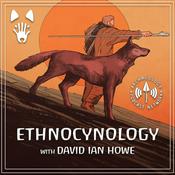
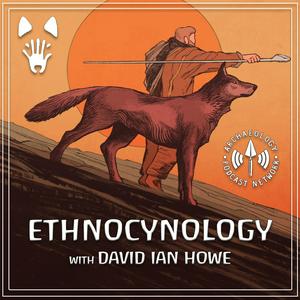
Ethnocynology is the study of dogs in human cultural contexts. This podcast, hosted by anthropologist and comedian David Ian Howe, explores the history and archaeology of dogs, the roles of dogs in modern media, and the latest findings from archaeology in general.
Podcast websiteListen to Ethnocynology with David Ian Howe, Begin Again with Davina McCall and many other podcasts from around the world with the radio.net app
Get the free radio.net app
- Stations and podcasts to bookmark
- Stream via Wi-Fi or Bluetooth
- Supports Carplay & Android Auto
- Many other app features
Get the free radio.net app
- Stations and podcasts to bookmark
- Stream via Wi-Fi or Bluetooth
- Supports Carplay & Android Auto
- Many other app features

Ethnocynology with David Ian Howe
Scan code,
download the app,
start listening.
download the app,
start listening.
Ethnocynology with David Ian Howe: Podcasts in Family
 New Zealand
