
Listen to this podcast in the app for free: Download for free in the App Store
radio.net
Sleep timer
Save favourites
244 episodes
The Comb-Shaped Career: Why Senior Women with Multiple Skills Will Win in the Age of AI | Prue Jones
01/11/2026 | 34 mins.AI cannot replicate relationships. And it's been my experience that projects will live or die, fail or succeed, on the basis of how strong the relationship is.
✨ 90 Day Bold Move Career Accelerator
Learn more here 👉 https://www.georgiehubbard.com/bold-moves
—
📚 The Bold Move
https://www.theboldmovebook.com
—
Connect with Georgie:
🔵 LinkedIn: https://www.linkedin.com/in/georgiehubbard/
🟪 Instagram: http://instagram.com/georgielhubbard
♦️ Website: https://www.georgiehubbard.com
—
Connect with Prue Jones:
🔵 LinkedIn: https://www.linkedin.com/in/prue-jones/
♦️ Website: https://www.pruejones.com.au
🟪 Instagram: @prudencemjones
—
For 20 years, Prue Jones has worked in the creative industries. She's watched technology change everything, from painting with gouache and pasting up type by hand to the birth of Adobe Creative Suite, the explosion of UX, and now the arrival of AI.
And here's what she's learned: design was never really about the visuals. It was always about the decisions. The taste. The judgment. The relationships. The ability to see the whole picture when everyone else is stuck in their silo.
Those are the things AI can't do. And those are the things that will make senior women with multiple skills absolutely invaluable in the age of AI.
In this episode of the Career Confidence Podcast, Georgie sits down with Prue Jones, a creative director, designer, and leader who's spent her career connecting people, process, and creativity across some of Australia's most complex projects.
Prue shares why she believes the future belongs to what she calls comb-shaped people, women who have depth across multiple verticals, not just one. Women who can take the 10,000-foot view. Women who understand that AI can automate tasks, but it can't reassure a client, anticipate what's coming next in a conversation, or hold a team together through messy change.
This conversation is about what happens when you stop trying to pick a lane and start leaning into the breadth of your experience. It's about why taste, judgment, and critical thinking are becoming more valuable, not less. It's about the difference between facilitating transactions and facilitating connection. And it's about why the next chapter of work isn't about being the most technical person in the room. It's about being the person who can bring it all together.
Prue also shares how she's upskilling herself on AI, why she's finding it fun rather than fearful, and the one thing she wishes more designers understood: just because we can doesn't mean we should.
In this episode:
How Prue's career has spanned 20 years in the creative industries, from gouache paint to AI
Why design is really a set of decisions, not just visuals
What Prue got wrong in 2017 when she said AI would never touch human creativity
Why she believes AI is here to stay, and why it's imperative to understand it even if you're uncomfortable using it
How she's using AI in her own design process, from Figma agents to Claude MCP
Why taste is the one thing the machine cannot manufacture on its own
What comb-shaped people are, and why senior women with multiple skills will win in the age of AI
Why having a 10,000-foot view is one of the most valuable skills you can bring to an organisation
Why AI cannot replicate relationships, and why soft skills are more important than ever
How to lean into the breadth of your experience rather than trying to pick one lane
Why Prue is moving from facilitating transactions to facilitating connection
What the experience economy looks like, from book doofs to sleep concerts
Why human connection will become even more valuable as the world becomes more reliant on technology
Why just because we can doesn't mean we should, and the unintended consequences of AI design decisions
How organisations need to think very carefully about who owns what in an interaction
One of the biggest takeaways from this conversation?
Your breadth of experience isn't a problem. It's your superpower.
The women who will thrive in the age of AI aren't the ones who can do one thing perfectly. They're the ones who can pull on multiple skills, take the 10,000-foot view, and bring people together.
They're the comb-shaped women. And they're about to become absolutely invaluable.Are You Being Underpaid? Why Women Need to Start Talking About Their Salaries
25/10/2026 | 51 mins.What’s the one thing every woman should do this week to start increasing her earning potential?
Women already earn less, save less, and retire with less. We're paid less for the same work. We take time out for caring responsibilities that go unvalued and unpaid. We're told we're not technical enough, not strategic enough, too risk averse. And now, AI is being trained on data that reflects all of that.
In this episode of AI Ready Women, Georgie and Lou sit down with Angela Meyer, an award winning strategist, speaker, bestselling author, and co founder of High Money and Project Gender. Angela has spent years championing women's economic equality, and she's written a brilliant paper called Counted In: What AI Could Be Fixing About Women's Financial Lives and Why It Isn't.
This conversation is about what happens when AI learns from a financial system that was built 250 years ago by men, for men. It's about why women are being given more conservative financial advice by AI, even when they ask the same questions as men. It's about the invisible work that women do every single day that has never been counted, never been valued, and is now being completely left out of the algorithms shaping our financial futures.
Angela shares why she believes this is one of the most pivotal moments we've had to redesign the system. Why talking about money openly is one of the most powerful things women can do. And why AI literacy isn't just a nice to have anymore. It's a wealth building tool.
She also unpacks the research from MIT and Stanford that found women using AI for financial advice ended up with $60,000 less wealth by age 60, largely because the AI assumed they were more risk averse. Not because they were. But because of the way they asked questions.
This episode will make you think differently about the stories you've been told about money, the beliefs you've inherited, and the systems you're trying to navigate.
In this episode:
How beliefs about money are shaped by the age of seven, and why that matters
The invisible work women do that has never been valued or counted in our economic system
What happens when AI is trained on data that reflects systemic gender bias
The MIT and Stanford study that found women ended up with $60,000 less wealth by age 60 when using AI for financial advice
Why AI assumes women are more risk averse, and how that assumption is costing women money
Why women are not risk averse, we just understand calculated risk differently
How the gender pay gap, the pink tax, and career interruptions compound over a lifetime
Why so many capable women feel shame about money, even when they're managing million dollar budgets at work
The why behind the buy exercise, and how it helps you get curious about your spending
Why talking about money openly with other women is one of the most powerful things you can do
How AI literacy can become a wealth building tool for women
Why women need to be creators of AI, not just consumers of it
The one thing every woman should do this week to start increasing her earning potential
One of the biggest takeaways from this conversation?
The best thing we can do is talk about money.
Because if we don't talk about how much we're getting paid with each other and with the men in our companies, chances are they're getting a lot more than us.
And if we don't start shaping the AI systems being built right now, we'll be locked into the same biased systems for decades to come. Only faster.
This is your reminder that you're not behind. You're not bad with money. The system was just never designed for you.
And now is the moment to change that.
—
✨ 60 Day Bold Move Career Accelerator
Learn more here 👉 https://www.georgiehubbard.com/bold-moves
—
📚 The Bold Move
https://www.theboldmovebook.com
—
Connect with Georgie:
🔵 LinkedIn: https://www.linkedin.com/in/georgiehubbard/
🟪 Instagram: http://instagram.com/georgielhubbard
♦️ Website: https://www.georgiehubbard.com
—
Connect with Lou Compagnone:
🔵 LinkedIn: https://www.linkedin.com/in/loucompagnone/
—
Connect with Angela Meyer:
🔵 LinkedIn: https://www.linkedin.com/in/angela-meyer-378b321a/
♦️ Website: https://www.angela-meyer.com
📚 Money Money Money by Angela Meyer and Rachel Davies - https://himoney.co/
📄 Counted In: What AI Could Be Fixing About Women's Financial Lives and Why It Isn'tVisibility Starts With You: Why Senior Women Need to See Their Own Value Before Anyone Else Will with Emma Buckland
18/10/2026 | 30 mins.You can carry your career around as a kind of blur. A sense of having done a lot, but without ever seeing what it actually adds up to.
That's what Emma Buckland realised when she finally sat down and looked at her career cumulatively.
Years of work. Thousands of people helped. Millions of dollars in impact. But she'd never properly counted it before.
And that's the thing about visibility. It doesn't start with LinkedIn. It doesn't start with speaking at conferences. It starts with becoming visible to yourself first.
In this episode of the Career Confidence Podcast, Georgie sits down with Emma Buckland, a mobile UX designer with 17 years of experience across financial services, public sector, and corporate design. Emma's career has taken her from acting to designing mobile experiences that have reached millions of people across Australia and the world.
But for years, she carried that work around without ever really seeing what it amounted to. Until she did the work of looking back, connecting the dots, and recognising the evidence that was already there.
This conversation is about what happens when you stop waiting for someone else to recognise your value and start seeing it for yourself. It's about why self-trust isn't just a mindset; it's grounded in evidence. It's about how Emma went from applying to speak at UX Australia thinking they'd say no, to delivering a talk that challenged the entire design industry on how we think about mobile and interrupted attention.
Emma also shares how she's thinking about AI, why she believes designers need to refuse to let it distract us from the things that are still broken, and why the real differentiator in an AI-driven world will be the quality of thinking behind the work, not just the speed at which we can produce it.
In this episode:
How Emma went from acting to mobile UX design, and why both come from the same impulse
Why she became fascinated by financial services and the complexity of designing within constraints
What's changed in 17 years of working in UX and mobile design
Why Emma believes we need to stay ahead of AI without letting it distract us from what's still broken in design
The blind spot in the design industry that Emma challenged at UX Australia: we're not designing for interrupted attention
Why the real differentiator in an AI world will be quality of thinking, judgment, curiosity, and adaptability
How Emma prepared for and delivered her talk at UX Australia, and why public speaking terrified her
Why visibility starts with becoming visible to yourself first
How Emma looked at her career cumulatively for the first time and realised the enormous contribution she'd never properly counted
Why self-trust is grounded in evidence, not just mindset
What happens when you carry your career around as a blur versus seeing what it actually adds up to
Why staying connected to the work and the people you've helped matters more than the numbers
How AI is changing Emma's work, from two weeks of research down to two hours, and the brain fry that comes with it
Why Emma believes AI needs governance and why designers shouldn't lose sight of the problems AI can't solve
What the boldest version of Emma looks like: not a bigger title, but using her experience more fully in ways that have wider effect
One of the biggest takeaways from this conversation?
Visibility begins with being able to see and articulate your own value before expecting anyone else to see it.
You can't position yourself for what's next if you've never properly counted what you've already done.
Behind those numbers are real people. People who received money they were owed, or managed something they'd been avoiding, or were protected from losing something because the experience finally worked.
That's not just a job. That's a contribution. And it's time you started seeing it that way.
—
✨ 60 Day Bold Move Career Accelerator
Learn more here 👉 https://www.georgiehubbard.com/bold-moves
—
📚 The Bold Move
https://www.theboldmovebook.com
—
Connect with Georgie:
🔵 LinkedIn: https://www.linkedin.com/in/georgiehubbard/
🟪 Instagram: http://instagram.com/georgielhubbard
♦️ Website: https://www.georgiehubbard.com
—
Connect with Emma Buckland:
🔵 LinkedIn: https://www.linkedin.com/in/emmabuckland/Is Your Experience Still Valuable in the Age of AI? Here’s How to Take the Lead
11/10/2026 | 44 mins.If you read the headline that AI is going to take your job, well, it might. But only if you don't learn how to work with it, you don't become more visible, and you don't know your worth.
The headlines are everywhere right now. AI will take your job. Agents are out of control. We're on the cusp of superintelligence. Or even worse, AI is going to destroy us all.
And underneath all of that noise, there's a quieter, more insidious message: you're falling behind. You're not technical enough. You don't know enough. You're not doing enough.
In this episode of the Career Confidence Podcast, Georgie and Lou sit down to talk about the language being used around AI right now, and what it's actually doing to us.
They call it FOE and FOMO. Fear of extinction and fear of missing out. Two narratives that sound like opposites but actually work the same way, creating urgency, panic and paralysis, and stopping us from asking the most important question of all: is this even a future we want?
Because here's the thing. The women who are thriving in this moment aren't the ones spiraling over every headline. They're the ones asking better questions. They're the ones staying calm, staying curious, and staying visible. They're the ones adding AI to what they already know, rather than trying to become someone else entirely.
This conversation is about how to move from AI fearful to AI ready. It's about protecting your headspace in a world designed to hijack your attention. It's about understanding who benefits when you believe the narrative. And it's about recognising that your years of experience, your wisdom, your leadership, none of that is obsolete. It just needs to be positioned correctly.
Georgie and Lou also unpack the real opportunities that exist right now for women who are willing to lead, not just keep up. From building agents to running Lunch and Learns. From asking where you want to lead, not just how to keep up. From using fear as fuel to innovate, not as a reason to hide.
In this episode:
The two narratives shaping AI right now: FOE (fear of extinction) and FOMO (fear of missing out)
Why the language of inevitability is stopping us from asking if this is even the future we want
How to protect your headspace when the headlines are designed to hijack your attention
Why coming from a place of calm, not chaos, is the most important thing you can do right now
The difference between being AI ready and being AI panicked
Why you need to ask: who's saying this, what do they gain if I believe it, and what choice does this story take off the table for me?
Why your subconscious is always listening, and why what you consume every day matters more than you think
How to use fear as fuel to innovate, not as a reason to hide
Why the question isn't how can I keep up, it's where do I want to lead
How one woman is using AI to build agents, run Lunch and Learns, and position herself as a leader in her organisation
Why your years of experience aren't obsolete, they just need to be positioned correctly
Why visibility, curiosity and critical thinking are the skills that will set you apart
How to add AI to what you already know, rather than trying to become someone else entirely
One of the biggest takeaways from this conversation?
Don't ask how you can keep up. Ask where you want to lead.
Because the women who are thriving right now aren't the most technical. They're the most visible, the most curious, and the most strategic.
They're the ones who understand that AI is a people problem, not just a technology problem.
And they're the ones who are staying AI ready, not AI fearful.
—
✨ 60 Day Bold Move Career Accelerator
Learn more here 👉 https://www.georgiehubbard.com/bold-moves
—
📚 The Bold Move
https://www.theboldmovebook.com
—
Connect with Georgie:
🔵 LinkedIn: https://www.linkedin.com/in/georgiehubbard/
🟪 Instagram: http://instagram.com/georgielhubbard
♦️ Website: https://www.georgiehubbard.com
—
Connect with Lou Compagnone:
🔵 LinkedIn: https://www.linkedin.com/in/loucompagnone/The Hidden Job Market: How This Tech Leader Got Her AI Role Without It Ever Being Advertised
04/10/2026 | 30 mins.Within minutes, an interview was locked in. Within weeks, she was in the third stage interview. And she landed the job.
That job was never advertised. It never hit a job board.
And it's exactly the case in point of how powerful your network is.
In this episode of the Career Confidence Podcast, Georgie sits down with Priscilla, a transformation and technology leader who's spent her career connecting people, process and technology in some of Australia's biggest retail and tech organisations.
After years at David Jones leading digital trannew way
sformation, Priscilla recently stepped into a brand new AI-focused role at a fast-growing scale-up.
And here's the thing: the role was never advertised.
An old boss reached out. They had a conversation. And within weeks, she was in.
This conversation is about what it actually takes to break into AI roles when you're not the most technical person in the room. It's about why curiosity and problem solving matter more than coding. It's about the hidden cost of AI that no one's talking about yet, like token usage, data governance, and how one workflow change can break three other systems if you're not thinking holistically.
Priscilla shares how she's upskilling herself on AI, from using Claude for personal budgeting to building agents, to learning how Copilot works across different Microsoft tools, and why it's changing almost every month.
She also talks about what companies are getting wrong when they rush to implement AI without clarity on the problem they're actually trying to solve, and why the soft skills, the human connection, the ability to bring people together, are going to be the most valuable skills in an AI-driven world.
In this episode:
How Priscilla landed her AI role through her network, not a job board
Why technology is no longer a specialised area but everyone's business
Whether you actually need a tech degree to work in AI
The skills companies are hiring for right now: orchestration, communication, and the human touch
What Priscilla's doing day to day in her new AI-focused role
Why data strategy and governance are foundational to AI success
How AI is being used to automate credit processing and document intake
How she's upskilling herself on AI, from Claude to Copilot to building agents
Why Copilot in PowerPoint was terrible six months ago and is now amazing
The hidden cost of AI that most people don't think about: token usage
Why companies need to think about cost control, not just cost effectiveness
The new questions you need to ask vendors: where is the metadata stored? Is it overseas? What's your AI governance?
Why most companies are applying AI without clarity on the problem they're solving
Why delivery is the easy part, and getting clarity is the hard part
How Priscilla thinks about the future of work and why humans will always be needed
Why soft skills, critical thinking, and the courage to ask questions will matter more than technical expertise
Her advice for women who feel intimidated by AI: embrace it, give it a go, and remember no one is an expert right now
One of the biggest takeaways from this conversation?
You don't need to be the most technical person to break into AI. You need to be curious, ask good questions, and understand how to connect technology with people and business outcomes.
As Priscilla puts it: if anyone says they're an expert in AI right now, you should probably ask why they think that.
Because no one is. Everyone is learning. And that's exactly why now is the time to start.
—
✨ 60 Day Bold Move Career Accelerator
Learn more here 👉 https://www.georgiehubbard.com/bold-moves
—
📚 The Bold Move
https://www.theboldmovebook.com
—
Connect with Georgie:
🔵 LinkedIn: https://www.linkedin.com/in/georgiehubbard/
🟪 Instagram: http://instagram.com/georgielhubbard
♦️ Website: https://www.georgiehubbard.com
—
Connect with Priscilla
🔵 LinkedIn: https://www.linkedin.com/in/priscillachanau/
More Business podcasts





Trending Business podcasts


















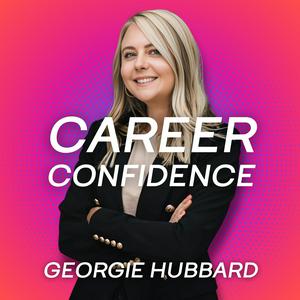
About Career Confidence
Not behind. Unpositioned. Career Confidence is for leaders ready to make their next bold move in the age of AI.
Hosted by Georgie Hubbard, career coach, recruiter, Director of CH Talent Solutions, and creator of the Bold Moves Career Accelerator, this show is for senior leaders who've already done the proving and are ready for what's next.
Each episode brings honest conversations with business leaders and women who've navigated real turning points: the restructure, the redundancy, the promotion that went to someone else, the AI shift nobody prepared them for. Real strategy, not just inspiration. The language, positioning, and clarity to make your next move the right one, not just the first one offered.
Whether you're overlooked for a role you know you're ready for, in motion after a restructure, or applying and not landing, this podcast gives you the frameworks and the permission to back yourself, in a market where AI is changing what gets you chosen.
Clarity creates calm. Calm creates confidence. Confidence creates momentum. That's Career Confidence.
Podcast websiteListen to Career Confidence, A Bit of Optimism and many other podcasts from around the world with the radio.net app
Get the free radio.net app
- Stations and podcasts to bookmark
- Stream via Wi-Fi or Bluetooth
- Supports Carplay & Android Auto
- Many other app features
Get the free radio.net app
- Stations and podcasts to bookmark
- Stream via Wi-Fi or Bluetooth
- Supports Carplay & Android Auto
- Many other app features

Career Confidence
Scan code,
download the app,
start listening.
download the app,
start listening.
Career Confidence: Podcasts in Family
 New Zealand

