
Listen to this podcast in the app for free: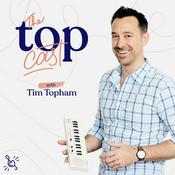 Download for free in the App Store
radio.net
Sleep timer
Save favourites
482 episodes
483: 6 Free Music Games for Your Piano Lessons with Georgina Wilson
19/10/2026 | 55 mins.When a student says “I don’t know”, it doesn’t always mean they don’t know. Today, I’m chatting with Georgina Wilson, creator of Busy Little Turtle and Marketing Manager for TopMusic, about using games and off-bench activities with beginners. She shares three no-equipment games that work just as well online as in person. Stay tuned for a free handout with six games to try in your lessons this week.
Tim explained why games and off-bench activities matter when teaching beginners.
Georgina shared how she teaches online from her simple, low-tech studio.
Why “I don’t know” can mean a gap, low confidence or zoning out.
How reframing a question re-engaged a student who said “I don’t know” 37 times.
Why today’s fast-paced, screen-driven kids need more engaging lessons.
How bringing in students’ interests, like Pokemon and video games, makes theory click.
She explained the Ribbit Game, where students make a sound on a chosen note.
How the Secret Animal game gets students repeating lines without complaint.
Why the “I went to the shops” memory game builds note and chord knowledge.
How magnets and posted printables make physical games work in online lessons.
Tim explained how the new Creativity Boost Cards tool matches a card to your lesson.
Why the students who stay longest have teachers who think outside the box.
Links Mentioned
Download your free resources attopmusic.co/busylittleturle
Georgina's website:www.busylittleturtle.com
Georgina's Facebook page:Busy Little Turtle
Georgina's Instagram page:@busylittleturtle
Today’s Guest
Georgina Wilson is a piano teacher who is a big believer in making music education fun and engaging for both the students and the teachers. Georgina runs BusyLittleTurtle, a site dedicated to quirky and creative music resources that help make teachers’ teaching lives a little easier and give students another reason to love their music lessons!
Today’s Sponsor
Beginners quit when reading music feels like decoding. Andrew Ingkavet built the Musicolor Method® to change that. Color makes notation readable from the first lesson, then scaffolds step by step to the standard staff. Piano is where most kids start, and the approach now works on ukulele, guitar, violin, viola, and drums too. Andrew is a guitarist, singer, songwriter, and composer, a former MTV VJ, and author of Superpowers Through Music. He founded Musicolor Method NYC, where 20 teachers use the method every week. Today he trains music teachers of every instrument to bring Musicolor into their own studios.
Find your beginner teaching breakthrough. Take the free assessment at MusicolorMethod.com/topcast
TopMusicPro 14-Day Free Trial
Heard about TopMusicPro Membership? As a valued podcast listener, I’d like to offer you a special chance to try our community free for 14 days. You can access a treasure trove of teaching resources, professional development courses, and creative lesson ideas. Click the link below to access your exclusive 14-day free trial for our Studio Membership.
TOPMUSICPRO MEMBERSHIP 14-DAY FREE TRIAL482: Singing with Beginners: Kazoos, Clapbacks and Confidence with Nikki Loney
12/10/2026 | 44 mins.Most of us weren't taught to sing in our own lessons, so it's no wonder singing feels awkward to teach. Today, I'm sharing a conversation I recorded with voice teacher Nikki Loney back in 2021, and the message is just as relevant now. We talk vocal roller coasters, kazoos, and why singing should be a normal part of lessons from day one, whatever instrument you teach.
Tim explained why he's revisiting this 2021 conversation on singing.
Nikki shared how a lack of vocal resources led her to co-found Full Voice Music.
Why singing supports pitch, language development and emotional regulation.
How vocal roller coasters use playful exploration instead of pitch correction.
Nikki explained why singing can feel especially vulnerable for older students.
Why movable do lets each student start on a pitch that feels comfortable.
How hand signs give young students something physical to focus on.
Tim shared why kazoos make a gentle, low-pressure entry point into singing.
Why normalizing singing early prevents awkwardness later in exams or tests.
Nikki shared how vocalizing a phrase can shape expressive instrumental playing.
How Full Voice workbooks grew from one-page activity sheets into a full curriculum.
Nikki shared her advice for teachers wanting to try singing with reluctant students.
Links Mentioned
Find out more about the Spotlight Session here.
The Full Voice Website
The Full Voice Free Resources
Today’s Guest
Inspired by the youngest students in her private voice studio, Nikki Loney challenges teachers to redefine what a singing lesson looks like for a child. Founder and CEO of FULL VOICE Music, she works with music education specialists, children’s composers, and musicians to create music education resources for the young vocal student. She is an active member of NATS, and The FULL VOICE Podcast (part of the NATSCast Network) serves the independent voice teacher and has a global audience.
Today’s Sponsor
Beginners quit when reading music feels like decoding. Andrew Ingkavet built the Musicolor Method® to change that. Color makes notation readable from the first lesson, then scaffolds step by step to the standard staff. Piano is where most kids start, and the approach now works on ukulele, guitar, violin, viola, and drums too. Andrew is a guitarist, singer, songwriter, and composer, a former MTV VJ, and author of Superpowers Through Music. He founded Musicolor Method NYC, where 20 teachers use the method every week. Today he trains music teachers of every instrument to bring Musicolor into their own studios.
Find your beginner teaching breakthrough. Take the free assessment at MusicolorMethod.com/topcast
TopMusicPro 14-Day Free Trial
Heard about TopMusicPro Membership? As a valued podcast listener, I’d like to offer you a special chance to try our community free for 14 days. You can access a treasure trove of teaching resources, professional development courses, and creative lesson ideas. Click the link below to access your exclusive 14-day free trial for our Studio Membership.
TOPMUSICPRO MEMBERSHIP 14-DAY FREE TRIAL481: What 5 Playing-Based Methods Taught Us (And What They Didn’t Say About Adults) with Ian Belloso
05/10/2026 | 1h 7 mins.Five methods in four weeks taught Tim and Ian a lot, but one question kept surfacing: what about the adults? Today Ian Belloso returns, not as co-host this time, but as the guest, to synthesize everything from last month's playing-based series. We talk the gate not the date, Simply Music's lead sheets for Beatles songs, and why four-chord composing hooks teenagers.
Tim and Ian wrapped up the month-long series on playing-based methods.
Ian shared his biggest surprise: every method starts reading in lesson one.
Why reading really means decoding notation, not understanding music itself.
Tim explained Neil Moore's idea of widening the door, not lowering the bar.
How Kendra's Suzuki background proved more flexible than expected.
Ian explained why his method map compares approaches by teacher readiness, not type.
Why "it's the gate, not the date" reframes when students start reading.
How adult students already arrive with a playlist and developed musical taste.
Tim shared why asking for a student's top ten songs still works as a hook.
Ian explained why adults become their own life coach without a parent figure.
How Simply Music's lead sheets get adults playing Beatles songs quickly.
Tim highlighted four-chord composing as a powerful hook for teenage students.
Links Mentioned
Ian Belloso's studio:Piano Belloso Music
Ian's YouTube channel:www.youtube.com/@pianobellosomusic
Playing First Piano Methods Handout
Today’s Guest
Ian Belloso is a pianist, composer, music producer, and educator based in Bethlehem, PA. He's the founder of Piano Belloso Music, a playing-based piano studio serving students of all ages, and Techier Teacher, a coaching platform helping online music educators simplify their tech and build confident, connected virtual studios. His work lives at the intersection of structure and creativity — building systems that remove barriers so people can focus on what matters: expression, learning, and human connection.
Today’s Sponsor
Beginners quit when reading music feels like decoding. Andrew Ingkavet built the Musicolor Method® to change that. Color makes notation readable from the first lesson, then scaffolds step by step to the standard staff. Piano is where most kids start, and the approach now works on ukulele, guitar, violin, viola, and drums too. Andrew is a guitarist, singer, songwriter, and composer, a former MTV VJ, and author of Superpowers Through Music. He founded Musicolor Method NYC, where 20 teachers use the method every week. Today he trains music teachers of every instrument to bring Musicolor into their own studios.
Find your beginner teaching breakthrough. Take the free assessment at MusicolorMethod.com/topcast
TopMusicPro 14-Day Free Trial
Heard about TopMusicPro Membership? As a valued podcast listener, I’d like to offer you a special chance to try our community free for 14 days. You can access a treasure trove of teaching resources, professional development courses, and creative lesson ideas. Click the link below to access your exclusive 14-day free trial for our Studio Membership.
TOPMUSICPRO MEMBERSHIP 14-DAY FREE TRIAL480: Listen, Sing, Play, Read: Exploring the Yamaha Approach with Bec Stewart
28/09/2026 | 49 mins.Everyone can create music, that's the whole point of this month's series. Today marks Ian Belloso's last episode as co-host, and we're wrapping up playing-based teaching with Bec Stewart, twenty-year Yamaha veteran and now our TopMusic Community Manager. We unpack why Yamaha puts listening first, how group lessons build musical confidence, and Bec's own listen, sing, play, read sequence.
Tim and Ian wrapped up this month's series with the Yamaha method.
Bec explained how Yamaha integrates reading rather than deferring it.
Why cultivating the ability to create sits at the heart of Yamaha's mission.
How group lessons help students internalize music through solfège and singing.
Bec shared why one-on-one lessons struggle to recreate that same collaborative spark.
Why timely education means teaching each skill when a child is developmentally ready.
How a four-year-old's strongest sense shapes the Yamaha starting point.
Ian asked how movement and off-the-bench activities fit into Yamaha lessons.
Why ongoing teacher training keeps a sound-first curriculum consistent at scale.
Bec shared why she still teaches listening, singing and playing before reading.
How writing her own sight reading books filled a gap for exam prep.
Links Mentioned
Rebecca Stewart’s Website – Sight Reading Secrets
Rebecca's Sight Reading Secrets book Series
Rebecca's Jam Sessions Course
TMPP 016: Learning to Teach Beginners with Rebecca Stewart
TopMusic 12-Week Studio Transformation
Today’s Guest
Rebecca Stewart grew up surrounded by music, listening to her three older sisters practise, and knew early that she wanted to teach children in a fun, creative way. On the recommendation of her piano teacher at Melbourne University she trained in the Yamaha method, and went on to teach with Yamaha Music Education Centres for twenty years, from 1998 to 2018. She became a national teacher trainer for Yamaha, travelling to Toronto and Tokyo for teacher development, and in 2016 to Jakarta, where her eight-year-old student performed his own composition at the Asia Pacific Junior Original Concert.
She's also the author of the Sight Reading Secrets series, now nine books strong. Today, Rebecca is the Community Manager and Head of Certification at TopMusic, where she's known for a warm, collaborative and creative approach to piano teaching.
Today’s Co-Host
Ian Belloso is a pianist, composer, music producer, and educator based in Bethlehem, PA. He's the founder of Piano Belloso Music, a playing-based piano studio serving students of all ages, and Techier Teacher, a coaching platform helping online music educators simplify their tech and build confident, connected virtual studios. His work lives at the intersection of structure and creativity — building systems that remove barriers so people can focus on what matters: expression, learning, and human connection.
Ian Belloso's studio:Piano Belloso Music
Ian's YouTube channel:www.youtube.com/@pianobellosomusic
TopMusicPro 14-Day Free Trial
Heard about TopMusicPro Membership? As a valued podcast listener, I’d like to offer you a special chance to try our community free for 14 days. You can access a treasure trove of teaching resources, professional development courses, and creative lesson ideas. Click the link below to access your exclusive 14-day free trial for our Studio Membership.
TOPMUSICPRO MEMBERSHIP 14-DAY FREE TRIAL479: Teaching Piano the Way Kids Learn to Talk with Krista Jadro
20/09/2026 | 1h 2 mins.Reading music might be the very last thing we should teach. Today, I'm joined by co-host Ian Belloso and our guest Krista Jadro, piano faculty at the Gordon Institute for Music Learning, to unpack music learning theory and the concept of audiation. We talk through resting tones, singing before symbols, and why students don't open a reading book until well into their training.
Tim explained how discovering music learning theory changed his own teaching.
Krista shared how a jazz band video convinced her MLT was the way to teach.
Why tonal and rhythm patterns are taught separately in music learning theory.
How audiation differs from simply hearing or memorizing a tune.
Krista demonstrated audiation using a folk tune to show tonic and dominant patterns.
Ian asked how singing and movement fit into a typical beginner lesson.
Why the resting tone gives students a sense of home in the music.
How movement stays continuous rather than stopping to keep the beat.
Tim explained the difference between music learning theory, GIML and Music Moves for Piano.
Why formal reading isn't introduced until around age ten to twelve.
Krista shared her one practical exercise every teacher can try tomorrow.
Why Edwin Gordon believed every student is born with musical potential.
Links Mentioned
Music Learning Academy Website
Music Learning Academy YouTube Page
Music Moves for Piano
TMPP 046: Music Moves with Krista Jadro and Hannah Mayo
Watch the episode on YouTube
https://youtu.be/2j4scGuvW_I
Today’s Guest
Krista Jadro is the owner of Music Learning Academy, an online resource center dedicated to supporting teachers using Music Moves for Piano curriculum by Marilyn Lowe for audiation-based piano instruction. Through Music Learning Academy, Krista provides online courses, leads study groups, and presents and hosts webinars and workshops. Krista has a thriving piano studio at Brookline Music School, where she previously redesigned and directed the early childhood and group piano program. Krista is on the piano faculty with the Gordon Institute for Music Learning (aka GIML) and has a Bachelor and Masters in Music Education from University of Delaware. Krista co-hosts the Keys to Music Learning Podcast with fellow GIML faculty member Hannah Mayo, exploring all things audiation-based piano instruction.
Today’s Co-Host
Ian Belloso is a pianist, composer, music producer, and educator based in Bethlehem, PA. He's the founder of Piano Belloso Music, a playing-based piano studio serving students of all ages, and Techier Teacher, a coaching platform helping online music educators simplify their tech and build confident, connected virtual studios. His work lives at the intersection of structure and creativity — building systems that remove barriers so people can focus on what matters: expression, learning, and human connection.
Ian Belloso's studio:Piano Belloso Music
Ian's YouTube channel:www.youtube.com/@pianobellosomusic
TopMusicPro 14-Day Free Trial
Heard about TopMusicPro Membership? As a valued podcast listener, I’d like to offer you a special chance to try our community free for 14 days. You can access a treasure trove of teaching resources, professional development courses, and creative lesson ideas. Click the link below to access your exclusive 14-day free trial for our Studio Membership.
TOPMUSICPRO MEMBERSHIP 14-DAY FREE TRIAL
More Business podcasts






Trending Business podcasts





















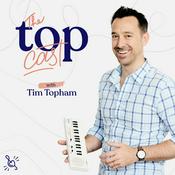
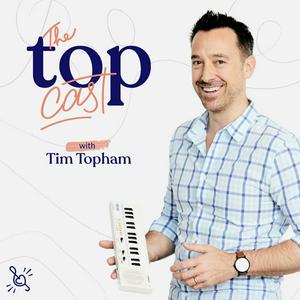
About The TopCast: The Official Music Teachers' Podcast
The original podcast for growth-minded instrumental music and voice teachers since 2015. Our mission at TopMusic is to empower music teachers to find and nurture their innate creativity so they can teach lessons that are innovative, integrated and inspiring, and that will have a positive, life-long impact on their students. Tune in weekly as we interview teachers and creators from around the world and unpack fun and exciting ideas to maximise your teaching and studio business success.
Podcast websiteListen to The TopCast: The Official Music Teachers' Podcast, Prof G Markets and many other podcasts from around the world with the radio.net app
Get the free radio.net app
- Stations and podcasts to bookmark
- Stream via Wi-Fi or Bluetooth
- Supports Carplay & Android Auto
- Many other app features
Get the free radio.net app
- Stations and podcasts to bookmark
- Stream via Wi-Fi or Bluetooth
- Supports Carplay & Android Auto
- Many other app features

The TopCast: The Official Music Teachers' Podcast
Scan code,
download the app,
start listening.
download the app,
start listening.
The TopCast: The Official Music Teachers' Podcast: Podcasts in Family
 New Zealand
