

Listen to this podcast in the app for free: Download for free in the App Store
radio.net
Sleep timer
Save favourites
29 episodes
Where It All Began | Shopfront Ep1
08/09/2026 | 19 mins.How did a small university program become a bridge between students, academics and communities for more than 30 years?
In this first episode, we explore the origins of UTS Shopfront and the ideas that shaped it from the beginning. Through stories from founders, community partners and former students, we hear how collaboration, trust and a commitment to social justice helped create a program with lasting impact.
From preserving overlooked histories to supporting emerging organisations, we learn that the most enduring outcomes are often not the projects themselves, but the relationships built along the way.
Voices
Professor Paul Ashton - Co-Founder and former alternate director, UTS Shopfront
Pauline O’Loughlin - Founding program manager, UTS Shopfront
Bonney Djuric - Historian and Activist
Maia Ihemeje - Founder, Yung Prodigy
Professor Alison Page - Former Shopfront student
Scott Burns - Former Shopfront student and UTS Alumni
Hosted by Dr Mehal Krayem
Credits
Produced by Ali Aitken
Researchers - Dr Margaret Malone and Dr Cale Bain
Change the Story is an Impact Studios podcast.Body Mapping - making the invisible visible | Mapping What Matters Ep4
02/09/2026 | 22 mins.What if some of a community's greatest strengths can't be captured in a survey, a spreadsheet - or even a map?
If Episode 3 encouraged us to see the wider system, this episode invites us to look more deeply into lived experience.
Host Dr. Katie Blair is joined by Dr. Barbara Doran, an arts-based researcher and educator, to explore body mapping - a creative participatory method that helps people express experiences, knowledge and strengths that are often difficult to put into words.
Barbara reflects on the limitations of traditional community engagement approaches, arguing that even strengths-based methods like asset mapping can overlook the emotional, embodied and deeply personal experiences that shape people's lives. Through stories from her own practice - including projects with young people, parents and carers, and women who have experienced trauma - she demonstrates how body mapping creates opportunities for people to share richer, more nuanced stories about themselves and their communities.
The conversation explores how body mapping works in practice, from creating safe and supportive spaces through to using creative prompts and storytelling to uncover insights that conventional consultation methods rarely reveal. Barbara also shares practical guidance for introducing body mapping into your own work.
More than an arts-based activity, body mapping is a different way of listening. It reminds us that knowledge doesn't only live in words - it also lives in memory, emotion, sensation and lived experience. When we create space for people to express these experiences in their own way, we don't just gather better information - we create the conditions for connection, understanding and transformation.
Voices
Katie Blair, PhD is Manager, Research and Evaluation at the Centre for Social Justice and Inclusion at the University of Technology Sydney. Her work focuses on community-engaged research, participatory evaluation and strengthening community voice to support meaningful social change.
Barbara Doran, PhD is an arts-based researcher and educator at the University of Technology Sydney's Transdisciplinary School. Her work explores how creative and embodied methods can deepen participation, surface lived experience and support more inclusive approaches to research, education and community engagement.
Credits
Written by Mitra Gusheh, Tshinta Morris, Anusha Muller and Katie Blair. Recorded and edited by Jane Curtis and Lachlan A'Court. Executive producer: Sarah Gilbert. Mapping What Matters is made by UTS Impact Studios, in collaboration with the UTS Centre for Social Justice and Inclusion and Glebe Youth Service. This project was also supported by the Paul Ramsey Foundation.Mapping What Matters is made by UTS Impact Studios, in collaboration with the UTS Centre for Social Justice and Inclusion and Glebe Youth Service. This project was also supported by the Paul Ramsey Foundation.
Resources
Mapping What Mapping: Body mapping summary sheet
Boydell, K.M (Eds). (2020). Applying body mapping in research: an arts-based method. Routledge.The Harwood Approach - turning Outward | Mapping What Matters Ep5
02/09/2026 | 13 mins.What happens when we stop planning for communities and start listening to them instead?
Bringing together the themes explored throughout the series, host Dr. Katie Blair is joined by community builder and youth advocate Giane Cole to explore the Harwood Approach - a philosophy of community engagement built on one simple idea: before we plan, we need to listen.
Drawing on decades of experience working alongside young people and communities, Giane reflects on how genuine community conversations can shift perceptions, build trust and create lasting change. Through stories from her own practice, she describes how creating space for people to share their aspirations led to youth-led action, transformed public spaces and changed the way communities viewed young people - not as problems to solve, but as leaders and active contributors.
Giane explores what it really means to turn outward: placing community aspirations ahead of organisational priorities, valuing lived experience alongside professional expertise, and recognising that people, relationships and stories are some of a community's greatest assets. Giane also shares a practical five-step guide for facilitating meaningful community conversations and translating what people care about into collective action.
As the series draws to a close, this episode reminds us that every engagement method carries a mindset. When we begin by listening deeply, sharing power and trusting communities to shape their own future, we don't just change the questions we ask - we change the possibilities that emerge.
Whether you're working in community development, education, government or social impact, this final episode offers practical inspiration for creating more authentic, community-led change.
Voices
Katie Blair, PhD is Manager, Research and Evaluation at the Centre for Social Justice and Inclusion at the University of Technology Sydney. Her work focuses on community-engaged research, participatory evaluation and strengthening community voice to support meaningful social change.
Giane Cole is a community builder, youth advocate and community development practitioner with extensive experience supporting young people and communities to lead positive change. Her work focuses on youth participation, community engagement and creating the conditions for communities to identify their own strengths, build relationships and shape their own futures through meaningful participation.
Credits
Written by Mitra Gusheh, Tshinta Morris, Anusha Muller and Katie Blair. Recorded and edited by Jane Curtis and Lachlan A'Court. Executive producer, Impact Studios: Sarah Gilbert. Mapping What Matters is made by UTS Impact Studios, in collaboration with the UTS Centre for Social Justice and Inclusion and Glebe Youth Service. This project was also supported by the Paul Ramsey Foundation.
Resources
Mapping What Matters - The Harwood Approach Summary Sheet
Harwood Institute for Public Knowledge
Harwood Institute - Being Turned OutwardAppreciative Inquiry - starting with strengths | Mapping What Matters Ep2
26/08/2026 | 13 mins.What if the very first question we ask determines everything that follows?
In this episode of Mapping What Matters, host Dr. Katie Blair is joined by social impact practitioner and systems thinker Mitra Gusheh to explore Appreciative Inquiry - a strengths-based approach that begins not with problems, but with possibility.
Mitra reflects on how asset mapping has evolved from a radical, community-led practice into something that is often reduced to lists, inventories and data collection. Through stories from her own work, she asks whether we’ve become so focused on identifying assets that we’ve forgotten why we are looking for them in the first place.
Drawing on the origins of appreciative inquiry, Mitra explains how beginning with stories of success rather than stories of need can fundamentally change the way people experience participation. Through examples including the 100 Voices project and community conversations with older residents, she demonstrates how asking different questions uncovers relationships, strengths and possibilities that conventional engagement approaches often overlook.
More than a facilitation technique, Appreciative Inquiry is a different way of seeing communities. It reminds us that people are experts in their own lives, that every community holds stories worth learning from, and that meaningful change begins the moment we ask a better question.
Whether your facilitating workshops, designing programs, or working alongside communities, this episode offers practical ways to shift conversations from problems to possibility.
Voices
Katie Blair, PhD is Manager, Research and Evaluation at the Centre for Social Justice and Inclusion at the University of Technology Sydney. Her work focuses on community-engaged research, participatory evaluation and strengthening community voice to support meaningful social change.
Mitra Gusheh is a social impact practitioner and leader whose work focuses on advancing social justice, human rights and community-led change. She has extensive experience designing and facilitating community engagement processes that centre lived experience, strengthen relationships and support communities to imagine and create positive futures through strengths-based approaches such as Appreciative Inquiry.
Credits
Written by Mitra Gusheh, Tshinta Morris, Anusha Muller and Katie Blair. Recorded and edited by Jane Curtis and Lachlan A'Court. Executive producer: Sarah Gilbert. Mapping What Matters is made by UTS Impact Studios, in collaboration with the UTS Centre for Social Justice and Inclusion and Glebe Youth Service. This project was also supported by the Paul Ramsey Foundation.
Mapping What Matters is made by UTS Impact Studios, in collaboration with the UTS Centre for Social Justice and Inclusion and Glebe Youth Service. This project was also supported by the Paul Ramsey Foundation.
Resources
Mapping What Matters - Appreciative Inquiry Summary Sheet
Cooperriider, D.L., Whitney, D. & Stavros, J.M. (2006). The Appreciative Inquiry Handbook: For Leaders of Change (2nd ed). Crown Custom Publishing Inc.
100 Voices: engaging community through deep listening
The Centre for Appreciative InquiryLife-centred Design - seeing the bigger picture | Mapping What Matters Ep3
26/08/2026 | 15 mins.How can we move beyond mapping what exists to designing the futures our communities need?
Having explored strengths-based thinking in the previous episodes, host Dr. Katie Blair is joined by Professor Martin Tomitsch to ask a different question: what happens when we zoom out and understand the systems that shape communities?
Martin introduces listeners to life-centred design, an approach that expands our focus beyond individual people to include relationships, ecosystems, institutions and future generations. While identifying community strengths remains important, he argues that real change requires us to understand the wider systems in which those strengths exist.
Drawing on examples ranging from IKEA's iconic Poäng chair to climate adaptation and disaster recovery, Martin introduces three practical steps - systems mapping, the middle-out approach, and backcasting - that help practitioners understand complexity, build coalitions and create shared visions for the future.
Rather than treating communities as isolated places with fixed boundaries, this episode invites us to see them as interconnected systems. By combining strengths-based thinking with systems design and future-focused planning, Martin demonstrates how we can move beyond identifying assets to creating the conditions for lasting change.
Whether you're working in community development, local government, design or policy, this episode provides practical tools for navigating complexity and planning collaboratively for the future.
Voices
Katie Blair, PhD is Manager, Research and Evaluation at the Centre for Social Justice and Inclusion at the University of Technology Sydney. Her work focuses on community-engaged research, participatory evaluation and strengthening community voice to support meaningful social change.
Professor Martin Tomitsch is Head of the Transdisciplinary School at the University of Technology Sydney. His research focuses on life-centred design, systems thinking and transdisciplinary approaches to addressing complex societal challenges. Martin works with governments, industry and communities to design more sustainable, inclusive and future-focused systems and services.
Credits
Written by Mitra Gusheh, Tshinta Morris, Anusha Muller and Katie Blair. Recorded and edited by Jane Curtis and Lachlan A'Court. Executive producer: Sarah Gilbert. Mapping What Matters is made by UTS Impact Studios, in collaboration with the UTS Centre for Social Justice and Inclusion and Glebe Youth Service. This project was also supported by the Paul Ramsey Foundation.Mapping What Matters is made by UTS Impact Studios, in collaboration with the UTS Centre for Social Justice and Inclusion and Glebe Youth Service. This project was also supported by the Paul Ramsey Foundation.
Resources
Mapping What Matters - Life-Centred Design Summary Sheet
Tomitsch, M. (2025). More-than-human cities: how to bring life- centred design principles to urban spaces. In E. Rosenzweig, &; A. Davis (eds), Usability for the World: Building BetterCities and Communities (pp. 97-124). Spinger.
Tomitsch, M. et al. (2024). ‘Reflections on the usefulness and limitations of tools for life-centred design’, Design Research Society.
Tomitsch, M. & Baty, S. (2023). Designing Tomorrow: Strategic Design Tactics to Change Your Practice. BIS Publishers.
More Business podcasts
 Planet MoneyBusiness, News
 Prof G MarketsBusiness, Investing
 The Property Academy PodcastBusiness, Investing
 The Diary Of A CEO with Steven BartlettBusiness, Education, Society & Culture
 Shared LunchBusiness, Investing
 Think Fast Talk Smart: Communication TechniquesBusiness, Careers, Comedy, Education, Improv, Language Learning
 The Happy Saver Podcast - Personal Finance in New ZealandBusiness, Investing
 Cheques and BalancesBusiness
 The CurveBusiness, Investing
 A Bit of OptimismBusiness, Careers, Education, Self-Improvement
Trending Business podcasts
 Hunger & Heart with Kaila ColbinBusiness, Society & Culture, Sports
 Pretty BusyArts, Business, Fashion & Beauty
 Build with Leila HormoziBusiness, Education, Entrepreneurship, Management, Tutorials
 Figuring Out with Raj ShamaniBusiness, Education
 The Brand HunchArts, Business, Design, Education, Entrepreneurship, Marketing
 TED BusinessBusiness
 Money Grows on TreesBusiness, Education, Entrepreneurship, Investing, Tutorials
 限界突破ライフハックBusiness, Careers
 Decoder with Nilay PatelBusiness, Technology
 Australian Investors PodcastBusiness
 Ones and ToozeBusiness, Business News, History, News
 強者我朋友 by 志祺七七Animation & Manga, Arts, Business, Daily News, Design, Education, Leisure, Marketing, News, News Commentary, Self-Improvement
 High Performance with Josh Phegan and Alexander PhillipsBusiness, Technology
 知行小酒馆Business
 Gooaye 股癌Business
 World Business ReportBusiness, Business News, News
 Garys EconomicsBusiness
 Thoughtful Money with Adam TaggartBusiness, Investing
 Stretton UnfilteredBusiness
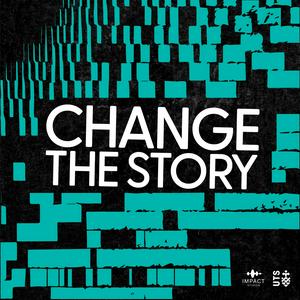
About Change the Story
People working to change systems from the ground up — community leaders, researchers, activists and practitioners. Through short series and conversations, you’ll hear big ideas, urgent debates, and practical examples of community-led solutions in action.
This podcast was previously called Life's Lottery, and relaunched in 2026 as Change the Story. Produced by UTS Impact Studios.
Podcast websiteListen to Change the Story, Planet Money and many other podcasts from around the world with the radio.net app
Get the free radio.net app
- Stations and podcasts to bookmark
- Stream via Wi-Fi or Bluetooth
- Supports Carplay & Android Auto
- Many other app features
Get the free radio.net app
- Stations and podcasts to bookmark
- Stream via Wi-Fi or Bluetooth
- Supports Carplay & Android Auto
- Many other app features

Change the Story
Scan code,
download the app,
start listening.
download the app,
start listening.
Change the Story: Podcasts in Family
 New Zealand