
Listen to this podcast in the app for free: Download for free in the App Store
radio.net
Sleep timer
Save favourites
75 episodes
Ep 76 The Parenting Paradox with Dr. Jenny Brown
14/10/2026 | 50 mins.In this episode of Conversations with Kristi, Kristi sits down with Dr. Jenny Brown, a family therapist and researcher with over 35 years of experience in children’s mental health. Dr. Jenny is the founder of the Parent HOPE Project and the author of the upcoming book, The Parenting Paradox.
Together, they explore the "worry cycle" that many modern parents find themselves trapped in. Dr. Jenny shares grounded, evidence-based insights into how our protective instincts and constant fears of "getting it right" can inadvertently crowd out our children’s ability to grow and solve their own problems. This conversation is a powerful call to move from being "reactors" to "relators," giving our kids the breathing space they need to thrive.
Content Covered in This Episode
The Parenting Paradox: Why sometimes "less help is more" and how over-pathologizing children can lead to increased helplessness.
"What Now" vs. "What If": A simple mental shift to move from catastrophizing the future to managing the facts of today.
Post-Traumatic Growth: Challenging the narrative that trauma always leads to long-term symptoms and exploring the human capacity to reset and grow.
The Over-Parenting Project: How the pressure to perfectly "attune" to our kids can actually make them shrink back in their development.
Grounding Your Job Description: Returning to the basics of providing safety, love, and education rather than trying to manufacture a child's happiness.
Navigating School Refusal: Why making a "project" out of getting a child back to school often backfires and how to support them by working on what you can control.
Mental Health Literacy vs. Labels: Discussing the unintended consequences of labeling normal emotions as mental health disorders.
Self-Regulating Protective Instincts: The importance of holding back our urge to rescue so our children can find their own inner resources.
Why This Conversation Matters
Parents today are more stressed than ever, often fueled by a constant stream of information telling them how to be "perfect". Dr. Jenny reminds us that when we over-monitor and over-fix, we stop treating our children as capable humans and start treating them as projects.
This episode encourages parents to reclaim their confidence. By stepping back and managing our own anxieties, we allow our children the space to navigate their own emotional ups and downs, ultimately preparing them for the realities of adulthood.
About Dr. Jenny Brown
Dr. Jenny Brown is a family therapist, mental health social worker, and clinical researcher. She has spent decades teaching clinicians and parents how to foster resilience in children. She is a leading voice in applying Bowen Family Systems Theory to parenting, helping families move away from worry-based patterns toward steady, grounded connection.
Learn More About Dr. Jenny Brown
🌐 Website: parenthopeproject.com.au
Book details from the website: parenthopeproject.com.au/the-parenting-paradox-new-book-2026-bloomsbury/ And the podcast: www.buzzsprout.com/2073632/episodes?search=true
Kristi’s Resources for Parents & Carers
If you’re feeling the pressure of parenting "what ifs," Kristi offers trauma-informed tools to help you stay steady and grounded.
🔗 Explore resources: www.kristimcvee.com
💡 Tool Highlight: Kristi’s Body Safety Card Deck – designed to help you have open, non-fearful conversations with your kids.
Support Services (Australia)
Lifeline: 13 11 14 | lifeline.org.au
Beyond Blue: 1300 22 4636 | beyondblue.org.au
Kids Helpline (ages 5–25): 1800 55 1800 | kidshelpline.com.au
If you are in immediate danger, please contact emergency services.Ep 75 Friendship, Sleepovers & Scaffolding Safety with Michelle Mitchell
11/10/2026 | 1h 3 mins.In this powerful return to Conversations with Kristi, Kristi sits down with parenting author and speaker Michelle Mitchell to explore one of the most important parts of growing up: friendship.
Together, Kristi and Michelle unpack the questions parents often find themselves asking when their children begin navigating sleepovers, friendships, different family rules, technology, boundaries and social situations without them.
Rather than approaching these experiences from a place of fear, Michelle encourages parents to think about how they can scaffold safety while still protecting the fun, connection and memories that make childhood meaningful.
This conversation goes beyond simply asking whether something is "safe". Kristi and Michelle explore how parents can ask better questions, recognise when a response gives them useful information, help children develop self-advocacy skills, and gradually prepare them to navigate relationships independently.
Michelle also introduces the framework at the heart of her new book, Friendship Smart: safety, chemistry and effort. Together, they look at friendship as a set of skills children can learn and practise - skills that will support them not just through primary school and the tween years, but throughout their lives.
Content Covered in This Episode
Scaffolding Safety Around Sleepovers: Moving beyond simply deciding whether sleepovers are "safe" and instead thinking about the practical questions parents can ask before their child attends one.
Asking the Right Questions: Understanding why parents should feel comfortable asking who will be supervising, who else will be in the house, how technology will be managed and where children will be sleeping.
When Parents Get a Defensive Response: Exploring why a safe parent should be able to understand reasonable questions about their child's safety - and why defensiveness can provide useful information to parents.
Protecting Friendship Experiences: Recognising that safety and fun are not opposites. The goal is not to remove children from experiences, but to create the conditions where they can enjoy friendship safely.
Different Families, Different Rules: Navigating situations where children encounter family environments with different expectations, boundaries and approaches to technology, supervision and independence.
Teaching Children to Speak Up: Helping children develop the confidence to communicate when something doesn't feel right and understand that their voice matters.
Self-Advocacy as a Life Skill: Looking beyond individual childhood situations and helping children develop the skills they will need to advocate for themselves as they grow.
Making Sleepovers Safe AND Fun: Why safety planning doesn't have to make an experience rigid or uncomfortable, and how simple preparation can help children have positive experiences with friends.
Creating Connection and Memories: Exploring the importance of shared activities, food, games, movies and simple moments that give children meaningful friendship experiences.
Knowing When to Step Back: Understanding that parents don't need to solve every friendship problem. Instead, they can create opportunities for children to practise navigating relationships themselves.
Looking at the Bigger Picture: Michelle encourages parents to zoom out from today's friendship drama and ask whether a particular pattern will serve their child in ten years' time.
Safety, Chemistry and Effort: Michelle's framework for understanding healthy friendships and relationships through three key elements: safety, chemistry and effort.
Learning What a Relationship Feels Like: Helping children notice how they feel after spending time with someone and use that feeling as information about the quality of a relationship.
Friendships as Practice for Future Relationships: Recognising that children's friendships provide an opportunity to develop relationship skills that will continue into adolescence and adulthood.
Moving Beyond the "Hard No": Teaching children that saying no does not always have to be all-or-nothing. Michelle explores the importance of helping children communicate boundaries while understanding that relationships have edges and limits.
Children Don't Exist to Please Us: A powerful reminder for parents that children were not born to agree with us, please us or do everything we want them to do - their existence alone is enough for us to love them.
Why This Conversation Matters
For many parents, the question of whether to let their child attend a sleepover can bring up a huge amount of uncertainty. We want our children to experience friendship, independence, fun and belonging, while also making sure we have done everything we reasonably can to keep them safe.
Michelle offers a different way to think about that balance.
Rather than allowing fear to take over or avoiding these experiences altogether, parents can learn to scaffold safety. Asking straightforward questions, understanding the environment, setting appropriate boundaries and watching how children respond to their experiences can all become part of building their child's independence.
The same principle applies to friendship more broadly. Instead of trying to fix every friendship drama, parents can zoom out and ask: If this pattern continued, would it serve my child in ten years' time?
Because the goal isn't simply to help children survive the next friendship problem. It's to give them the relationship skills they need for life.
About Michelle Mitchell
Michelle Mitchell is an Australian parenting author and speaker known for her compassionate and grounded advice for parents of tweens and teens. She has worked closely with families for three decades, including through a charity that delivered life-skills programs and psychological services to thousands of young people each year.
Michelle is the author of 10 books for parents and tweens, with more than 200,000 books sold worldwide. Her latest book, Friendship Smart, provides parents and young people with practical tools for understanding friendship, boundaries, trust, belonging and healthy relationships.
Learn More About Michelle Mitchell
📖 Book: Friendship Smart: A Parent's Guide
🎁 Friendship Smart Resources: Michelle's website includes additional resources, blogs, webinars and practical tools to support parents and young people with friendship and relationship skills.
📚 Parenting Resources: Michelle provides practical information for parents on friendships, communication, social media, resilience, anxiety and supporting tweens and teens.
Kristi’s Resources for Parents & Carers
Kristi provides practical, trauma-informed education to help parents and carers build safer environments and have confident conversations with their children.
For parents preparing for sleepovers, Kristi recommends starting with the practical questions discussed in this episode and using her Sleepover Safety Checklist as a guide.
🔗 Explore Kristi’s resources: www.kristimcvee.com
Kristi's blog: www.kristimcvee.com/blog/parenting-from-confidence-not-fear-a-risk-assessment-guide-for-playdates-sleepovers-and-daycare
Tool Highlight: Kristi’s Body Safety Card Deck provides an easy way to create regular, age-appropriate conversations with children about body safety, boundaries and speaking up.
Support Services (Australia)
Lifeline: 13 11 14 | lifeline.org.au
Beyond Blue: 1300 22 4636 | beyondblue.org.au
Kids Helpline (ages 5–25): 1800 55 1800 | kidshelpline.com.au
If you are in immediate danger, please contact emergency services on 000.Ep 74 Your Kids Aren't Fine. They're Waiting Until You Are with Melanie Enders
30/09/2026 | 55 mins.In this episode of Conversations with Kristi, Kristi sits down with psychotherapist and family constellations facilitator Melanie Enders to tackle one of the most common yet undersupported family structures: the blended family. Drawing from both her professional expertise and her own lived experience navigating a large, complex blended system, Mel sheds light on the emotional weight children carry when their "family frame" changes.
Together, they dive into why parents in survival mode often struggle to see what their kids truly need and the long-term internal damage caused by bad-mouthing a co-parent. Mel shares beautifully simple, three-dimensional tools to help children visualize their sense of belonging and provides a roadmap for parents to move from reactive survival into a grounded, aligned way of parenting.
Content Covered in This Episode
The Lived Experience Advantage: Why Mel became a therapist specifically for blended families after finding a lack of resources for her own.
Behavior as Language: A deep dive into how children use behavior-sometimes erratic or erratic-to communicate when they don’t feel safe or heard.
The Survival Mode Trap: How the existential stress of separation contracts a parent's nervous system, leaving little room for emotional nurturing.
The "Wait for the Fall" Phase: Why children often seem "fine" initially, only to fall apart 12 months later once they sense their parents are finally out of crisis.
The Dangers of Bad-Mouthing: Understanding that a child is 50% each parent; criticizing an ex-partner is effectively criticizing 50% of the child’s identity.
Healing Language Architecture: How to shift from "verbally vomiting" adult problems to using language that strengthens a child’s soul.
The Belonging Reorder: How family trees and "Spiral Charts" help children orient themselves when new partners and step-siblings enter their world.
Aligning with Self: The importance of parents finding their own internal alignment to avoid making fear-based decisions for the family.
Why This Conversation Matters
Blended families are now the norm, yet many parents still feel like they are failing because there is no universal blueprint. When families separate, the focus often stays on the logistics of survival, while the emotional experience of the child gets lost in the shuffle.
This episode challenges parents to separate "couple business" from "parenting business". It encourages a shift from judgment to awareness, reminding us that while we cannot control every change in our family structure, we have full control over the frame of safety and belonging we create for our children.
About Melanie Enders
Melanie Enders is a psychotherapist, family constellation facilitator, and trainer who runs a school for therapists specializing in family systems. With deep roots in trauma therapy and a personal background in navigating her own blended family, Mel provides a unique bridge between textbook data and the messy reality of modern parenting. She is the creator of the Blended Family Summit and an advocate for non-punitive, connection-based parenting.
Learn More About Melanie Enders
🌐 Website: melanieenders.com
🎙️ Resource: The Blended Family Summit - A collection of expert insights on grief, the nervous system, and family dynamics.
Kristi’s Resources for Parents & Carers
If you are navigating a family transition, Kristi offers trauma-informed tools to keep your children safe and empowered.
🔗 Explore resources: www.kristimcvee.com
💡 Tool Highlight: Kristi’s Body Safety Card Deck is a perfect way to maintain open communication during times of change.
Support Services (Australia)
Lifeline: 13 11 14 | lifeline.org.au
Beyond Blue: 1300 22 4636 | beyondblue.org.au
Kids Helpline (ages 5–25): 1800 55 1800 | kidshelpline.com.au
If you are in immediate danger, please contact emergency services.Ep 73 Secret or Surprise - and Why That Difference Could Save Your Child with Deb McPhedran
16/09/2026 | 37 mins.In this episode of Conversations with Kristi, Kristi sits down with Deb McPhedran, a mother, grandmother, and survivor turned advocate. Deb shares the deeply personal and moving story of how her family’s life was upended five years ago when her adult children disclosed that they had been sexually abused throughout their childhoods.
Deb also reveals her own realization that she was groomed and abused by a high school teacher starting at age 15-a reality she didn't fully grasp until her own daughter reached that same age. Instead of remaining silent, Deb and her family turned their devastation into action, co-authoring the stunning Australian children’s book Secret or Surprise to give other families the language and tools to protect their children.
This conversation is a powerful exploration of how perpetrators operate within families and relationships, the nuances of coercive control, and why it is vital to empower children with body safety knowledge from an early age.
Content Covered in This Episode
The Power of Disclosure: Deb recounts the moment her daughter and son disclosed their childhood abuse and how the family has navigated the years since.
The Predator’s Playbook: Identifying the warning signs Deb missed at the time, including pornography addiction and gaslighting within her own relationship.
A Survivor’s Realization: Deb shares her own experience of being groomed by a teacher at 15 and why it took decades to recognize it as abuse.
Why Kids Don’t Tell: The role of fear, severe threats, and the confusion of "fun times" mixed with abuse that keeps children silent.
"Secret or Surprise": How the family co-authored a book using Australian animals to teach children about safe touching, safe people, and the difference between good and bad secrets.
Navigating Parent Guilt: A raw look at the guilt parents feel when they discover abuse has happened under their roof and how to move toward healing.
The "Mama Bear" Mission: Deb’s work in providing empathy and support to other mothers who find themselves in this devastating position.
Empowering the Next Generation: Why ramping up body safety education is the most effective tool we have for prevention.
Why This Conversation Matters
For many parents, the idea of child sexual abuse happening within their own home is unimaginable. Deb’s story highlights that perpetrators are often the "good guys" who have groomed everyone around them, not just the children.
This episode serves as an urgent reminder that we must move past the myth of "stranger danger" and start having real, honest conversations with our kids about body autonomy and safe people. As Deb notes, teaching a child that they have a voice isn't about giving them an adult responsibility; it's about giving them the power to speak up when something doesn't feel right.
About Deb McPhedran
Deb McPhedran is a parent, grandmother, and dedicated advocate for child safety. After her family's personal experience with abuse, she co-authored Secret or Surprise, a resource designed to help Australian families navigate body safety conversations with ease and sensitivity. Through her advocacy, she provides a voice for survivors and support for parents navigating the aftermath of disclosure.
Learn More About Secret or Surprise
🌐 Website: secretorsurprise.com.au
📱 Social Media: Facebook and Instagram: @secretorsurprise
📖 The Book: Secret or Surprise is designed for children aged 4 to 10 to help recognize unsafe behaviors and identify safe adults.
Kristi’s Resources for Parents & Carers
If this episode resonated with you, Kristi offers trauma-informed education and practical tools to support your family's safety journey.
🔗 Explore resources: www.kristimcvee.com
Tool Highlight: Kristi’s Body Safety Card Deck is a perfect companion to Deb’s book for starting these chats at home.
Support Services (Australia)
Lifeline: 13 11 14 | lifeline.org.au
Beyond Blue: 1300 22 4636 | beyondblue.org.au
Kids Helpline (ages 5–25): 1800 55 1800 | kidshelpline.com.au
If you are in immediate danger, please contact emergency services.Ep 72 The System Isn't Broken. It Was Built This Way with Andrew Carpenter
02/09/2026 | 52 mins.In this episode of Conversations with Kristi, Kristi sits down with Andrew Carpenter, a South Australian solicitor who has spent over a decade fighting for victim-survivors of child sexual abuse. Andrew didn’t enter this field through personal experience, but rather by picking up the files at his law firm that no one else wanted to touch.
Together, they explore the staggering legal loopholes that allow offenders to hide assets in superannuation and avoid true accountability. Andrew shares the frustrating reality of a six-year campaign for legislative reform and discusses why the civil justice system is often the only form of deterrent left when criminal conviction rates remain so low. This is a necessary, albeit uncomfortable, conversation about the urgent need for persistent public pressure to force governments to prioritize child safety over institutional reputation.
Content Covered in This Episode
The Files No One Wanted: How Andrew’s journey began with the cases other lawyers were too uncomfortable to handle.
The Superannuation Loophole: Why offenders were able to dump millions into super to avoid paying settlements to survivors-and the 6-year battle to change it.
A "Moral Fault" vs. a Crime: The shocking 2014 revelation from a church official that child abuse was once viewed as a moral failing rather than illegal conduct.
The Volunteer Loophole: How a 2024 High Court decision currently protects institutions from liability for the acts of volunteers unless states change their laws.
Deterrence Through the Pocketbook: Why financial penalties and the loss of assets may be a more effective deterrent than the current criminal justice system.
Online Exploitation & AI: Australia’s rise as the second-largest consumer of live-streamed abuse material and the growing threat of AI-generated content.
The Myth of "Stranger Danger": Confronting the reality that the family home, not a dark alleyway, remains the most dangerous place for a child.
Signs to Watch For: Identifying secretive device behavior and how to listen when a child suddenly refuses to visit a "favorite" adult.
Why This Conversation Matters
Most Australians believe our laws are "tough enough," but as Andrew highlights, many significant legislative protections have only been enacted in the last few years-or haven't been enacted at all. We are failing as a country if our most vulnerable citizens are not protected by the very systems meant to serve them.
This episode is a call to action to move past the "it’s not my family" mindset. Statistically, in a classroom of 30 children, eight will be affected by sexual abuse by their 18th birthday. Andrew reminds us that uncomfortable conversations are the only way to break the stigma and drive the public pressure needed for legislative change.
About Andrew Carpenter
Andrew Carpenter is a dedicated solicitor based in South Australia, specializing in civil litigation for survivors of institutional and personal child sexual abuse. He is a relentless advocate for legal reform, most notably leading the campaign to open superannuation funds to satisfy civil judgments against offenders. Andrew uses his platform to highlight legislative gaps and empower the public to hold their representatives accountable for child safety.
Learn More About Andrew Carpenter
📱 Instagram: @andrewcarpentersolicitor
📱 Facebook: Andrew Carpenter Solicitor
Practical Support & Resources
If this episode resonated with you, Kristi offers trauma-informed education and practical tools to help you navigate these difficult conversations with your children.
🔗 Explore resources: www.kristimcvee.com
Support Services (Australia)
Lifeline: 13 11 14 | lifeline.org.au
Beyond Blue: 1300 22 4636 | beyondblue.org.au
Kids Helpline (ages 5–25): 1800 55 1800 | kidshelpline.com.au
If you are in immediate danger, please contact emergency services.
More Education podcasts








Trending Education podcasts

























About Conversations with Kristi
Welcome to Conversations with Kristi! 🎙️
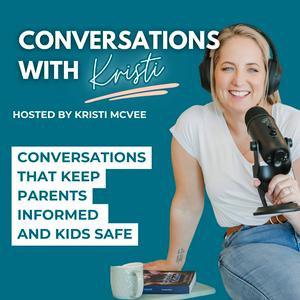
Hosted by Kristi McVee, this podcast is your go-to resource for keeping parents informed and kids safe in today’s ever-changing world. Each episode, Kristi brings expert insights, real-world advice, and meaningful discussions on topics like child abuse prevention, online safety, child development, parenting tips, and much more.
Whether you're navigating the challenges of parenting or simply looking for ways to protect and empower your kids, Conversations with Kristi has you covered. Tune in to stay ahead of the curve and ensure your child's safety and well-being.
👉 Subscribe now for new episodes and stay informed!
#ConversationsWithKristi #ParentingTips #KidsSafety #CAPEAU #ParentingAdvice #ChildSafety #KristiMcVee
Podcast websiteListen to Conversations with Kristi, 6 Minute English and many other podcasts from around the world with the radio.net app
Get the free radio.net app
- Stations and podcasts to bookmark
- Stream via Wi-Fi or Bluetooth
- Supports Carplay & Android Auto
- Many other app features
Get the free radio.net app
- Stations and podcasts to bookmark
- Stream via Wi-Fi or Bluetooth
- Supports Carplay & Android Auto
- Many other app features

Conversations with Kristi
Scan code,
download the app,
start listening.
download the app,
start listening.
 New Zealand
