

Listen to this podcast in the app for free: Download for free in the App Store
radio.net
Sleep timer
Save favourites
Truce with Food: The Psychology of Emotional Eating and Your Relationship with Food
Ali Shapiro, MSOD, CHHC
Latest episode
333 episodes

What Makes a Good Health Coach with Precision Nutrition’s Kate Solovieva (333)
07/10/2026 | 1h 7 mins.You can know what to eat, understand what would support your health, and still find yourself stress eating at night, skipping meals and then overeating, or falling back into old patterns. That’s frustrating when you’re the person living it, especially when you’ve already gotten plenty of information about what you “should” be doing. It can also be frustrating for the health coach sitting across from you, because caring deeply about helping someone can make it really tempting to rush in with another suggestion, another tool, or something from the latest training.
That’s where the difference between knowing a lot and actually being able to coach starts to matter. Some health problems are technical and have a relatively clear answer. Others are adaptive challenges, where the person already knows what to do and the harder question is why they aren’t doing it. Those situations require slowing down enough to get specific about what’s happening, asking why the behavior makes sense, and looking at what feels hard about changing it instead of immediately assuming the answer is more information. For coaches, that can also mean noticing what a stuck client brings up in you and whether your own urge to fix is helping or adding more pressure.
In this episode of Truce with Food, I sit down with Kate Solovieva, a master coach and Director of Community Engagement at Precision Nutrition, to talk about what makes a good health coach from both sides of the coaching relationship. We talk about what to do when another tip or tool isn’t helping, why coaching real people is different from studying case examples, and how to tell when more training is actually needed versus when it’s time to stop collecting information and practice the craft. We also get into what to look for when you’re hiring a coach, how scope of practice comes into play with questions about GLP-1s, and what AI may change about coaching without changing the human part of the work.
This episode is the third stop on the For Coaches Path in the Truce with Food Podcast Library, a set of conversations meant to be heard in order. Start the Path here: For Coaches Path.
1:53 – Who this episode is for and how to recognize a good health coach
2:10 – What happens when a client knows what to do but still isn’t doing it
4:21 – Why coaches need to notice their own urge to rush in and fix
6:59 – Why the health and wellness industry still feels like the Wild West
8:31 – Where health coaching has matured, from strength training to a more holistic view of health
14:37 – Where the industry still falls short on fatphobia, morality, and personal autonomy
16:43 – The gap between being good at coaching and being good at selling
20:32 – The difference between technical problems and adaptive challenges in behavior change
25:58 – Why coaches have to manage their own discomfort when a client is stuck
29:26 – How compassion and support help when old food patterns keep repeating
34:14 – How to know when more training will actually make you a better coach
36:35 – When learning becomes anxiety instead of professional growth
40:11 – Why you can’t become a great coach without actually coaching
44:30 – What separates a great coach from a really good student
45:57 – What to look for when choosing a health coach
50:51 – How to identify the specific skill gap you actually need to train
54:10 – GLP-1 questions, scope of practice, and the role of a health coach
58:53 – What AI, GLP-1s, and industry changes may mean for the future of coaching
Mentioned In What Makes a Good Health Coach with Precision Nutrition’s Kate Solovieva
Kate Solovieva | Instagram
Super Coach Diaries
Precision Nutrition | Coaches Connect
Truce Coaching Certification
For Coaches Path
Pros and Cons of Health Coaching with Courtney Townley
Hailey Rowe on Building a Sustainable Coaching Business
When Tips and Tools Aren’t Enough to Create Lasting Change with Christen Conly
How to Close the Knowing-Doing Gap with Food
Find your Food Stage with Ali’s free assessment: Take the Food Stages assessment
Struggling with cravings, emotional eating, or feeling stuck with food? Find a conversation that meets you where you are. Explore the free Truce with Food Podcast Library by topic, or follow a curated listening Path: Explore the Podcast LibraryYour GLP-1 Plateau Doesn’t Mean You’re Failing with Jessica Brown (332)
23/09/2026 | 1h 17 mins.A GLP-1 can quiet the food noise and give you hope again. Then you hit a plateau, the food noise starts creeping back in, or you see someone else having a completely different experience. That’s when the old thoughts can show up fast. Here we go again. I’m failing. What’s wrong? Why isn’t this working for me like everyone else?
We’ve put GLP-1s into the same magic bullet fantasy we tend to put everything else into. We want the straight line forward and the happily ever after. When that isn’t what happens, it can be easy to make the plateau mean something about you instead of separating what’s happening from what you’re making it mean about yourself.
In this episode of Truce with Food, I sit down with clinical nutritionist Jessica Brown, author of Beyond the Shot, to talk about what happens emotionally when GLP-1 progress stalls or the food noise comes back. Jessica is also a certified compassion teacher, and she has used a GLP-1 herself for more than two years, mostly for reasons beyond weight loss. We talk about the difference between feelings and beliefs, how comparison and self-judgment can shape the way you see yourself, and why self-compassion matters when the old story says you’re the problem. She also shares NICE, her practice for meeting that moment with kindness, especially if part of you worries that going easier on yourself means you’ll just give up.
This episode is the fourth stop on the GLP-1 Path in the Truce with Food Podcast Library, a set of conversations meant to be heard in order. Start the Path here: GLP-1 Path
7:47 – Why GLP-1 plateaus can feel so unexpected and what happens when progress stops being linear
9:05 – Jessica Brown’s reasons for using a GLP-1 beyond weight loss
15:35 – What can come up emotionally when food noise returns on a GLP-1
18:08 – The difference between feelings and beliefs and why it matters when you start blaming yourself
24:35 – How comparing your GLP-1 experience to other people can make you feel worse
28:52 – What makes support actually supportive when judgment is everywhere
34:40 – How to know when returning food noise needs emotional support, a medical conversation, or both
45:35 – Why the old story that you’re failing can come back so quickly during a plateau
50:56 – Jessica’s NICE practice for responding to old beliefs with self-compassion
52:38 – Jessica’s personal story of using NICE to change a belief she’d carried since infancy
59:19 – What emotional plateaus can reveal when food is no longer doing the same job
1:02:13 – Redefining progress when success is no longer just about weight or avoiding regain
1:11:00 – When to seek more support and what to know about GLP-1 microdosing claims
Mentioned In Your GLP-1 Plateau Doesn’t Mean You’re Failing with Jessica Brown
The Loving Diet | Instagram | YouTube
Beyond the Shot
Truce with Food Consistency
Truce with Food Podcast Library
Truce with Food Podcast Library: GLP-1 Path
A Holistic Approach to GLP-1s with Mayo Clinic Dietician Tara Schmidt
How to Use GLP-1s Without Losing the Muscle You Need with Ashley Fillmore
The Body You Were Always Meant to Have with Sas Petherick [Body Stories Series #6]
Episode 77: Your Green Juice Doesn’t Make You Worthy
Find Your Food Stage Quiz
Find your Food Stage with Ali’s free assessment: Take the Food Stages assessment
Struggling with cravings, emotional eating, or feeling stuck with food? Find a conversation that meets you where you are. Explore the free Truce with Food Podcast Library by topic, or follow a curated listening Path: Explore the Podcast LibraryWhy You Keep Feeling Like You’re Starting Over With Food (331)
09/09/2026 | 55 mins.You finally understand what’s been driving your food struggles. You change how you eat, you feel better, maybe you even think, okay, I’ve got this now. Then months or years later, the cravings come back, your body changes, or you find yourself eating when you’re not hungry again. It can feel like all that progress disappeared and you’re somehow back at the beginning.
After more than 10 years of this podcast and 330 episodes, what I keep seeing is that you may not need another answer. You may already have the right information, just at the wrong point in your own change process. The blood sugar episode that feels life-changing when you’re first realizing your cravings aren’t a willpower problem may not help two years later when you already understand the physiology and what you’re wrestling with is why you still want cookies when you’re alone on a Thursday night. Same information, completely different need.
In this episode of Truce with Food, I explain why timing and sequencing matter so much when you’re changing your relationship with food, and why feeling like you’re starting over doesn’t necessarily mean you’ve lost your progress. I’m also introducing the new free Truce with Food podcast library, built from more than a decade of episodes and organized around the problem you’re actually trying to solve now, so you can find the right next conversation for where you are.
2:42 – Reflections on the good and bad of what happened during the summer season
8:06 – Disillusionment with what’s currently happening in the wellness world
11:19 – The pitfalls of relying heavily on AI for written content
19:28 – The inferior-superior cycle that keeps you ping-ponging between all-or-nothing thinking
23:09 – What I mean by “right information, wrong timing” and why the order of things really matters
31:00 – A newly organized, decade-in-the-making tool designed to guide you toward solutions based on your situation
35:20 – Demonstration of how the new podcast library works using three people as examples
45:54 – How to use the library (including curated paths, how to search, and how it links with your food quiz)
50:38 – Asking for two favors when you use the beta version of the podcast library
Mentioned In Why You Keep Feeling Like You’re Starting Over With Food
Truce with Food Podcast Library
Email: Ali@alishapiro.com
Find Your Food Stage Quiz
Content with Carlos
Episode 233: Quitting Alcohol and Managing Sugar Cravings with Laura McKowen | Books by Laura McKowen
Episode 330: How to Make Habits Stick When Your Life Is Unpredictable with Monica Packer
Episode 321: Why Intuitive Functional Medicine Works When Protocols Don’t with Erin Holt
Episode 267: Esther Blum Demystifies Hormone Replacement Therapy (HRT) for Perimenopause and Menopause Relief
Episode 266: Dr. Stacy Sims on How “Women Are Not Small Men” (especially at midlife & with exercise)
Episode 188: The 4 Weight Loss Willpower Myths Sabotaging Your Results
Body Story Series with Sas Petherick: Parts 1, 2, 3, 4, 5, and 6
Find your Food Stage with Ali’s free assessment: Take the Food Stages assessment
Struggling with cravings, emotional eating, or feeling stuck with food? Find a conversation that meets you where you are. Explore the free Truce with Food Podcast Library by topic, or follow a curated listening Path: Explore the Podcast LibraryHow to Make Habits Stick When Your Life Is Unpredictable with Monica Packer (330)
26/08/2026 | 50 mins.How many times have you been in the middle of a habit challenge and quietly given up? You make it to day 19 of 21, then your kid gets sick, your period starts, or life blows up and you don’t have the time or energy to do the habit that day. The problem is that so much popular habit advice teaches consistency as doing the same thing, the same way, day after day. As Monica Packer puts it, what we’ve actually learned is perfectionism, not habit change.
Monica is a recovering perfectionist and the author of Sticky Habits. Her work looks at something most habit advice misses. Women often have less predictable time and energy because of caregiving, invisible labor, hormones, and the million moving pieces they’re managing. That doesn’t mean habits can’t work. It means we need a model for lasting change that accounts for how our lives actually work.
In this episode of Truce with Food, I sit down with Monica to talk about how rethinking consistency can help you build habits that actually stick. She explains what she calls gentle diligence, why doing your best isn’t the same as doing something perfectly, and how creating a baseline gives you a version of your habit you can maintain when life doesn’t go according to plan. We also get into what long-term social change can teach us about our obsession with quick results and why sustainable change requires measuring something different than speed.
3:36 – A short overview of Monica’s background
6:33 – Why the habit advice that works for men can quietly set women up to fail
12:37 – A solo trip that revealed how much invisible work it takes to keep a family running
15:17 – Male-centered authority and leadership in the habit change industry
18:49 – Why a habit challenge stalls out right around day 19, and the redefinition of consistency that has nothing to do with perfection
24:07 – How to establish a baseline version of your habits for less-than-ideal days, and what shifts when you start to believe in it
30:00 – An example of how showing up matters more than doing it right, and how Monica’s perfectionism inspired her book
36:17 – The point of habits and the flexibility to renegotiate them when circumstances come up
39:48 – Reframing what "fast enough" means for your own change, and being sold the lie of overnight success
44:47 – Two things Monica often says to her clients who are worried about consistency and doing things right
46:27 – Monica’s hopes for how she wants her book to impact both women who read it and the self-help and wellness industry overall
47:28 – Monica’s message for you if you fear you can’t change
Mentioned In How to Make Habits Stick When Your Life Is Unpredictable with Monica Packer
Sticky Habits by Monica Packer
About Progress podcast | Instagram | Facebook | YouTube
The Small and the Mighty by Sharon McMahon
Truce with Food: Consistency
Find Your Food Stage Quiz
Find your Food Stage with Ali’s free assessment: Take the Food Stages assessment
Struggling with cravings, emotional eating, or feeling stuck with food? Find a conversation that meets you where you are. Explore the free Truce with Food Podcast Library by topic, or follow a curated listening Path: Explore the Podcast LibraryHow Jenny Stopped Binge Eating Without More Food Rules (329)
12/08/2026 | 1h 1 mins.Jenny first learned to connect thinness with acceptance when she lost 30 pounds before eighth grade and returned to school getting attention she hadn’t received before. That connection shaped the next four decades of restriction, bingeing, bulimia, treatment, and trying to make peace with food.
By the time Jenny found Truce with Food, she already knew her struggle wasn’t really about food. What she didn’t understand was what kept pulling her back into the same patterns. Identifying loneliness as one of her eating triggers and recognizing the deeper need for belonging underneath it gave her a completely different place to start.
In this episode of Truce with Food, I sit down with Jenny, a client who completed Truce with Food: Consistency, to talk about how her urge to binge fell away without more food rules or another plan to follow. We also get into the role perfectionism played in keeping her stuck, what helped her close the gap between knowing and doing, and what changed when she started building a life she genuinely wanted to be part of.
6:35 – Jenny’s history with disordered eating and body image
9:55 – Loneliness as Jenny’s emotional trigger for bingeing
19:22 – Valuing peace above thinness in our culture
21:18 – "C plus effort" in the group breaking Jenny’s perfectionism cycle
25:56 – Attuning to yourself to satisfy the emotional trigger underneath the food struggle
28:47 – The "knowing" but not "doing" gap that kept Jenny stuck for years
31:49 – Shrinking the gap by learning how to set up for success or for opting out
41:25 – Movement as a door opener to new friendships and more fun
46:01 – Bingeing as betrayal and Jenny’s refusal to let restriction run her life
50:16 – Why the urge to binge can disappear without explanation
55:23 – Bringing your body online to notice what feels good and what triggers you
Mentioned In How Jenny Stopped Binge Eating Without More Food Rules
Truce with Food: Consistency
Free Workshop: Untangle Your Food Triggers: Catch Yourself Before You Fall Off Track
Find Your Food Stage Quiz
Find your Food Stage with Ali’s free assessment: Take the Food Stages assessment
Struggling with cravings, emotional eating, or feeling stuck with food? Find a conversation that meets you where you are. Explore the free Truce with Food Podcast Library by topic, or follow a curated listening Path: Explore the Podcast Library
More Education podcasts









Trending Education podcasts










About Truce with Food: The Psychology of Emotional Eating and Your Relationship with Food
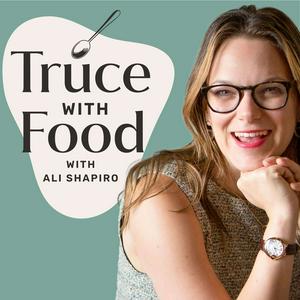
You've done Weight Watchers. Therapy. The functional medicine workup. You know more about nutrition than most people. And yet, you still can't make it stick. So now you're wondering if you're just the problem.You are not the problem. The framework you needed—that integrates real, lasting change—just never showed up, so you keep blaming yourself instead.Truce With Food® is a podcast for women in perimenopause and menopause who are exhausted from emotional eating, binge eating, overeating, and food noise taking up more space in their lives than they ever wanted. If you're eating when you're not hungry, can't figure out why what used to work no longer does, or just want a real conversation about your relationship with food and your body, you're in the right place.Host Ali Shapiro is a holistic nutritionist, cancer survivor, and creator of the research-based Truce With Food® framework that’s also built on 19 years of real client results. She healed her own relationship with food and has spent nearly two decades helping other women do the same through honest conversations about food, psychology, physiology, and why showing up with a C+ effort gets you further than any plan that demands perfection ever will. And how the real work is to be counterculture and trust in satisfaction, not more discipline. New episodes every other Wednesday.Struggling with cravings, emotional eating, or feeling stuck with food? Find a conversation that meets you where you are. Explore the free Truce with Food Podcast Library by topic, or follow a curated listening Path: https://www.trucewithfood.com/library
Podcast websiteListen to Truce with Food: The Psychology of Emotional Eating and Your Relationship with Food, The Mel Robbins Podcast and many other podcasts from around the world with the radio.net app
Get the free radio.net app
- Stations and podcasts to bookmark
- Stream via Wi-Fi or Bluetooth
- Supports Carplay & Android Auto
- Many other app features
Get the free radio.net app
- Stations and podcasts to bookmark
- Stream via Wi-Fi or Bluetooth
- Supports Carplay & Android Auto
- Many other app features

Truce with Food: The Psychology of Emotional Eating and Your Relationship with Food
Scan code,
download the app,
start listening.
download the app,
start listening.
 New Zealand