

Listen to this podcast in the app for free: Download for free in the App Store
radio.net
Sleep timer
Save favourites
38 episodes
35. Neurodiversity in Aotearoa: How are we doing?
15/05/2026 | 44 mins.In the past decade, neurodivergence has become far more visible in Aotearoa. But awareness is not the whole story - the real question is whether neurodivergent people and their whānau feel truly seen and understood.
There will always be gaps in services, funding and support. But not every change depends on a budget. Some begin with how we see neurodivergent people, how we listen to them, and whether we are willing to make room for who they really are.
This episode opens with a family getting ready for school. On the surface, it looks smooth. But for many neurodivergent families, the hardest parts are hidden - what the world sees is often only a fraction of what parents are managing.
We also hear from Raiha Tahuri, whose non-speaking autistic son Tomokia has taken his whānau on “a journey of self-reflection”, and opened their eyes to new ways of understanding communication, belonging and difference.
Autism researcher Dr Jessica Tupou joins the conversation to discuss how Te Ao Māori, mātauranga Māori and collective wellbeing could help shape a more inclusive, neurodiversity-affirming Aotearoa.
The challenges facing neurodivergent families are real, and the need for better support is undeniable. But if we focus solely on where the gaps are we risk missing what neurodivergent people have to teach us. This episode asks whether Aotearoa New Zealand is ready to build a society that recognises both the support they need and the gifts they bring.
In this episode:
The hidden reality behind a child who “looks fine” at school
The emotional and financial cost for parents in New Zealand when the system does not fit their child
Why meaningful change doesn’t always depend on funding
The unexpected gifts of listening to, and embracing, neurodivergence
The importance of Te Ao Māori perspectives in the way we understand difference
Why support needs to be culturally grounded
The advantages of being a small, interconnected country
What true neuro-inclusion could look like in Aotearoa
No Such Thing as Normal is made with support for NZ On Air
See omnystudio.com/listener for privacy information.34. Mental health, medication and neurodivergent burnout
08/05/2026 | 36 mins.Anxiety, depression, chronic stress and low self-esteem are common co-occurring conditions for many neurodivergent young people. But are these struggles caused by neurodivergence itself, or by trying to fit into environments that don’t work for them?
Child and adolescent psychiatrist Darryl-Lee Prince says not only is she seeing more school refusal and shutdown, but also more complex presentations. Among them, neurodivergent burnout.
Professor Dave Coghill unpacks what the evidence says about SSRIs, therapy, non-stimulant ADHD medication and non-drug treatments.
This episode is about what helps. And why these young people are not broken, but in need of the right support, understanding and environments that recognise their strengths.
In this episode
Neurodivergent burnout and masking
Anxiety, dysregulation and school refusal
When SSRIs can help
Why therapy needs to be tailored for those who are autistic, ADHD or AuDHD
Non-stimulant ADHD medication
The truth about the effects of sugar, food colouring, fish oils and brain training on ADHD symptoms
Is the information on TikTok trustworthy?
No Such Thing as Normal is made with support from NZ ON Air
See omnystudio.com/listener for privacy information.33. What can science tell us about neurodivergent brains?
01/05/2026 | 40 mins.If you - or your child - is neurodivergent, it can often feel like the world doesn’t always take you seriously. The challenges might be huge, but they’re largely invisible, and often unpredictable. So life can become a cycle of apologies and explanations.
But advances in science are beginning to change this. In this episode we look at some of the important research happening here in Aotearoa. From brain imaging studies into ADHD, to genetic research revealing the biological pathways of autism.
As these brain differences become measurable, the impact on individual lives is profound.
In this episode:
What brain scans are revealing about ADHD and the role of movement
Why those with ADHD struggle to hold two ideas in their mind at one time
The emerging science behind the genetic basis of autism
Why identifying specific genetic variants can be life-changing for families
The ethical considerations of autism research, and why community involvement matters
The importance of having a biological explanation for differences
Guests:
Dr Jessie Jacobsen and Dr Ruth Monk: Centre for Brain Research, University of Auckland
Dr Gil Newburn and Paul Condron: Mātai Medical Research Institute
To support the work of the Centre for Brain Research click here
No Such Thing as Normal is made with the support of NZ On Air
See omnystudio.com/listener for privacy information.32. ADHD and Perimenopause: The Perfect Storm
24/04/2026 | 43 mins.For many women, perimenopause brings more than just hot flushes. The impact on their cognition and mood is so extreme it feels like the chair has been pulled out from under them. Strategies that once held everything together stop working. Anxiety spikes, brain fog sets in, and confidence takes a hit.
In this episode, Dr Rachael Sumner discusses why hormonal changes can hit ADHD brains harder - not just in perimenopause, but throughout their lives. And we look at why so many women are only discovering their ADHD in mid-life.
Research is still catching up, but this episode helps shed some light on a hidden struggle affecting thousands of women, and offers validation, understanding, and a way forward.
In this episode:
Why ADHD symptoms often worsen during perimenopause
The role of estrogen in supporting dopamine and serotonin
The link between ADHD and PMDD (Premenstrual Dysphoric Disorder)Why neurodivergent women may be more sensitive to hormonal shifts across the lifespan.
Why so many women are diagnosed with ADHD in their 40s and 50s
The collapse of coping strategies and ‘unmasking’
Separating ADHD symptoms from hormonal changes
The mental health impact: including anxiety, burnout and emotional dysregulation
Why research into women’s health is still lagging behind
The power of connection, validation and being understood
Guests
Dr Rachael Sumner, Senior Research Fellow, University of Auckland
Dr Jacqui Johnson, ADHD Coach Partnering with ADHD
Fiona Winfield, ADHD Coach Fiona Winfield
And a special thanks to the women from the workshop - When ADHD meets Menopause. For more information on upcoming workshops go to A Hot Mess
No Such Thing as Normal is made with the support of NZ On Air
See omnystudio.com/listener for privacy information.31. Gender diversity & neurodiversity: Understanding the intersection
17/04/2026 | 43 mins.Neurodivergent young people are more likely to question their gender identity, and it can be a confusing and confronting time. Not just for the individual, but also for their loved ones.
The support and validation of families is vital, but many feel unprepared; struggling to even navigate things like the role of pronouns.
This episode gives some insight into the unique way a number of autistic and ADHD young people experience identity - including gender identity. Through deeply personal stories and expert insight, we look at how families can best support young people as they navigate this complex space, and how they can reframe it as a natural period of exploration.
At the heart of this conversation is mental health. The statistics for those at this intersection are confronting, but responsibility for better outcomes extends beyond immediate families; it rests with society as a whole.
Greater awareness of lived experience can help reduce stigma - and with it, much of the suffering. As can recognising the immense courage it takes to live authentically, especially when that identity sits outside societal norms.
In this episode:
Adolescence: a time of identity formation for all young people.
The mental health risks and what can significantly reduce them
The role of interoception in identity
The reality for parents: Uncertainty, and the fear of ‘getting it wrong’.
The impact of stigma, and what it feels like to navigate the world as non-binary or trans and neurodivergent
Practical advice for parents: how to support without rushing or shutting things down
Why authenticity isn’t a choice
No Such Thing as Normal is made with support from NZ On Air
See omnystudio.com/listener for privacy information.
More Health & Wellness podcasts







Trending Health & Wellness podcasts




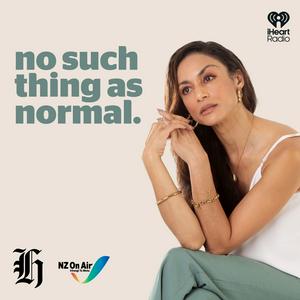
About No Such Thing as Normal
At least 20% of New Zealanders are believed to be neurodivergent, but there is very little awareness, understanding and support for people with conditions such as ADHD, Autism and Dyslexia.
Sonia Gray has a neurodivergent daughter and is an ADHDer herself. In this 10-part series she’ll talk to dozens of experts and people with a lived-experience of neurodiversity to better understand how we can support and celebrate those whose brains are wired differently.
No Such Thing as Normal is brought to you by NZ Herald and Team Uniform, with support from NZ on Air. New episodes are available every Saturday.
Podcast websiteListen to No Such Thing as Normal, The High Performance Podcast and many other podcasts from around the world with the radio.net app
Get the free radio.net app
- Stations and podcasts to bookmark
- Stream via Wi-Fi or Bluetooth
- Supports Carplay & Android Auto
- Many other app features
Get the free radio.net app
- Stations and podcasts to bookmark
- Stream via Wi-Fi or Bluetooth
- Supports Carplay & Android Auto
- Many other app features

No Such Thing as Normal
Scan code,
download the app,
start listening.
download the app,
start listening.
No Such Thing as Normal: Podcasts in Family

 New Zealand