
Listen to this podcast in the app for free: Download for free in the App Store
radio.net
Sleep timer
Save favourites
328 episodes
EMQs: Are the Tories against welfare cuts?
26/10/2026 | 46 mins.After the great response to Ed Balls’ scepticism on Burnham trying to rejoin the EU, former Labour MP Gloria De Piero got in touch. She asks Ed and George Osborne just how they would make the case for rejoining, to their former constituents. With Gloria’s seat now held by Lee Anderson, it’s clear that the case in some leave voting areas will be a hard one to make…
Then, Times writer and former Spectator editor Fraser Nelson asks if the political costs of welfare cuts outweigh their benefits. George explains how it was the right, not the left, who prevented him making greater cuts while in office. Ed cautions that for the Milburn reforms to work, a careful line will have to be taken by the government.
Roads minister Justin Madders then attempts to correct George on the situation surrounding driving tests and takes a trip down memory lane. He was the Labour candidate against George in 2005 and asks if any candidates the pair beat in elections went on to great or surprising things. Ed recalls he beat one Andy Burnham in the 2010 Labour leadership race…
Finally, off the back of their angelic renditions of hymns last week, a listener submits a favourite hymn of their own, and shares a story of a young George Osborne encountering a future Labour cabinet minister…
We love hearing from you, so please don’t forget to send all your EMQs to questions@politicalcurrency.co.uk and make sure to include a voice note of your question or send a question to our social media handles:
👉 X
👉 Instagram
👉 TikTok
Thanks for listening. To get episodes early and ad- free join Political Currency Gold or our Kitchen Cabinet. If you want even more perks including our exclusive newsletter, join our Kitchen Cabinet today:
👉 patreon.com/politicalcurrency
👉 Apple Podcasts
Please note: Kitchen Cabinet is only available via Patreon.
Credits:
Production: Sam Burton
Producer: Caillin McDaid
Video Editor: Louis Norris & Sam Gruet
Executive Producer: Henrietta Harrison
Political Currency is a Persephonica Production and is part of the Acast Creator Network.
Hosted on Acast. See acast.com/privacy for more information.Will Healey’s budget burst the Burnham bubble?
22/10/2026 | 1h 2 mins.The Budget is less than a week away, and the pressure is on for Andy Burnham and John Healey to deliver. Ed Balls and George Osborne debate whether the right moves are being taken for the new chancellor’s first budget, or if the bold rhetoric from the PM will not be matched by what is set to be a small Budget.
George is in Paris this week, days after the media was dominated by scenes of rioting across France. What impact will these events have on the forthcoming Presidential election? Does it shore things up for Le Pen on the far right? How is it impacting Europe more broadly? Will it complicate Burnham’s position in the forthcoming EU summit?
Finally, the scenes in France last weekend are not unheard of in Britain.The Brixton riots in 1981, fuel protests in 2000, and the London riots in 2011. Ed and George were in government for the latter two, and know what it’s like to be in the room for these moments of high tension on the streets. How should a government react in these moments? Should the PM get directly involved? Can you address the concerns of rioters without being seen to capitulate?
We’re going LIVE next Wednesday at 3pm, on YouTube, to give our Hot Take on the Budget, so make sure to stay tuned for more information on that.
We love hearing from you, so please don’t forget to send all your EMQs to questions@politicalcurrency.co.uk and make sure to include a voice note of your question or send a question to our social media handles:
👉 X
👉 Instagram
👉 TikTok
Thanks for listening. To get episodes early and ad- free join Political Currency Gold or our Kitchen Cabinet. If you want even more perks including our exclusive newsletter, join our Kitchen Cabinet today:
👉 patreon.com/politicalcurrency
👉 Apple Podcasts
Please note: Kitchen Cabinet is only available via Patreon.
Credits:
Production: Sam Burton
Producer: Caillin McDaid
Video Editor: Louis Norris & Sam Gruet
Executive Producer: Henrietta Harrison
Political Currency is a Persephonica Production and is part of the Acast Creator Network.
Hosted on Acast. See acast.com/privacy for more information.EMQs: Who Lifts Heavier, Ed or George?
19/10/2026 | 41 mins.Author Philip Delves Broughton asks Ed Balls and George Osborne whether Britain could survive an energy shock like the 1973–74 oil crisis, which ended with a three-day week and the fall of the Heath government. George warns of voters blaming the government while Ed argues that the real danger, like in the ‘70s, is the energy shock landing alongside other collapsing post-war assumptions.
They then debate who is more of a gym bro, and reveal which politicians are the most ripped. Ed shares Gordon Brown’s fitness regime as chancellor, while George reveals an unexpected training partner - David Beckham!
A listener challenges Ed and George’s stance on Kemi Badenoch's proposed inheritance tax. As a divorced mum in a modest home in the South East, she explains why the tax isn’t just for the wealthy.
Finally, off the back of Ed attending the 100th anniversary of the BBC broadcasting Choral Evensong, the pair share their favourite hymns and choral music. They even perform a few renditions of their own…
Make sure to listen to Bridget Phillipson on Dig It with Jo Whiley and Zoe Ball, alongside Mariella Frostrup, here:
👉 EXCLUSIVE Bridget Phillipson MP & Mariella Frostrup: Menopause, Misogyny & Missing School
We love hearing from you, so please don’t forget to send all your EMQs to questions@politicalcurrency.co.uk and make sure to include a voice note of your question or send a question to our social media handles:
👉 X
👉 Instagram
👉 TikTok
Thanks for listening. To get episodes early and ad- free join Political Currency Gold or our Kitchen Cabinet. If you want even more perks including our exclusive newsletter, join our Kitchen Cabinet today:
👉 patreon.com/politicalcurrency
👉 Apple Podcasts
Please note: Kitchen Cabinet is only available via Patreon.
Credits:
Production: Sam Burton & Annie Ackerman
Producer: Caillin McDaid
Video Editor: Oliver Geraghty & Sam Gruet
Executive Producer: Henrietta Harrison
Political Currency is a Persephonica Production and is part of the Acast Creator Network.
Hosted on Acast. See acast.com/privacy for more information.Does Burnham have a foot in mouth problem?
15/10/2026 | 1h 5 mins.International politics can disrupt the best laid plans of any government, and this week was no different. Ed Balls and George Osborne delve into a week that has been dominated by the war in Ukraine, and how Andy Burnham has chosen to navigate it. Donald Trump has made a deal with Russia on diesel, which Zelenskyy said was a betrayal. Burnham has to walk a careful line to side with Ukraine, but not anger the President. Has his diplomacy worked?
An attack in Saudi Arabia at the weekend only highlights how precarious the whole Middle East is, which draws attention back to the price of oil. This is a tough background for John Healey, with the budget less than two weeks away. Healey is attempting to spin the positive message, but is this the right strategy? Ed feels the messaging needs to be tough, and that selling hope won’t help with heating costs.
Of course, one way to counterattack the challenges Healey and Burnham face with growth is establishing closer ties to Europe. Burnham has continued to make those gestures this week, while also suggesting Russia interfered with the results of the EU referendum. After revising and walking back the statement all week, this is the latest in a series of off the cuff remarks from the PM. Is he going for a Trumpian approach of speaking freely? Is this the right approach for a British leader? Can Andy be Andy, without needing to issue so many corrections?
We love hearing from you, so please don’t forget to send all your EMQs to questions@politicalcurrency.co.uk and make sure to include a voice note of your question or send a question to our social media handles:
👉 X
👉 Instagram
👉 TikTok
Thanks for listening. To get episodes early and ad- free join Political Currency Gold or our Kitchen Cabinet. If you want even more perks including our exclusive newsletter, join our Kitchen Cabinet today:
👉 patreon.com/politicalcurrency
👉 Apple Podcasts
Please note: Kitchen Cabinet is only available via Patreon.
Credits:
Production: Sam Burton & Annie Ackerman
Producer: Caillin McDaid
Video Editor: Oliver Geraghty & Sam Gruet
Executive Producer: Henrietta Harrison
Political Currency is a Persephonica Production and is part of the Acast Creator Network.
Hosted on Acast. See acast.com/privacy for more information.EMQs: The truth about government war gaming
12/10/2026 | 42 mins.Money saving expert Martin Lewis sends in a question for Ed Balls and George Osborne this week, all about the tiny fixes. He tasks the pair with contributing to his new Small Ideas Initiative, proposing their own solutions to the most annoying problems in Britain. Ed goes for football tickets, while George hits on driving tests.
They then turn to a former FT colleague of Ed’s, who asks whether the biggest decisions a chancellor makes happens between budgets. They weigh up the case for and against this, hitting on some of the biggest economic moments in recent decades.
A fan from Instagram then asks if Andy Burnham has failed the Makerfield test, with George feeling his constituents wouldn’t be taken by PR or rejoining the EU. Fellow podcaster Abbie Bennington then asks them about wine and Brexit, off the back of George appearing on her show.
Finally, they reveal their experience with war gaming. How much does the government prepare for the worst? Does it work in the end? Ed reveals one instance that left the government much more prepared for the financial crisis than they otherwise would have been…
Make sure to listen to George’s appearance on Vintage Politics here:
👉 https://podcasts.apple.com/gb/podcast/george-osborne-candid-conversations-on-brexit-ai-the/id1881977789?i=1000793761417
We love hearing from you, so please don’t forget to send all your EMQs to questions@politicalcurrency.co.uk and make sure to include a voice note of your question or send a question to our social media handles:
👉 X
👉 Instagram
👉 TikTok
Thanks for listening. To get episodes early and ad- free join Political Currency Gold or our Kitchen Cabinet. If you want even more perks including our exclusive newsletter, join our Kitchen Cabinet today:
👉 patreon.com/politicalcurrency
👉 Apple Podcasts
Please note: Kitchen Cabinet is only available via Patreon.
Credits:
Production: Sam Burton
Producer: Caillin McDaid
Video Editor: Louis Norris & Sam Gruet
Executive Producer: Henrietta Harrison
Political Currency is a Persephonica Production and is part of the Acast Creator Network.
Hosted on Acast. See acast.com/privacy for more information.
More News podcasts





Trending News podcasts













About Political Currency
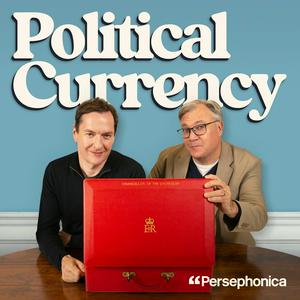
Ed Balls and George Osborne take us behind closed doors into the rooms where decisions are made. Having battled it out across the despatch box, the former Chancellor and shadow chancellor now meet in the studio to discuss the decisions that affect the nation’s pockets. Our frenemies have the knowledge and experience to explain how good politics follows the economics - and expose how the powerful become powerless when faced with market forces and political currents they can’t control. Join us every Thursday.Send your messages or voice notes to questions@politicalcurrency.co.ukFind us on social media @polcurrencyPolitical Currency is a Persephonica production. Hosted on Acast. See acast.com/privacy for more information.
Podcast websiteListen to Political Currency, Inside Trump's Head and many other podcasts from around the world with the radio.net app
Get the free radio.net app
- Stations and podcasts to bookmark
- Stream via Wi-Fi or Bluetooth
- Supports Carplay & Android Auto
- Many other app features
Get the free radio.net app
- Stations and podcasts to bookmark
- Stream via Wi-Fi or Bluetooth
- Supports Carplay & Android Auto
- Many other app features

Political Currency
Scan code,
download the app,
start listening.
download the app,
start listening.
Political Currency: Podcasts in Family

 New Zealand
