

Listen to this podcast in the app for free: Download for free in the App Store
radio.net
Sleep timer
Save favourites
162 episodes
EP 161: Why High Performers Don’t Always Make a High-Performing Team with Jamie Shapiro
14/08/2026 | 59 mins.What does connection mean to you? How do you know when you're feeling connected?
Connection is foundational to building trust, and trust is an essential quality that any team or relationship needs to grow.
Yet in many relationships, both personally and professionally, we tolerate disconnection. We miss the early signals of missed deadlines, the subtle cues of quiet resentment, and the team that’s compliant and even productive, but not engaged.
Until disconnection creates the distrust, the dis-ease, and the erosion of psychological safety that, left unchecked, hijacks even the strongest relationships, teams, and organizations.
Leaders and their teams need to not only learn to identify markers of disconnection early, but to also develop the skills to repair it. The goal isn’t a team that never ruptures. It’s a team that knows how to reconnect.
That’s why I’m so excited to talk with my guest today about her work that integrates well-being science, positive psychology, and systems-level leadership to help organizations uncover what it takes to build connected, thriving teams where well-being and high performance can truly coexist.
Jamie Shapiro, PhD, is a Keynote Speaker, Master Certified Executive Coach, organizational psychologist, researcher and the CEO of Connected EC. Jamie’s approach blends science, strategy, and lived leadership experience to her work with CEOs and executive teams navigating growth, complexity, and cultural transformation.
Jamie is the author of Brilliant: Be the Leader Who Shines Brightly Without Burning Out and Connected Culture: The New Science for Thriving Teams and Cultures. She is also the founder of the Leader and Organization Vitality (LOV) Center, a research institute that advances the science of leadership vitality, culture, and performance and bridges the gap between research and real-world practice.
Listen to the full episode to hear:
How Jamie’s personal experience with cycles of burnout in the corporate world informs her research and coaching practice
The physical, mental, and emotional impacts of trust and connection on teams
Why Jamie’s model for thriving teams has trust, care, and connection at its core
What corporate culture consistently gets wrong about candid communication and the number one way to improve it
What we can learn from chickens about building high-performing teams
How psychological safety and connection positively drive performance
Learn more about Jamie Shapiro:
Connected EC
Connect on LinkedIn
Brilliant: Be The Leader Who Shines Brightly Without Burning Out
Connected Culture: The New Science for Thriving Teams and Cultures
Learn more about Rebecca:
rebeccaching.com
Work With Rebecca
The Unburdened Leader on Substack
Sign up for the weekly Unburdened Leader Email
Resources:
Links
The Gifts of Imperfection, Brené Brown
Loneliness: Human Nature and the Need for Social Connection, John T Cacioppo and William Patrick
The Neuroscience of Trust, Paul J. Zak | Harvard Business Review
The Fearless Organization: Creating Psychological Safety in the Workplace for Learning, Innovation, and Growth, Amy C. Edmondson
Right Use of Power Institute
Shaping Power for Good: Wayfinding to Right Relationship, Amanda Aguilera
Super-Chicken Model
Just One Word: The Surprisingly Simple Method to Discover Your Purpose and Unleash Your Power, Erin Weed
ILLENIUM
Off Campus
Voicemails for Isabelle
Sixteen Candles
Chapters:
(00:22) - Introduction
(07:33) - New Book and Career Pivot
(11:33) - Support Systems
(13:38) - Burnout to Vitality Research
(16:10) - Trust Fuels Team Energy
(21:29) - Connection Model and Accountability
(24:36) - Defining candid communication
(27:59) - Psychological Safety Reframed
(30:00) - Listening and Power Dynamics
(32:58) - High Performer Chicken Study
(37:46) - From Doing To Being
(41:21) - Safety Versus Accountability Myth
(48:30) - Defining Leadership
(49:52) - Quick Fire Questions
(55:51) - How to Connect
(56:35) - Closing ThoughtsEP 160: Hiding Doesn't Keep You Safe: Mike Ganino on Visibility and Storytelling
31/07/2026 | 1h 2 mins.When the stakes rise and more is on the line, everything about visibility shifts –– what it means, what it costs, and what it asks of you.
And if you ever experienced bullying, relational trauma, betrayal, or abuse, visibility can be more than just awkward or uncomfortable. Unprocessed echoes of those burdens can make the past feel like it is happening in the present.
We have to do the work of building more trust within, getting clear on who and what really matters, and learning to follow our values even when we do not know the results.
As my guest today reminded me, when we go silent, we may feel safe, but our voices are not out there, and others will step in to define the direction of conversations and the topics that matter most to us.
Showing up and letting people see and hear you isn’t always easy, but with practice and courage, we can reshape the narratives we carry about ourselves and our visibility.
Mike Ganino works with professional speakers, keynote speakers, and executives to help them create transformative speaking experiences worthy of standing ovations. As a keynote director with a background as an actor, writer, director, producer, hospitality executive, and corporate trainer, Mike learned to view storytelling and performance from the audience’s perspective and uses these insights and experiences to help his clients develop talks and performances that go beyond just wowing the audience to truly transform their thinking.
Listen to the full episode to hear:
How a fourth-grade substitute teacher showed Mike the power of making people feel seen
Why getting comfortable with visibility requires us to address the relational wounds that have kept us quiet
What we can learn from actors about the choices we make as we show up and interact with others
Why developing as a speaker is a physical practice before it’s an intellectual practice
Two essential elements for telling an effective story
How fears of losing status and being misunderstood keeps us from showing up for ourselves and others
Learn more about Mike Ganino:
https://mikeganino.com/
Instagram: @mikeganino
Facebook: @mikeganino
Connect on LinkedIn
Make a Scene: Storytelling, Stage Presence, and the Art of Being Unforgettable in Every Spotlight
Learn more about Rebecca:
rebeccaching.com
Work With Rebecca
The Unburdened Leader on Substack
Sign up for the weekly Unburdened Leader Email
Resources:
The Face: A Natural History, Daniel McNeill
Ariana Grande
E.T. the Extra-Terrestrial
Chapters:
(00:43) - Introduction
(08:36) - Fourth Grade Lessons
(13:28) - Healing Through Visibility
(16:59) - Safe Reps on Video
(21:40) - Authenticity vs Performance
(25:29) - Questioning the 'new and fresh'
(28:59) - Top Visibility Blocks
(31:24) - Gendered Speaking Habits
(37:36) - Storytelling For an Integrated Life
(41:05) - Status Loss and Feedback
(45:45) - Who you take notes from matters
(49:56) - Inner Child And Leadership
(50:51) - Defining Leadership
(52:00) - Embracing the Complexities
(53:56) - Rapid Fire
(58:05) - Making Connections
(59:00) - Closing ThoughtsEP 159: MILCK on Self-Trust, Healing, and Creative Leadership
17/07/2026 | 1h 7 mins.A lot of people feel like they know who they're supposed to be, how they're supposed to show up, and what they're supposed to value, and they assume those things come from themselves instead of external influences.
But we all have internalized beliefs and expectations from others, our culture, and the systems we live in. It takes a beat, sometimes a long one, to get clear on who you actually are and what is actually important to you. It requires building the kind of deep self-trust that allows you to act from your values even when the world is suggesting otherwise.
And if you carry relational wounds or other interpersonal or socio-cultural burdens, those experiences can slow down or block your capacity to deepen self-trust, trust in others, grow in courage, and fully inhabit your whole story. That is not a character flaw. It is a developmental reality.
My guest today models what becomes possible when you stop performing the version of yourself the world approved of and start trusting yourself and leading from that space. She is building a career and a creative practice rooted in self-trust and values alignment, and she is far from done.
MILCK, born Connie K. Lim, is a self-proclaimed gentle rebel whose artistry and advocacy is fueled by her music. Her breakout anthem “Quiet” became a global sensation, championing women’s rights and resonating with movements around the globe. MILCK has collaborated with notable artists such as John Legend, Natasha Bedingfield, Phillipa Soo, Ani DiFranco, Aloe Blacc, and LeAnn Rimes, blending soulful melodies with poignant, socially conscious lyrics.
Beyond the recording industry, MILCK is expanding her creative reach into musical theater, advocacy, and mentorship; MILCK and artists Sam Chanse, Jess Mcleod, and AG have partnered with La Jolla Playhouse to develop The Family Album, an award-winning seriocomedy musical. Inspired by MILCK's life journey, the musical explores themes of healing and family.
Listen to the full episode to hear:
How “Quiet” began as a means to process her own story and turned into an anthem
How personal, creative, and therapeutic supports came together to help Connie find her truth and her voice and connect with audiences
The discouragement of her dreams Connie received as a kid and why her younger self is delighted with her now
How working on The Family Album has been healing for Connie and her family
Developing the confidence and self-trust to push boundaries and be an emotional bridge
How the all-female creative team behind The Family Album musical came together
Learn more about MILCK:
Website
Instagram: @milckmusic
MILCK on Bandcamp
Get tickets to The Family Album
Learn more about Rebecca:
rebeccaching.com
Work With Rebecca
The Unburdened Leader on Substack
Sign up for the weekly Unburdened Leader Email
Resources:
Childhood and Society, Erik H Erikson
In Over Our Heads: The Mental Demands of Modern Life, Robert Kegan
Roxy Music - Avalon
Couples Therapy
Tears For Fears
Chapters:
(00:37) - Introduction
(07:35) - Meet Connie Kim aka MILCK
(13:36) - Quiet - Origins and Cost
(18:22) - Therapy and Support Mirrors
(20:55) - Musical Beginnings
(25:31) - Younger Self and Healing
(29:14) - Turning Life Into A Musical
(32:36) - Fighting to Stay Connected to Family
(37:15) - Pushing Boundaries for Healing and Growing
(41:19) - Conflict and the Wisdom of the Past
(46:12) - Family Album Origin Story
(55:35) - Opening Night Emotions
(57:29) - Defining Leadership
(58:48) - Quick Fire Questions
(01:02:55) - How to Connect
(01:04:34) - Closing ThoughtsEP 158: Stop Waiting Until You’re Ready: Sylvia Kwan on Women, Wealth, and Leadership
03/07/2026 | 57 mins.How many times have you talked yourself out of pursuing an opportunity, telling yourself it wasn't for you, that you weren’t ready, or you weren’t qualified?
What if that hesitation wasn't self-awareness but a script you internalized?
Many women have a complicated relationship with their ambitions for greater leadership and greater wealth. And it isn’t because women are somehow inherently less suited for leadership or financial independence. The systems of power, patriarchy, sexism, and misogyny that we live in every day shape the voice in women’s heads that tells them they’re not meant to be a leader.
We are in a political and cultural moment where women’s rights and autonomy are facing incredible pushback at all levels. It’s vital that we examine our internalized biases towards ourselves and others, where we limit our ambitions for roles we have the skills and abilities for, and where we’re giving up our power because of the stories we’ve been told by our society.
My guest today is a beautiful example of a woman who hadn’t considered herself for a CEO role, but who stepped into the position and has grown into the kind of leader we just might need most right now. In our conversation, we talk a lot about women and finances and also about what we believe about our abilities and the opportunities we deserve to pursue.
Sylvia Kwan is a Chartered Financial Analyst with more than 30 years of industry experience. Prior to Ellevest, she founded SimplySmart Asset Management and held senior portfolio management positions at Financial Engines and Charles Schwab. Sylvia serves on the Board of Exit 182, the investment committee that oversees the endowment of Grinnell College.
Listen to the full episode to hear:
How Sylvia’s commitment to Ellevest’s mission bolstered her through the abrupt and sometimes isolating shift into being CEO
How she navigated the tension between wanting to be transparent with her team and needing to project calm
The scripts about who she is and the work she excels at that Sylvia had to rewrite, and why it’s a continuing process
How the financial industry subconsciously reinforces sexist ideas about women and money
Why taking the stigma out of women talking about money is a key piece of closing the gender wealth gap
How women accruing wealth actually supports communities and creates more equity
How convoluted jargon and perfectionism keep women from getting started with investing
Learn more about Sylvia Kwan, PhD, CFA, CAIA:
Ellevest
Instagram: @ellevest
Connect on LinkedIn
Learn more about Rebecca:
rebeccaching.com
Work With Rebecca
The Unburdened Leader on Substack
Sign up for the weekly Unburdened Leader Email
Resources:
EP 88: Right-Use-of-Power: Navigating Leadership Dynamics with Dr. Cedar Barstow
Right Use of Power: The Heart of Ethics: A Guide and Resource for Professional Relationships, Dr. Cedar Barstow
The Will to Change: Men, Masculinity, and Love, bell hooks
Down Girl: The Logic of Misogyny, Kate Manne
Women leaders make work better. Here’s the science behind how to promote them
Power with purpose: How women's leadership boosts the economy and society | Devex
Whidbey, T Kira Madden
CeCe Winans - Goodness of God
Ted Lasso
Chapters:
(00:42) - Introduction
(11:55) - Sudden CEO Transition
(14:15) - Self Trust and Mission
(17:45) - Leading Through Uncertainty
(22:48) - Rewriting the Leadership Script
(27:10) - Finance Industry Gender Gap
(33:48) - Myths About Women and Wealth
(36:24) - Complexity Masquerading as Sophistication
(39:46) - Roadblocks and Getting Started Now
(44:31) - Defining Leadership
(46:22) - Embracing the Complexities
(48:27) - Quick Fire Questions
(53:35) - How to Connect
(54:26) - Closing ThoughtsEP 157: The Ambition Penalty: Stefanie O'Connell on Why Wanting More Still Costs Women
19/06/2026 | 56 mins.Say the word ambition, especially around women, and it brings up a complicated mix of emotions and beliefs.
If you're not succeeding, you're not ambitious enough. If you are succeeding, wanting a lot, and going for it, you're too ambitious, and you get penalized or punished. It happens at work, at home, and in the communities we move through every day.
There are so many mixed messages about ambition and success coming at us from every direction. And it's not just imposed from the outside.
For many women, those messages get internalized and shape the way we present ourselves and communicate about our work and personal lives. We start to police our own ambition, and we police each other's ambition.
My guest today names the invisible norms around women’s ambitions, and calls out the ways that organizations perpetuate bias, even as they think they’re playing fair. Her work is extensively researched, tracing the roots of the tension around ambition, and also offers language and an opportunity for us to reclaim our ambitions together.
Stefanie O’Connell is an award-winning journalist and author of The Ambition Penalty: How Corporate Culture Tells Women to Step Up– and Then Pushes Them Down. Her work dismantles the myths keeping women from equitable pay, leadership and power — one data point at a time.
Listen to the full episode to hear:
The material costs of what happens when women speak up, lean in, and get ambitious
How implicit and gendered double standards around power keep women out of leadership
Why encouraging ambition in girls doesn’t translate into celebrating ambition in women
How people and organizations that believe they are meritocratic end up reinforcing the most bias
Why we can’t self-optimize our way out of systemic inequality, and why we need collective action
Six key elements for reframing burnout as an environmental problem, not a personal one
Why we need to push back against framing women being pushed out of the work force as “empowerment” and challenge sexism in our everyday lives
Learn more about Stefanie O'Connell:
Website
Too Ambitious on Substack
Instagram: @stefanieoconnell
Threads: @stefanieoconnell
TikTok: @stefaniemoconnell
The Ambition Penalty
Learn more about Rebecca:
rebeccaching.com
Work With Rebecca
The Unburdened Leader on Substack
Sign up for the weekly Unburdened Leader Email
Resources:
EP 155: Hidden Cost of Caretaking at Work: Nilofer Merchant on Invisible Norms Limiting Your Leadership
Stop Punishing Women for Being Ambitious | Bloomberg
Maslach, Christina. (1998). A Multidimensional Theory of Burnout. 10.1093/oso/9780198522799.003.0004.
My Mother's Daughter: Finding Myself in My Family's Fractured Past, Tracy Clark-Flory
Ragtime (2025 Broadway Cast Recording)
Mad Men
Chapters:
(00:07) - Introduction
(07:14) - Meet Stephanie OConnell
(10:30) - The Ambition Penalty
(14:06) - The Ambition Double-Standard
(19:51) - The Shame of Ambition
(22:34) - Women Colluding with The Harm
(28:50) - Hustle Culture
(32:26) - Maslach's Burnout Framework
(39:01) - Reframing Empowerment
(42:06) - Leveraging our Collective Power
(48:16) - Quick Fire Questions
(53:02) - How To Connect
(54:05) - Closing Thoughts
More Business podcasts
 The Diary Of A CEO with Steven BartlettBusiness, Education, Society & Culture
 Planet MoneyBusiness, News
 Making CentsBusiness, Education, Investing, Tutorials
 Cheques and BalancesBusiness
 The Property Academy PodcastBusiness, Investing
 Aspire with Emma GredeBusiness, Entrepreneurship, Society & Culture
 The CurveBusiness, Investing
 Shared LunchBusiness, Investing
 The Happy Saver Podcast - Personal Finance in New ZealandBusiness, Investing
 She's On The MoneyBusiness, Investing
Trending Business podcasts
 Investing InsightsBusiness, Entrepreneurship, Investing, News
 ASB Investment PodcastBusiness, Investing
 Tom Bilyeu's Impact TheoryBusiness, News, News Commentary, Philosophy, Society & Culture
 The NZ Property Market PodcastBusiness, Business News, Investing, News
 MarketplaceBusiness, News
 Rebel EntrepreneurBusiness, Entrepreneurship
 After HoursBusiness, Management
 The CurveBusiness, Investing
 The Iced Coffee HourBusiness, Entrepreneurship
 Decoder with Nilay PatelBusiness, Technology
 CNBC's "Fast Money"Business, Investing, News
 无人知晓Business, Religion & Spirituality
 30 Minutes to President's Club | No-Nonsense SalesBusiness, Careers
 Markets, Mystics and MayhemBusiness
 Patrick Boyle On FinanceBusiness, Investing
 Coaching Real LeadersBusiness, Careers, Management, Society & Culture
 The Artificial Intelligence ShowBusiness, Marketing, Technology
 NZX Opening BellBusiness, Investing
 REAL AF with Andy FrisellaBusiness, Entrepreneurship, Marketing
 Australian Finance PodcastBusiness, Education, Investing
 The Economics of Everyday ThingsBusiness
 Closing BellBusiness, News
 Interview BossBusiness, Careers, Education
 Business Is BoringBusiness, Entrepreneurship
 ChooseFI | Financial Independence PodcastBusiness, Careers, Investing
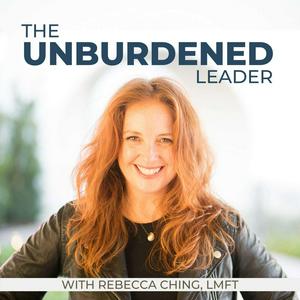
About The Unburdened Leader
Meet leaders who recognized their own pain, worked through it, and stepped up into greater leadership. Each week, we dive into how leaders like you deal with struggle and growth so that you can lead without burnout or loneliness. If you're eager to make an impact in your community or business, Rebecca Ching, LMFT, will give you practical strategies for redefining challenges and vulnerability while becoming a better leader. Find the courage, confidence, clarity, and compassion to step up for yourself and your others--even when things feel really, really hard.
Podcast websiteListen to The Unburdened Leader, The Diary Of A CEO with Steven Bartlett and many other podcasts from around the world with the radio.net app
Get the free radio.net app
- Stations and podcasts to bookmark
- Stream via Wi-Fi or Bluetooth
- Supports Carplay & Android Auto
- Many other app features
Get the free radio.net app
- Stations and podcasts to bookmark
- Stream via Wi-Fi or Bluetooth
- Supports Carplay & Android Auto
- Many other app features

The Unburdened Leader
Scan code,
download the app,
start listening.
download the app,
start listening.
 New Zealand