

Listen to this podcast in the app for free: Download for free in the App Store
radio.net
Sleep timer
Save favourites
35 episodes
S01 E34 - Matt Freeman and the Oceania Renewable Power Conference - Aug 8 2026
10/08/2026 | 40 mins.Summary
In this episode, Dave and Glen Talanoa with Matt Freeman of Freeman Media to discuss the upcoming Oceania Renewable Power Summit, focusing on renewable energy developments in the Pacific region, challenges, opportunities, and the role of international investment.
Keywords
renewable energy, Pacific region, Oceania Renewable Power Summit, energy transition, solar, wind, batteries, energy investment, Fiji, Australia, New Zealand
Key topics
Energy transition in the Pacific region
Role of international investment and funding
Challenges in renewable energy deployment in island nations
The significance of the Oceania Renewable Power Summit
Case studies including the Chatham Islands and Fiji
Market mechanisms and regulatory frameworks in energy development
Sound bites
"Renewables are the future of Pacific energy."
"Geopolitical events are accelerating energy transition."
"Cost and access to finance are the biggest hurdles."
Chapters
00:00 Introduction to the Pacific energy landscape and the summit
02:16 Introduction to Matt Freeman and Freeman Media
03:10 Background of Freeman Media and the origins of the summit
05:03 Focus on renewable energy trends in New Zealand and Australia
08:07 Impact of geopolitical events on energy discussions
10:46 Cost and financing challenges in Pacific renewable projects
13:37 Evolving conversations and key themes for the summit
20:09 Key speakers and expected attendees at the summit
24:17 Case study: The Chatham Islands' transition to renewable energy
36:41 Details about the summit location and logistics
37:49 Opportunities for businesses and stakeholders in the Pacific energy sector
40:50 Closing remarks and the importance of regional collaboration
Resources
Two Palagi email: two.palagi@gmail.com
Freeman Media: https://www.freemanmedia.co.nz/
Oceania Renewable Power Conference: https://www.freemanmedia.co.nz/event/853392/oceania-renewable-power-summitS01 E33 - Atin Patel and the Vinod Patel Group - Aug 1 2026
03/08/2026 | 49 mins.summary
In this episode, Dave Dewar interviews Atin Patel, a director of Vinod Patel Group, to explore the company's diverse operations, regional expansion, and leadership philosophy. Discover how a family business maintains professionalism, innovation, and community engagement across Fiji and beyond.
keywords
Vinod Patel Group, Fiji business, regional expansion, family business, leadership, sustainability, retail, manufacturing, Pacific trade
key topics
Vinod Patel Group's diversified business model
Regional expansion into Papua New Guinea and Australia
Family governance and professional management
Sustainability and ESG initiatives
Use of technology and AI in retail management
Community engagement and corporate social responsibility
guest name
Atin Patel
Titles
Inside Fiji's Vinod Patel Group: Family, Innovation, and Regional Growth
How Vinod Patel Group Balances Family and Business Success
sound bites
"Discipline is the hallmark of our business"
"Unity in the family is the key to our success"
"We are proactive in sustainability and ESG initiatives"
Chapters
00:00 Introduction and Personal Background of Atin Patel
01:00 Overview of Vinod Patel Group and Its Legacy
02:09 Atin Patel's Journey from Ba to Fiji and New Zealand
04:03 Transition from Engineering to Business Leadership
07:01 Managing Multiple Business Verticals and Export Markets
09:23 Structure of Vinod Patel Group and Business Verticals
13:57 Evolving Consumer Tastes and Retail Innovation
16:26 Workforce and SKU Management in Fiji
18:49 Use of Technology and AI in Supply Chain
22:20 Family Governance and Business Culture
25:55 Family Unity and Leadership Philosophy
27:48 Sustainability and Environmental Policies
30:51 Pacific Trade and Cultural Nuances
33:01 Building Relationships and Business Entry Strategies
37:40 Engagement, Networking, and Community Involvement
40:21 Approach to Supplier Relationships and Market Entry
43:13 Future Outlook and Regional Opportunities
46:56 Closing Remarks and Final Insights
resources
Vinod Patel Group Official Website - https://vinodpatalgroup.com
Pacific Business Conferences - https://pacificbusinessconferences.com
LinkedIn - Atin Patel - https://linkedin.com/in/atinpatelS01 E32 - The French Pacific with Agnes Baekelandt - July 25 2026
25/07/2026 | 51 mins.Summary
Join our Two Palagi as they explore the economic significance of the French Pacific, featuring insights from Agnes Baekelandt, Vice President of the French New Zealand Chamber of Commerce and CEO at Barkers of Geraldine. Discover the region's potential, cultural highlights, and key opportunities for business and collaboration; including discussion of the upcoming trade mission organized by the French New Zealand Chamber of Commerce. Discover the unique markets, investment potential, and regional dynamics that make this area a compelling focus for businesses and investors.
Keywords
French Pacific, New Caledonia, French Polynesia, Wallis and Fortuna, Agnes Baekalandt, French New Zealand Chamber of Commerce, Pacific economy, Vanuatu, agriculture, trade, cultural exchange
Key topics
The economic significance of the French Pacific
Agnes Baelalandt’s role and insights
Trade and investment opportunities in the region
Cultural and agricultural highlights of the Pacific
The region's potential for growth and collaboration
Takeaways
The French Pacific's GDP exceeds Fiji's, highlighting its economic importance.
Agnes Baekalandt emphasizes the region's untapped trade potential.
Cultural festivals like Timaeva Nui showcase the vibrant Pacific heritage.
Agriculture is a key sector with significant growth opportunities.
The region's strategic position offers unique collaboration prospects.
Guest name
Agnes Baekalandt Regenvanu
Sound bites
"The French Pacific's GDP exceeds Fiji's."
"The region offers untapped trade potential."
"Agriculture is a key growth sector."
Chapters
00:07 Introduction and episode overview
04:52 Introduction to the French Pacific’s economic importance
07:25 Agnes Baekelandt and her journey
13:34 History and overview of French Pacific
16:36 Key sectors
23:48 Trade mission to French Polynesia and New Caledonia
25:02 Trade barriers in the French Pacific
30:01 Vanuatu connection
33:23 Barker's of Geraldine
36:50 The French Pacific and the wider region
39:40 Merci Agnes!
40:06 Outro, Sunrise and the week ahead
Resources
French New Zealand Chamber of Commerce - https://www.fnzcci.org.nz/
Trade Mission - https://www.fnzcci.org.nz/events/upcoming-events/event-detail/event/fnzcci-french-pacific-trade-mission-2026.html guest links
Barkers of Geraldine - https://barkers.co.nz/
Papua New Guinea Investment Conference - https://pnginvestmentconference.com/S01 E31 - The Constantinou Group in PNG - July 18 2026
20/07/2026 | 47 mins.Summary
In this episode, we explore the Pacific region's business landscape through an insightful conversation with George Constantinou of the Constantinou Group. Discover how a family business spans multiple markets and generations, and gain valuable regional insights. We explore their diverse portfolio, management strategies, regional opportunities, and community initiatives.
Keywords
Pacific region, family business, Papua New Guinea, regional investment, tourism, property development, business insights
Key topics
The history and diversification of the Constantinou Group
The role of family leadership across generations
Investments in tourism and property in PNG and Samoa
Challenges and opportunities in regional markets
Insights into Pacific regional economic development
Guest name
George Constantinou
Sound bites
"The group has had a significant investment in Samoa for over ten years."
"They describe themselves as a fully integrated property development business."
"Their portfolio spans property, construction, and tourism across the region."
Chapters
00:00 Introduction and episode overview
01:16 Weekly updates and personal reflections
05:34 Introduction to George Constantinou and the Talanoa
06:09 IGeorge Constantinou and the Constantinou Group
32:50 Talanoa Summary and the Week Ahead
Constantino Group Website - https://www.constantinou-group.com/
Airways Hotel - https://www.airways.com.pg/
Taumeasina Island Resort - https://www.taumeasinaislandresortsamoa.com/
Loloata Island Resort - https://www.loloataislandresort.com/
Lamana Hotel - https://lamanahotel.com.pg/
Heritage Park Hotel - https://heritageparkhotel.com.sb/
Texas Chicken - https://nz.texaschicken.com/
Sir Theo Foundation - https://www.sirtheofoundation.org/
Port Moresby Kiwi Club - https://www.facebook.com/POMKiwiClub/
PNG Investment Week - https://www.businessadvantagepng.com/events/png-investment-week-2026/
Business Advantage PNG - https://www.businessadvantagepng.com/
PNG Chiefs - https://nrlpng.co/S01 E30 - John Stokes and Eat The Kiwi - July 11 2026
12/07/2026 | 45 mins.Navigating Pacific Food Supply Chains with John Stokes
Discover how John Stokes leverages his extensive experience in food distribution from New Zealand to the Pacific, creating sustainable and profitable regional supply chains. This episode delves into the intricacies of exporting Pacific-grown produce, overcoming logistical hurdles, and building local markets.Main Topics:
The evolution of food distribution and supply chain models in the Pacific
Opportunities and challenges in exporting premium Pacific produce
Strategies for leveraging local growers to add value and reduce reliance on imports
The importance of research, relationships, and understanding local market dynamics
Future opportunities in regional exports, including premium products and niche markets
In this episode:
We celebrate Dave’s birthday along with the Matariki celebration
John Stokes shares his journey from the Auckland restaurant scene to founding "Eat the Kiwi" and expanding into Pacific markets
Insights on establishing supply chains for high-end products tailored for super yachts and resorts
The significance of local sourcing and supporting regional growers
Overcoming freight and logistical challenges faced when exporting to New Zealand and beyond
Opportunities for small premium food businesses to tap into Pacific markets
The potential for Pacific producers to export back into New Zealand and Australia
Timestamps:
00:00 - Introduction to John's background and Pacific food logistics
02:18 - John's transition from Auckland restaurants to Pacific markets
04:00 - Building relationships with Pacific growers and traders
07:15 - Establishing supply chains for super yachts and resorts in Vanuatu and Samoa
09:32 - Evolution of the supply model from New Zealand to local sourcing
11:45 - Overcoming export challenges and freight logistics
13:38 - The importance of market research and local partnerships
16:00 - Shifts in demand for higher quality food in Pacific resorts
17:55 - Opportunities for small businesses in Pacific markets
20:09 - Common mistakes in Pacific market entry and how to avoid them
31:16 - Export of Pacific produce (like limes) back to New Zealand
34:44 - Supporting local producers through branding and storytelling
37:42 - Future exploration and regional market potential
40:45 - Key advice for businesses entering the Pacific region
41:30 - Challenges and lessons learned from Pacific trading ventures
43:09 - Closing remarks and vision for the future of Pacific food trade
Resources & Links:
Eat the Kiwi
https://dynamicvanuatu.com/
https://www.heilalavanilla.co.nz/
https://www.whittakers.co.nz
https://www.markwellfoods.co.nz/
https://dsrupt.com/
More Business podcasts
 The Prof G Pod with Scott GallowayBusiness, Entrepreneurship
 Think Fast Talk Smart: Communication TechniquesBusiness, Careers, Comedy, Education, Improv, Language Learning
 Shared LunchBusiness, Investing
 The Diary Of A CEO with Steven BartlettBusiness, Education, Society & Culture
 The Property Academy PodcastBusiness, Investing
 She's On The MoneyBusiness, Investing
 The CurveBusiness, Investing
 On PointBusiness, Investing
 A Bit of OptimismBusiness, Careers, Education, Self-Improvement
 Making CentsBusiness, Education, Investing, Tutorials
Trending Business podcasts
 Coaching for LeadersBusiness, Careers, Education, Management, Self-Improvement
 The NZ Property Market PodcastBusiness, Business News, Investing, News
 Business English from All Ears EnglishBusiness, Education, Language Learning
 Garys EconomicsBusiness
 半拿铁 | 商业沉浮录Business, Business News, Entrepreneurship, History, News
 Water New ZealandBusiness, Non-Profit
 小昭陪你读天道之——遥远的救世主Business, Drama, Fiction, Film Reviews, Investing, TV & Film
 Gooaye 股癌Business
 Economy WatchBusiness, Business News, Investing, News
 The Economics of Everyday ThingsBusiness
 The Story of MoneyBusiness, Business News, History, News
 HBR IdeaCastBusiness, Entrepreneurship, Management, Marketing
 The Money PuzzleBusiness, Business News, Investing, News
 The Brand & Market Podcast - Turning Airbnb Listings into LegaciesBusiness, Entrepreneurship, Investing, Marketing
 Travel Trends with Dan ChristianBusiness, Leisure, Marketing, Places & Travel, Society & Culture
 Empowering LeadersBusiness, Careers
 Habits of High Performers Podcast with James LaughlinBusiness, Entrepreneurship, Management
 Big Business with Brittney SaundersBusiness, Entrepreneurship
 UnhedgedBusiness, Business News, Investing, News
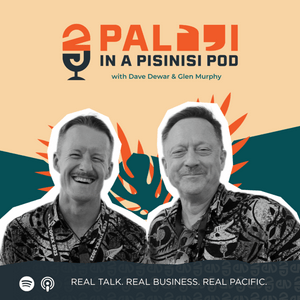
About Two Palagi in a Pisinisi Pod
The Pacific is one of the most commercially underestimated places on the planet. Its business stories rarely get told. That's what we're here for.Two Palagi in a Pisinisi Pod is a weekly business podcast hosted by Dave Dewar, based in Rarotonga Cook Islands (previously in Fiji), and Glen Murphy, based in Auckland New Zealand.Between them they've spent years working across the Pacific: building businesses, opening markets, and getting to know the people, trends and organisations that make this region tick.Now they've got a microphone and a lot of questions.Each week Dave and Glen dig into the business stories, news, and trends shaping the Pacific. Sometimes a conversation with an operator or investor with skin in the game; sometimes unravelling and explaining stories and trends that deserve more commercial attention than it's getting.Always, it means thirty minutes of straight talk with no development-sector framing.The show is made for businesspeople, investors, and professionals with Pacific interests - whether from Australia, New Zealand or across the region, but anyone curious about what's actually happening commercially across the Pacific will find plenty to take away.The listener who gets the most out of it is someone who knows the Pacific is worth paying attention to, and wants intelligence they can act on rather than headlines they've already seen.Pisinisi, by the way, is the Samoan and Tongan word for "business". Palagi refers to people of European descent in several Pacific cultures.Two Palagi in a Pisinisi Pod: the name says exactly what it is.New episodes drop weekly. Find us on Apple Podcasts, Spotify, and YouTube, or get in touch at two.palagi@gmail.com.
Podcast websiteListen to Two Palagi in a Pisinisi Pod, The Prof G Pod with Scott Galloway and many other podcasts from around the world with the radio.net app
Get the free radio.net app
- Stations and podcasts to bookmark
- Stream via Wi-Fi or Bluetooth
- Supports Carplay & Android Auto
- Many other app features
Get the free radio.net app
- Stations and podcasts to bookmark
- Stream via Wi-Fi or Bluetooth
- Supports Carplay & Android Auto
- Many other app features

Two Palagi in a Pisinisi Pod
Scan code,
download the app,
start listening.
download the app,
start listening.
 New Zealand