
Listen to this podcast in the app for free: Download for free in the App Store
radio.net
Sleep timer
Save favourites
100 episodes

Racing Records Decoded: Predicting OTTB Eventing Performance
21/10/2026 | 11 mins.In this episode Nancy McLean answers a listener’s question about choosing off-the-track Thoroughbreds (OTTBs) for eventing and reviews recent research on how past racing careers influence post-racing eventing levels.
She summarizes Bacon et al. (2025), which found that shorter racing careers and longer race distances are associated with greater likelihood of reaching higher eventing levels, while long track longevity and involuntary retirements (injury/health) reduce that likelihood. Nancy also highlights factors like pedigree, early-life influences, and the importance of the rider–horse relationship.
The episode offers practical tips — check racing records (Equibase), prioritize personality and a patient retraining timeline, and consider evidence-based retraining programs such as Kate Fenner’s Race2Ride.
Bacon, E. K., Parnell, D., Muscatello, G., McElroy, J., & Velie, B. D. (2025). How prior racing performance influences competition level in off-the-track Thoroughbred horses' post-racing eventing careers. Journal of equine veterinary science, 154, 105679. https://doi.org/10.1016/j.jevs.2025.105679
Race2Ride link:
https://www.race-2-ride.com/a/2148257211/YJ65wKcdGame-Changer for Equine OA? 2.5% Polyacrylamide Hydrogel Shows Long-Lasting Relief
23/09/2026 | 17 mins.In this episode Nancy McLean reviews a Tnibar (2025) literature review with seven equine studies showing 2.5% polyacrylamide hydrogel (IPAAG) provides long‑lasting, biocompatible intra‑articular relief for osteoarthritis, often reducing or resolving lameness from one month up to 24 months in many horses.
The episode summarizes study outcomes, notes rapid onset in some horses (as early as one week), typical post‑injection management (about one week stall rest with hand‑walking), and highlights effects on joint capsule elasticity and viscous supplementation that may protect articular surfaces.
Nancy contrasts 2.5% IPAAG with 4% products, explaining that 4% differs in manufacturing, contains silver ions, and currently has less published evidence and unclear safety compared with 2.5% IPAAG.SGLT2i Therapy for Horses
22/08/2026 | 16 mins.This episode reviews cases of steroid-induced laminitis and examines recent research and owner-reported experiences using SGLT2 inhibitors (most commonly ertugliflozin) as an off-label treatment for equine metabolic syndrome and hyperinsulinemia-associated laminitis.
An online survey of 342 owners found most horses treated with SGLT2Is showed improved quality of life and reduced pain, with many horses spared from euthanasia; common initial side effects included increased drinking and urination, weight loss, and dullness, which were often dose-dependent or resolved over time.
Key takeaways: SGLT2Is show promise as a rescue option for laminitis when combined with strict dietary management and good hoof care, but long-term safety, availability, cost, and further research remain important considerations.
Research
https://beva.onlinelibrary.wiley.com/doi/abs/10.1111/eve.14071
https://scholar.google.com/scholar?hl=en&as_sdt=0%2C14&as_vis=1&q=sundra+et+al+2025+Horseowner&btnG=#d=gs_qabs&t=1787417730062&u=%23p%3DSFYkeG9TZt4J
Humble Hoof Podcast Episode
https://open.spotify.com/episode/4CvEegebGNduL7hNJDAlFc?si=UWRrM3TuRJuXyg0Rxx_vSA&utm_source=copy-linkSteroid Use and Insulin Dysregulation in Horses.
07/08/2026 | 26 mins.Updates on preliminary research findings on steroid use and insulin deregulation in horses.Do Horses Get Headaches?
20/07/2026 | 20 mins.This episode explores whether horses can experience headaches by examining cervical spine pain, common signs like head rubbing or altered carriage, and how musculoskeletal and nervous system issues contribute to discomfort.
Nancy reviews diagnostic options, treatment and rehabilitation strategies, and the need for improved imaging and physiotherapy to restore performance and well-being.
Research Link: https://www.mdpi.com/2076-2615/11/2/422
More Health & Wellness podcasts









Trending Health & Wellness podcasts






















About Conversations in Equine Science
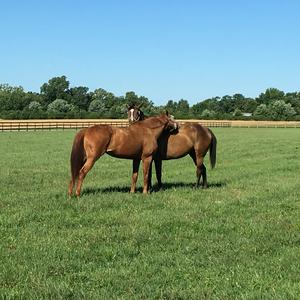
Nancy McLean discusses various equine research projects and studies to help bridge the gap between the scientific community, as well as, the general community of horse owners, trainers and enthusiasts.
Podcast websiteListen to Conversations in Equine Science, Get Sleepy: stories for sleep and many other podcasts from around the world with the radio.net app
Get the free radio.net app
- Stations and podcasts to bookmark
- Stream via Wi-Fi or Bluetooth
- Supports Carplay & Android Auto
- Many other app features
Get the free radio.net app
- Stations and podcasts to bookmark
- Stream via Wi-Fi or Bluetooth
- Supports Carplay & Android Auto
- Many other app features

Conversations in Equine Science
Scan code,
download the app,
start listening.
download the app,
start listening.
Conversations in Equine Science: Podcasts in Family
 New Zealand

