

Listen to this podcast in the app for free: Download for free in the App Store
radio.net
Sleep timer
Save favourites
96 episodes
Calm Your Nervous System Now: 3 Techniques for PCS
11/08/2026 | 44 mins.Episode 50
If you have ever felt like anxiety, overwhelm, or a racing nervous system is making your concussion symptoms worse, you are not alone. And you are not imagining it.
In this episode, Melinda Krynen Hill guides Dr. Cameron Marshall and Nikki Fraser through three live nervous system regulation practices that you can use right now, wherever you are, no experience required.
Here is what they cover:
What the window of tolerance actually means and why it matters so much in concussion recovery
How grounding foot and palm presses can anchor your nervous system when you are feeling activated or overwhelmed
Why box breathing is one of the most accessible tools for managing high-distress moments, like right before a meeting or a difficult task
How the three-minute breathing space works and when to use it
The difference between hyperarousal and hypoarousal, and why going too deep too fast can actually leave you feeling worse
What to do if you drop into a numb, flat, or shutdown state after a regulation practice
Why seated meditation is not always the right tool when you are highly dysregulated, and what to do instead
How to use movement as a bridge back into your window of tolerance
Dr. Cam started the session at an 8 out of 10 on the distress scale and ended at a 3. Nikki moved from a 5 to a 2. These are simple practices. And they work.
If your nervous system feels like it is constantly running too hot, or sometimes completely shut down, this episode was made for you. Recovery is possible, and learning to regulate your nervous system is one of the most foundational steps in the process.
Visit www.concussionfix.com to learn more about the step-by-step Concussion Fix program and find the support you deserve. Subscribe so you never miss an episode.
Intro song credit - I Feel Good - All Good Folks, Orfium (Hexacorp Ltd.)- downloaded from Uppbeat.io
Learn more about the Concussion Fix program for PCS - https://www.concussionfix.com/
Hear what people are saying about the Concussion Fix Program - https://concussiondoc.io/offer/love-page/
Take part in one of our free 90-minute patient workshops to learn how you can conquer your PCS - https://webinar.concussiondoc.io/s/qMKYfx
Don't forget to subscribe to the podcast so you can be notified about more valuable content on concussion recovery!
Learn more about the Concussion Fix program for PCS - https://concussiondoc.io/offer/the-concussion-fix/
Hear what people are saying about the Concussion Fix Program - https://concussiondoc.io/offer/love-page/
Take part in one of our free 90-minute patient workshops to learn how you can conquer your PCS - https://webinar.concussiondoc.io/s/qMKYfx
Remember, these insights are not medical advice. Always consult with your healthcare provider before making any changes to your treatment plan.
Intro song credit - I Feel Good - All Good Folks, Orfium (Hexacorp Ltd.)- downloaded from Uppbeat.ioFatigue After Concussion: The Emotional, Hormonal, and Physical Truth
28/07/2026 | 27 mins.Episode 49
If you are living with persistent concussion symptoms and feel exhausted no matter what you do, this episode is for you.
Fatigue is one of the most common and most misunderstood symptoms in post-concussion syndrome. It is also one of the most layered. In Episode 49 of the Concussion Fix Podcast, Nikki Fraser sits down with Dr. Paul Hrkal and Melinda Krynen Hill to unpack many of the dimensions of PCS fatigue, from nutritional deficiencies and hormonal disruption to emotional exhaustion, deconditioning, and sensory overload.
This is not a one-size-fits-all conversation. The panel walks you through a systematic, detective-style approach to figuring out what is actually driving your fatigue so you can stop guessing and start addressing the right things in the right order.
Here is what they cover in this episode:
Why emotional exhaustion is the most overlooked cause of fatigue in PCS, and why validating it first changes everything
How iron deficiency and B12 deficiency can quietly drain your energy, and why concussion often surfaces these pre-existing issues
The role of the pituitary gland and why concussion can disrupt thyroid function, cortisol, testosterone, growth hormone, and more
Why standard blood panels often miss adrenal dysfunction, and what kind of testing actually gives you accurate results
What morning fatigue specifically tells you about your cortisol and adrenal health
Why waking up tired after a full night of sleep is a completely separate problem from not sleeping enough
How physical deconditioning after concussion turns ordinary daily tasks like grocery shopping or riding transit into exhausting events
Why sensory overload from light and noise is itself a significant source of fatigue, and how graduated exposure helps rebuild tolerance
The emotional weight of identity loss, life disruption, and the pressure to be who you were before your injury
How clinical depression and anxiety, even mild versions, drain neurochemical and physical energy
A simple pen-and-paper self-assessment Dr. Hrkal recommends to identify your personal fatigue drivers
How to find a therapist or counsellor who understands traumatic brain injury, depression, anxiety, and life transitions
Why sub-symptom-threshold cardiovascular exercise is one of the most evidence-based tools for rebuilding energy capacity
How the Concussion Fix Pyramid guides you to address emotional and nervous system regulation before jumping into clinical testing
The most important thing to know is this: PCS fatigue is not laziness, weakness, or something you just have to live with. It is multifactorial, it is real, and there is a clear, structured path to understanding and addressing it.
Explore the full step-by-step Concussion Fix program at www.concussionfix.com. Subscribe so you never miss an episode.
Don't forget to subscribe to the podcast so you can be notified about more valuable content on concussion recovery!
Learn more about the Concussion Fix program for PCS - https://concussiondoc.io/offer/the-concussion-fix/
Hear what people are saying about the Concussion Fix Program - https://concussiondoc.io/offer/love-page/
Take part in one of our free 90-minute patient workshops to learn how you can conquer your PCS - https://webinar.concussiondoc.io/s/qMKYfx
Remember, these insights are not medical advice. Always consult with your healthcare provider before making any changes to your treatment plan.
Intro song credit - I Feel Good - All Good Folks, Orfium (Hexacorp Ltd.)- downloaded from Uppbeat.ioConcussion In Kids: The Parent Role That Actually Helps
14/07/2026 | 31 mins.Episode 48
If your child is living with persistent concussion symptoms, you are probably doing everything you possibly can to help them heal. But what if some of that help is actually slowing their recovery down?
In this episode, Nikki Fraser sits down with Dr. Cameron Marshall and Dr. Paul Hrkal to talk about one of the most emotionally charged dynamics in concussion recovery: the role of parents when their child has PCS.
This conversation was sparked by a real question from one of our program members, a mom navigating recovery alongside her older teenage son, and the discussion that followed was one we knew we had to share.
Here is what we cover:
- Why doing the program on your child's behalf can backfire, no matter how well-intentioned
- The age ranges at which parental involvement should shift from hands-on to background support
- Age of the child does matter. Young kids - parents completing the program. Younger teens - a partnership between parent and child. Older teens - they need to do the program themselves, with parents offering some support.
- How parental anxiety is actually a documented predictor of prolonged recovery in kids
- Why teen athletes with PCS face unique emotional and identity challenges
- The three things parents can do right now to genuinely support their child's recovery
- When to bring in additional professional support, and why a clinician's voice often lands differently than a parent's
Recovery is possible, even for kids who feel stuck, angry, or shut down. The path forward starts with giving them the tools to walk it themselves.
Learn more and explore the Concussion Fix program at www.concussionfix.com. Subscribe so you never miss an episode.
Hear what people are saying about the Concussion Fix Program - https://concussiondoc.io/offer/love-page/
Take part in one of our free 90-minute patient workshops to learn how you can conquer your PCS - https://webinar.concussiondoc.io/s/qMKYfx
Intro song credit - I Feel Good - All Good Folks, Orfium (Hexacorp Ltd.)- downloaded from Uppbeat.io
#ConcussionRecovery #PersistentConcussionSyndrome #TeenConcussion #PostConcussionSyndrome #ConcussionFix #KidsConcussion #PCSRecovery #ConcussionParent #BrainHealth #YouthAthletes #ConcussionAwareness #ParentingWithPCS
Don't forget to subscribe to the podcast so you can be notified about more valuable content on concussion recovery!
Learn more about the Concussion Fix program for PCS - https://concussiondoc.io/offer/the-concussion-fix/
Hear what people are saying about the Concussion Fix Program - https://concussiondoc.io/offer/love-page/
Take part in one of our free 90-minute patient workshops to learn how you can conquer your PCS - https://webinar.concussiondoc.io/s/qMKYfx
Remember, these insights are not medical advice. Always consult with your healthcare provider before making any changes to your treatment plan.
Intro song credit - I Feel Good - All Good Folks, Orfium (Hexacorp Ltd.)- downloaded from Uppbeat.ioHow To Manage PCS Symptoms During A Heat Wave
30/06/2026 | 22 mins.Episode 47
Struggling with concussion symptoms every time the temperature rises? You are not imagining it, and you are not alone.
In this episode of the Concussion Fix Podcast, Nikki Fraser sits down with Dr. Paul Hrkal and Dr. Cameron Marshall to answer a question that hits close to home for many members right now: how does heat actually affect persistent concussion symptoms, and what can you do about it?
With heat waves increasing in frequency across the globe, this episode could not be more timely.
If you have ever noticed your symptoms flaring in warm weather, felt dizzy or faint in the heat, or found yourself hiding in the one cool corner of your home just to get through the day, this episode was made for you.
Here is what Dr. Hrkal and Dr. Marshall cover:
- Why autonomic nervous system dysregulation makes people with PCS so much more sensitive to heat
- How heat acts as a stressor on the same systems that concussion already disrupts, including blood flow regulation, heart rate control, and vasodilation
- Why avoidance makes heat intolerance worse over time, and what to do instead
- The gradual exposure method: how to safely build heat tolerance the same way athletes acclimatize to hot climates
- Short-term survival strategies for getting through a heat wave right now
- The role of hydration and electrolytes, especially sodium, in managing autonomic dysfunction
- Practical cooling tools like wet towels, cold basins for hands and feet, and frozen water bottles
- How anticipatory anxiety about heat can make symptoms worse and what you can do to calm your nervous system before heading out
- Why the morning hours are your best window for errands and outdoor activity in summer
Recovery is possible, even in the middle of a heat wave. The key is small, consistent, gradual steps forward.
Learn more and explore the full Concussion Fix program at www.concussionfix.com. Subscribe so you never miss an episode.
Hear what people are saying about the Concussion Fix Program - https://concussiondoc.io/offer/love-page/
Take part in one of our free 90-minute patient workshops to learn how you can conquer your PCS - https://webinar.concussiondoc.io/s/qMKYfx
Intro song credit - I Feel Good - All Good Folks, Orfium (Hexacorp Ltd.)- downloaded from Uppbeat.io
Don't forget to subscribe to the podcast so you can be notified about more valuable content on concussion recovery!
Learn more about the Concussion Fix program for PCS - https://concussiondoc.io/offer/the-concussion-fix/
Hear what people are saying about the Concussion Fix Program - https://concussiondoc.io/offer/love-page/
Take part in one of our free 90-minute patient workshops to learn how you can conquer your PCS - https://webinar.concussiondoc.io/s/qMKYfx
Remember, these insights are not medical advice. Always consult with your healthcare provider before making any changes to your treatment plan.
Intro song credit - I Feel Good - All Good Folks, Orfium (Hexacorp Ltd.)- downloaded from Uppbeat.ioPCS And Perimenopause: What Every Woman Should Know
16/06/2026 | 17 mins.Episode 46
Are your concussion symptoms getting worse and you can't figure out why? If you're a woman in your 40s or 50s, hormones might be the missing piece of your recovery puzzle.
In this episode of the Concussion Fix Podcast, Nikki Fraser sits down with Dr. Paul Hrkal and Melinda Krynen Hill to unpack the complicated relationship between perimenopause, menopause, and persistent concussion symptoms (PCS). This is one of the most common questions from members of our program, and for good reason.
Here's what we cover:
How a concussion can disrupt hormone production, sometimes months or even a year later
Why perimenopause and PCS symptoms look so similar, and how to tell them apart
Simple at-home tracking strategies to see if your cycle is affecting your mood and symptoms
What hormone testing to ask for and who to see
How balancing hormones creates a "neuropermissive environment" for brain healing
Recovery is complex, and for many women, hormonal dysregulation is a layer of the onion that goes unaddressed for far too long. You deserve answers that actually account for everything your body is going through.
If this resonates, you are not alone, and recovery is absolutely possible.
Visit us at www.concussionfix.com to learn more about the Concussion Fix program and the step-by-step support waiting for you there. Subscribe so you never miss an episode.
Learn more about the Concussion Fix program for PCS - https://www.concussionfix.com/
Hear what people are saying about the Concussion Fix Program - https://concussiondoc.io/offer/love-page/
Take part in one of our free 90-minute patient workshops to learn how you can conquer your PCS - https://webinar.concussiondoc.io/s/qMKYfx
Intro song credit - I Feel Good - All Good Folks, Orfium (Hexacorp Ltd.)- downloaded from Uppbeat.io
#ConcussionRecovery #PersistentConcussionSyndrome #PCSRecovery #Perimenopause #HormoneHealth #BrainHealth #WomensHealth #ConcussionFix #PostConcussionSyndrome #TraumaInformedCare
Don't forget to subscribe to the podcast so you can be notified about more valuable content on concussion recovery!
Learn more about the Concussion Fix program for PCS - https://concussiondoc.io/offer/the-concussion-fix/
Hear what people are saying about the Concussion Fix Program - https://concussiondoc.io/offer/love-page/
Take part in one of our free 90-minute patient workshops to learn how you can conquer your PCS - https://webinar.concussiondoc.io/s/qMKYfx
Remember, these insights are not medical advice. Always consult with your healthcare provider before making any changes to your treatment plan.
Intro song credit - I Feel Good - All Good Folks, Orfium (Hexacorp Ltd.)- downloaded from Uppbeat.io
More Health & Wellness podcasts
 Steph & LauraHealth & Wellness, Kids & Family, Mental Health, Parenting, Relationships, Society & Culture
 Feel Better, Live More with Dr Rangan ChatterjeeAlternative Health, Health & Wellness
 Maintenance PhaseEducation, Health & Wellness, History
 On Purpose with Jay ShettyBusiness, Health & Wellness, Mental Health
 The School of GreatnessBusiness, Education, Entrepreneurship, Health & Wellness, Mental Health, Self-Improvement
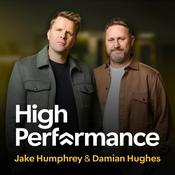 The High Performance PodcastEducation, Health & Wellness, Self-Improvement, Sports
 Nothing much happens: bedtime stories to help you sleepFiction, Health & Wellness
 Daze of Our LivesEducation, Health & Wellness, Self-Improvement, Society & Culture
 ZOE Science & NutritionEducation, Health & Wellness, Nutrition, Science
 Huberman LabHealth & Wellness, Life Sciences, Science
Trending Health & Wellness podcasts
 ADHD Experts PodcastHealth & Wellness, Mental Health
 The Boundaries.me PodcastChristianity, Health & Wellness, Mental Health, Relationships, Religion & Spirituality, Society & Culture
 No Such Thing as NormalHealth & Wellness, Mental Health, Society & Culture
 You Make SenseEducation, Health & Wellness, Mental Health, Relationships, Self-Improvement, Society & Culture
 All In The MindHealth & Wellness, Life Sciences, Mental Health, Science
 Clearer, not Louder with Beatrice KamauAlternative Health, Christianity, Education, Health & Wellness, Religion & Spirituality, Self-Improvement
 Just Sleep - Bedtime Stories for AdultsAlternative Health, Health & Wellness, Mental Health
 Rain Sounds - 10 HoursAlternative Health, Health & Wellness, Nature, Science
 Savage LovecastHealth & Wellness, Relationships, Sexuality, Society & Culture
 Your Anxiety Toolkit - Practical Skills for Anxiety, Panic & DepressionEducation, Health & Wellness, Mental Health, Self-Improvement
 mind youHealth & Wellness, Mental Health
 The Little ThingsEducation, Health & Wellness, Kids & Family, Parenting, Relationships, Self-Improvement, Society & Culture
 Office Hours with Arthur BrooksHealth & Wellness, Mental Health
 We're All InsaneHealth & Wellness, Mental Health
About The Concussion Fix Podcast
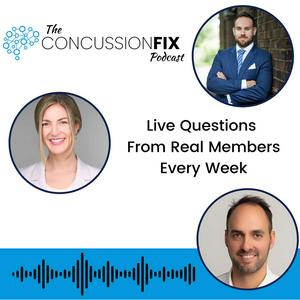
The Concussion Fix Podcast lifts the veil on concussion recovery by providing tools, insights, and expert guidance to help individuals take control of their healing journey. Featuring real questions from program members and advice from leading specialists, this podcast offers hope, clarity, and empowerment for those navigating persistent concussion symptoms.Your hosts include Dr. Cameron Marshall, Dr. Paul Hrkal, and psychotherapist Melinda Krynen Hill.
Podcast websiteListen to The Concussion Fix Podcast, Steph & Laura and many other podcasts from around the world with the radio.net app
Get the free radio.net app
- Stations and podcasts to bookmark
- Stream via Wi-Fi or Bluetooth
- Supports Carplay & Android Auto
- Many other app features
Get the free radio.net app
- Stations and podcasts to bookmark
- Stream via Wi-Fi or Bluetooth
- Supports Carplay & Android Auto
- Many other app features

The Concussion Fix Podcast
Scan code,
download the app,
start listening.
download the app,
start listening.
 New Zealand