PodcastsHealth & WellnessPlayful Nature Podcast by WildStrong

Playful Nature Podcast by WildStrong

WildStrong
Playful Nature Podcast by WildStrong
Latest episode

36 episodes

  • Playful Nature Podcast by WildStrong

    #36. Gareth Williams. Belonging before performance.

    01/03/2026 | 1h 6 mins.
    Andrew chats with Gareth Williams, a primary school PE teacher on the Kent coast who’s built Play Folke, a weekly “playground games for adults” session designed for people who do not feel at home in gyms, bootcamps, or traditional sport.
    Gareth’s story starts in the familiar place of someone who lived inside sport. He trained full-time for a year at Crystal Palace, played semi-professional football for a decade, then tried hard not to become “the tracksuit coach” before eventually leaning into what he was good at. A headteacher nudged him towards teacher training, and after qualifying as a primary teacher, Gareth began to notice something that changed his approach. The kids who loved PE would always be fine. The ones who felt awkward, judged, or left behind were the ones who needed PE to work.
    During COVID, Gareth found a different style of PE through teachers and resources that emphasised inclusion, simplicity, and play. He describes a shift away from sport-heavy, match-based lessons towards activities that “let it breathe”, giving children freedom to explore, adapt, and find success without being singled out. That same insight became the seed for Play Folke: if these games create confidence and joy for kids, why would they not work for adults who have carried a negative relationship with movement since school?
    Play Folke began with three people, two of whom Gareth already knew. One new person turning up, and enjoying it, was the difference between stopping and continuing. Since then, Gareth has learned the slow reality of building community, the mismatch between online interest and in-person attendance, and the value of keeping sessions loose, social, and low-pressure.
    This episode is a look at what many movement spaces miss: belonging, permission, and play as a genuine route back to physical capability.
    Links for more about Play Folke:
    Substack
    Instagram
    Facebook
    Gareth on LinkedIn

  • Playful Nature Podcast by WildStrong

    #35. Becky Dunphy. Learning to trust your body

    05/02/2026 | 59 mins.
    In this conversation, Andrew sits down with physiotherapist and first-year PhD student Becky Dunphy to explore what changes when you stop treating movement like a neat mechanical problem.
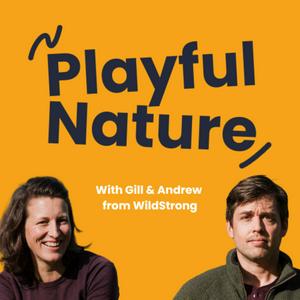
    Becky traces her journey from a “black and white” early-career physio mindset (find the faulty part, prescribe the fix) toward a public health lens shaped by COVID-era NHS strain, inequality, and the reality that bodies don’t behave like textbooks.
    We go into how an “injury” makes sense on the surface, but when you widen the frame to stress, sleep, workload, and skipped meals, you start to see why the body might protect itself — and why a purely biomechanical explanation often fails people.
    From there the conversation moves into Cognitive Functional Therapy and the practical art of helping someone “make sense” of pain, reduce fear, and rebuild trust through experiential learning.
    Becky also challenges the idea that there is one correct way to move — pointing to everyday labour, the Paralympics, and sport itself as evidence that humans self-organise brilliantly. The deeper risk, she argues, is when credentialism and “optimal form” narratives become barriers that stop people moving at all.
    The episode closes with Becky’s current research focus: peri- and post-menopausal women with multiple long-term conditions (especially osteoarthritis), and why the gap in strength training may be biological, social, and structural — not a motivation problem.
    She ends with heuristics for exercising with pain: aim for tolerable discomfort, watch the after-effects, and keep it functional.
  • Playful Nature Podcast by WildStrong

    #34. Dr Gillian Bartle. Learning to value movement throughout our lives

    21/01/2026 | 1h 1 mins.
    In this episode, Andrew is joined by Dr Gillian Bartle, lecturer in education, researcher, and Research Lead for the International Physical Literacy Association.
    Drawing on decades of experience across physical education, teacher education, further education, and academia, Gillian reflects on how we learn to move and what gets lost when movement is over-structured, over-measured, or over-scripted.
    The conversation begins with Gillian’s journey from PE teacher to philosopher of physical education, shaped by early discomfort with assessment systems that valued written knowledge over embodied knowing.
    Together, Andrew and Gillian explore physical literacy as a disposition rather than a programme or policy: an ongoing relationship with movement rooted in meaning, confidence, curiosity, and lived experience. They discuss the risks of normalising developmental benchmarks, the limits of fitness-led approaches, and why valuing movement cannot be reduced to sets, reps, or gym memberships.
    Woven throughout is a broader question: do we, as a society, actually value movement — and if not, what might help restore it as part of everyday life?
    Related links:
    IPLA
    Exploring the Notion of Literacy Within Physical Literacy: A Discussion Paper
    Physical Literacy as a Foundation for Physical Education in Scottish Primary Schools
  • Playful Nature Podcast by WildStrong

    #33. Gill & Andrew Short. Pain, recovery and rebuilding confidence.

    14/01/2026 | 37 mins.
    In this short (ish) Gill & Andrew chat, they tackle one of the biggest topics they get asked about every week: pain, recovery, and coping when your body doesn’t feel like it used to.
    They start by talking through the three broad pain categories: nociceptive (often linked to acute tissue injury), neuropathic (linked to nerves), and nociplastic (often chronic, where the alarm system can become over-sensitive).
    The central idea: pain is an output of the nervous system — a kind of alarm — and alarms can be loud, imprecise, and shaped by context.
    From there, they explore the tension between a more reductionist “biomechanics / something is structurally wrong” story and a biopsychosocial model that includes biology, beliefs, stress, sleep, uncertainty, prior experiences, and cultural narratives about injury.
    The episode finishes with a practical recovery frame: two levers — calm things down and build things up. Calm the nervous system, reduce threat, create a plan, and adjust load temporarily. Then gradually reintroduce exposure, “flirt” with the edges of tolerable discomfort, and build capability over time — in ways that are meaningful to you, not imposed by a guru.
    The takeaway is, recovery isn’t “getting your old body back”. It’s building a new relationship with the one you have now.
    Links for more on this:
    Greg Lehman – referenced as a key pain educator; “pain is an output of the nervous system” framing.

    Peter O’Sullivan – referenced in relation to persistent pain work and rehab approach.

    Todd Hargrove  - Episode 22 – referenced re: “regaining territory” / explorer-map metaphor; also mentioned as a previous podcast guest.

    Nil Teisner – mentioned for the idea of “flirting with pain” (finding tolerable edges rather than avoidance).

    Tom Morrison – Episode 14

    Joanna Myers – Episode 12

    Jarlo Alano  - Episode 28 – mentioned for the “rusty hinge” analogy.
  • Playful Nature Podcast by WildStrong

    #32. Gill & Andrew Short. Nocebo, Pain, and Practitioner Power

    02/01/2026 | 34 mins.
    Be careful what you ask for folks! A lot of you asked for more from Gill and Andrew together, here's our first shot.
    A bit of a chatty one - we have a Part 2 to this coming shortly on pain and moving with pain.
    What if some of the advice meant to help us actually makes things worse?
    In this episode, Gill Erskine and Andrew Telfer unpack the nocebo effect - the lesser-known counterpart to placebo - and how it shows up in everyday healthcare interactions. From back pain diagnoses and scary scans to guru dynamics and over-reliance on “being fixed,” they explore how language, power, and belief can quietly undermine confidence, resilience, and recovery.
    Drawing on real experiences with physiotherapy and chiropractic care, as well as research discussed by clinicians like Peter O'Sullivan, this conversation looks at why pain isn’t a simple mechanical problem - and why building agency matters more than quick fixes.
    This isn’t about attacking professions or telling people to stop seeing practitioners. It’s about learning how to spot unhelpful narratives, ask better questions, and find support that helps you build capability for the long term.

    Blog article: ⁠The Stories That Shape How We Move ⁠

    Avoiding nocebo and other undesirable effects in chiropractic, osteopathy and physiotherapy: An invitation to reflect This is a paper that we often talk about in class. It looks at the disempowering and ‘nocebo’ effects that certain practitioners can have on their clients.
    Link to the Todd Hardgrove episode of the podcast.

More Health & Wellness podcasts

About Playful Nature Podcast by WildStrong

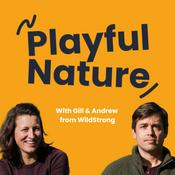
A Podcast that explores connection through movement, nature & community, with Gill Erskine & Andrew Telfer from WildStrong. A mix of discussions on questions that come up a lot during our movement courses and classes and some long form chats with people we admire. Music by our long time supporter, Mary Erskine @meforqueen
Podcast website

Listen to Playful Nature Podcast by WildStrong, On Purpose with Jay Shetty and many other podcasts from around the world with the radio.net app

Get the free radio.net app

  • Stations and podcasts to bookmark
  • Stream via Wi-Fi or Bluetooth
  • Supports Carplay & Android Auto
  • Many other app features
Social
v8.7.2 | © 2007-2026 radio.de GmbH
Generated: 3/4/2026 - 7:16:02 AM