
Listen to this podcast in the app for free: Download for free in the App Store
radio.net
Sleep timer
Save favourites
540 episodes
NEW STUDY: Dr. Satchin Panda on How IF/TRE Changes Your Fat Cells | Fat Loss, Muscle & Meal Timing
26/10/2026 | 1h 14 mins.What actually happens inside your fat cells when you practice time-restricted eating—and can meal timing help you lose body fat without sacrificing muscle?
Dr. Satchin Panda, one of the world's leading researchers on circadian rhythms and time-restricted eating, returns to the Optimal Protein Podcast to unpack fascinating new human research examining time-restricted eating, body composition, inflammation and changes in gene activity inside fat tissue.
Dr. Panda explains why fat tissue is far more than a passive storage depot. We explore how fat cells have their own circadian clocks, why excess fat can become pro-inflammatory, and how aligning eating and fasting periods may influence the pathways involved in fat breakdown and inflammation.
We also tackle one of the biggest concerns surrounding intermittent fasting: Does time-restricted eating cause muscle loss? Dr. Panda explains why some earlier studies raised this concern, what newer research is showing, and why protein intake, diet quality and resistance training remain essential—especially as we age.
We discuss:
• The new human study examining time-restricted eating and fat tissue
• What researchers discovered about gene activity inside fat cells
• How time-restricted eating may change the way stored fat is mobilized
• Why visceral and excess body fat can become pro-inflammatory
• How the circadian clock coordinates fat metabolism
• Why TRE may naturally reduce calories, alcohol and late-night processed foods
• Whether the benefits extend beyond simple calorie restriction
• Does intermittent fasting cause muscle loss?
• Why adequate protein and resistance training matter during fat loss
• Why an 8–10 hour eating window may be a practical approach
• Earlier dinner vs. later breakfast—which matters more?
• Why Dr. Panda recommends finishing your last meal about 3 hours before bed
• Why he recommends waiting approximately 1–2 hours after waking before breakfast
• Black coffee, morning lattes and whether they "break" the fasting period
• What research in athletes tells us about TRE and body composition
• Meal timing, glucose regulation and metabolic health
• New preliminary research combining meal timing, exercise, daylight exposure and sleep consistency
• The surprising effects observed in older adults after only 60 days
• Dr. Panda's practical framework for organizing sleep, meals, movement and light exposure for healthy aging
Dr. Panda also shares how he structures his own mornings, why consistency matters more than perfection, and the simple daily habits he believes can have an outsized impact on metabolic health and healthy aging.
This conversation goes far beyond "when should I eat?" It's a fascinating look at how protein, resistance training, circadian biology, sleep and meal timing can work together to support fat loss while preserving the muscle we work so hard to build.
RESOURCES
⭐ Protein Sparing Modified Fasting Library™
Get the complete high-protein system featuring recipes, structured meal frameworks, grocery lists and strategies designed to support fat loss while prioritizing satiety and lean mass.
Visit KetogenicGirl.com and use code VANESSA for 20% off.
AirDoctor
Upgrade the air quality in your home with AirDoctor's powerful filtration systems. Visit AirDoctorPro.com and use code VANESSA to get up to $300 off select AirDoctor models plus a free 3-year warranty.
CONNECT WITH DR. SATCHIN PANDA
Learn more about Dr. Panda's research, books and work on circadian biology and time-restricted eating at SatchinPanda.com and follow him on Instagram and X.
CONNECT WITH VANESSA
Instagram: @ketogenicgirl
Instagram: @optimalproteinpodcast
Optimal Protein Podcast Facebook Community
This podcast is for educational and informational purposes only and is not medical advice. Always consult your physician or qualified healthcare provider regarding your individual health, nutrition and exercise needs.2 NEW STUDIES: How Many Calories Does It Take to Build Muscle—and Can Lifting Change Fat Cells?
23/10/2026 | 44 mins.How many calories does it actually take to build muscle—and do you really need to eat in a surplus?
In this Friday solocast, I recap my conversation with Dr. Milo Wolf, exploring a new paper modeling the energy cost of building muscle and what it means for the familiar advice to "eat more to grow."
We discuss how muscle gain and fat loss can happen together, why protein matters, and how to make your workouts effective when time is limited!
You'll learn:
• Why building muscle doesn't automatically require bulking—and how stored body fat can help supply energy.
• What an energy-cost model can tell us, and why it cannot prescribe your exact calorie needs.
• Milo's protein recommendations for supporting muscle growth and preserving muscle during fat loss.
• How brief, challenging workouts can deliver results.
• Training close to failure, emphasizing the stretched position, and saving time with supersets and drop sets.
• How to approach a calorie deficit while supporting muscle, performance, and recovery.
Plus, I unpack a fascinating mouse study on changes in fat tissue following strength training—even before body weight changed—and explain why mobilizing fat is different from losing it.
Listen to the full interview with Dr. Milo Wolf for our deeper dive into the research!
Explore the PSMF Library, the Tone device and Tone LUX red light therapy at ketogenicgirl.com. Get 20% off with the code VANESSA
This podcast is for informational and educational purposes only and does not constitute medical advice. Consult your qualified healthcare professional for advice specific to your health and circumstances.New Study: Do You Really Need a Calorie Surplus to Build Muscle? | Dr. Milo Wolf
19/10/2026 | 1h 12 mins.Can you build muscle without bulking—and could stored body fat help fuel the process?
Dr. Milo Wolf joins me to unpack new research on the energetic cost of building muscle and what it means for losing fat while gaining or preserving muscle, even for experienced lifters.
We discuss:
• Why a calorie surplus may not be necessary for muscle growth.
• His protein recommendations for body recomposition.
• Balancing fat loss with muscle retention and recovery.
• How little resistance training can still produce results.
• Using lengthened partials, supersets, and drop sets to make workouts more efficient.
Join me Friday for my solo recap and top takeaways!
Thank you to our sponsor, AQUATRU!
Get 20% off your AquaTru water purifier at AquaTru.com with code VANESSA! Includes a 30-day best-tasting water guarantee or your money back.
SAVE ON THE PSMF LIBRARY™ & TONE LUX
Explore the Protein-Sparing Modified Fasting Library™ and the Tone LUX red light therapy collection at Ketogenic Girl. Save 20% with code VANESSA
DISCLAIMER
This podcast is for educational and informational purposes only and is not medical advice. Consult your healthcare professional before changing your diet, exercise routine, or supplement use. Guest opinions are their own, and individual results vary.
This episode contains paid advertising and promotions for my own products. Some links may be affiliate links, meaning I may earn a commission at no additional cost to you.T2, Fat Burning & Brown Fat: How It Works in the Mitochondria and What the Studies Show
16/10/2026 | 50 mins.Does increasing fat burning automatically mean losing more body fat? And what would we need to measure to know whether an intervention preserves muscle?
In this Friday solocast, I'm revisiting my conversation with Dr. Amie Hornaman to unpack the research on T2, a lesser-known thyroid hormone derivative, and connect the mechanisms to the body composition questions we care about.
We go inside the mitochondria to explore how fatty acids enter, how our cells regulate fuel use, and how mitochondrial uncoupling releases energy as heat. I also revisit the brown fat research and potential connections with ketogenic metabolism.
Along the way, I clarify several findings from the interview—including what "50% less fat mass" meant in the rat study, why lower body weight does not establish fat-only loss, and why changes in muscle-cell metabolism do not prove muscle preservation.
The T2 research is intriguing, but human evidence remains very limited. This recap explores what the findings suggest, what they cannot establish, and the practical steps we can take now to support muscle and metabolic health.
BACK-TO-SCHOOL SALE!
For a limited time, save 40% sitewide at ketogenicgirl.com with code BACKTOSCHOOL40, including the Protein-Sparing Modified Fasting Library, ToneLUX Red Light Therapy Collection, and Tone Breath Ketone Analyzer.
In this episode, I discuss:
What T2 is and how it relates to T3 and T4.
What the 2005 rat study actually found about fat accumulation.
The carnitine shuttle and how fatty acids reach the mitochondria.
How AMPK, ACC, and malonyl-CoA help regulate fat oxidation.
Mitochondrial uncoupling, ATP production, and heat generation.
Brown fat thermogenesis and why an animal's thyroid status matters.
Possible connections with keto—and why shared pathways do not establish added benefits.
The difference between burning dietary fat and losing stored body fat.
The two-participant human T2 report and Amie's uncontrolled 14-woman project.
What stronger human research would need to measure.
Thyroid safety questions and the importance of appropriate prescribed treatment.
Lean mass versus skeletal muscle during weight loss.
Practical ways to prioritize protein, resistance training, and consistency.
Questions to bring to your clinician if you have persistent symptoms.
Research discussed
Lanni and colleagues, 2005: T2, fat accumulation, and liver fatty acid oxidation in high-fat-fed rats.
Read the study
Lombardi and colleagues, 2009: T2, skeletal muscle fatty acid oxidation, AMPK signaling, and thermogenesis.
Read the study
Antonelli and colleagues, 2011: Preliminary human report on resting metabolic rate and body weight in two participants.
Read the study
Cavallo and colleagues, 2013: Rapid liver-cell responses to T2 in hypothyroid rats.
Read the study
Lombardi and colleagues, 2015: Brown fat thermogenesis in hypothyroid rats.
Read the study
Additional research and resources
Luukkonen and colleagues, 2020: A short human study of ketogenic eating, liver fat, and hepatic mitochondrial metabolism.
Read the study
Hall and colleagues, 2015: A controlled human study illustrating the distinction between increased fat oxidation and net body-fat loss.
Read the study
Longland and colleagues, 2016: Protein and exercise during an energy deficit.
Read the study
Padron and colleagues, 2014: T2 and thyroid suppression in rats.
Read the study
Jonas and colleagues, 2015: T2, thyroid regulation, and potential cardiac effects in mice.
Read the study
American Thyroid Association: Thyroid treatment and testing information.
Thyroid hormone treatment | Thyroid function tests
Listen to the full conversation with Dr. Amie Hornaman in the podcast feed.
Thank you so much for spending this time with me! If you enjoyed the episode, please share it with a friend who loves understanding the science behind metabolism and body composition.
Disclosure and medical disclaimer
Dr. Amie Hornaman sells the T2-containing supplement discussed in the original interview. This recap is educational and does not endorse or recommend purchasing or taking it. Supplemental T2's long-term safety has not been established, and some animal studies have raised concerns about thyroid suppression and heart effects.
Do not start T2, substitute it for prescribed treatment, or change your thyroid medication based on this episode. Consult a qualified healthcare professional about your individual circumstances.T2 and Fat Burning: What the Thyroid Research Really Shows with Dr. Amie Hornaman
12/10/2026 | 1h 19 mins.What is T2, and why have researchers been investigating its effects on metabolism?
In this episode of the Optimal Protein Podcast, I'm welcoming back Dr. Amie Hornaman to explore 3,5-diiodothyronine, commonly called T2—a lesser-known thyroid hormone derivative studied for its effects on energy expenditure, fatty acid oxidation, and mitochondrial function.
Thank you to our sponsor, AirDoctor!
Visit AirDoctorPro.com and use promo code VANESSA for up to $300 off select AirDoctor models, plus a free 3-year warranty. All AirDoctor air purifiers come with a 30-day money-back guarantee.
We walk through research on liver cells, skeletal muscle, and brown fat, unpacking the machinery that helps fatty acids enter the mitochondria and a process called mitochondrial uncoupling, in which energy is released as heat.
We also explore possible connections with ketogenic diets and the question that matters so much to us here: what could these findings mean for losing body fat while preserving muscle?
Much of the research discussed comes from animal studies. We examine a small human report involving just two participants, and Amie shares observations from an uncontrolled group of 14 women who used her T2-containing product. These findings raise interesting questions, but they do not establish that supplemental T2 is a safe or effective approach to fat loss.
BACK-TO-SCHOOL SALE!
For a limited time, save 40% sitewide at ketogenicgirl.com with code BACKTOSCHOOL40, including the Protein-Sparing Modified Fasting Library, ToneLUX Red Light Therapy Collection, and Tone Breath Ketone Analyzer.
In this episode, we discuss:
What T2 is and how it relates to the better-known thyroid hormones T3 and T4.
The 2005 rat study reporting less fat accumulation and greater liver fatty acid oxidation.
How the carnitine shuttle helps transport long-chain fatty acids into the mitochondria.
AMPK, ACC, and malonyl-CoA—and their roles in regulating fat oxidation.
Mitochondrial uncoupling, ATP production, and thermogenesis.
Research on T2 and brown fat in animals with low thyroid function.
Potential overlaps with ketogenic metabolism.
The limited human evidence and the need for larger, controlled studies.
Why increased fat burning, lower body weight, and muscle preservation are different outcomes.
Protein, resistance training, and body composition during weight loss.
Important context for interpreting the research
The approximately 50% lower fat mass reported in the 2005 rat study was a comparison with the untreated high-fat-diet group. It does not mean the animals lost half of their starting body fat.
The 2011 human report described approximately 4% lower body weight, not proof that all weight lost was fat. Neither that report nor the uncontrolled 14-woman project establishes long-term safety or that T2 caused the reported changes.
Changes in muscle-cell fuel use do not establish muscle preservation during weight loss. Shared metabolic pathways also do not establish that combining keto and T2 provides additional benefits.
Studies discussed
Lanni and colleagues, 2005: T2, fat accumulation, and liver fatty acid oxidation in rats receiving a high-fat diet.
Read the study
Lombardi and colleagues, 2009: T2, skeletal muscle fatty acid oxidation, AMPK signaling, and thermogenesis in rats.
Read the study
Antonelli and colleagues, 2011: Preliminary human report on T2, resting metabolic rate, and body weight in two participants.
Read the study
Cavallo and colleagues, 2013: Rapid effects of T2 on fatty acid oxidation and mitochondrial function in liver cells from hypothyroid rats.
Read the study
Lombardi and colleagues, 2015: T2 and brown adipose tissue thermogenesis in hypothyroid rats.
Read the study
Additional safety references
Padron and colleagues, 2014: T2 administration, central hypothyroidism, and effects on thyroid-sensitive tissues in rats.
Read the study
Jonas and colleagues, 2015: T2's effects on thyroid regulation, body composition, energy metabolism, and heart weight in mice.
Read the study
Thank you so much for listening! If you enjoyed exploring the science with us, please share this episode with a friend who loves learning about metabolism and body composition.
Join me on Friday for my solocast recap, where I'll revisit the key mechanisms, clarify what the studies do and don't show, and connect the discussion to practical takeaways for supporting muscle and metabolic health.
Guest disclosure and medical disclaimer
Dr. Amie Hornaman sells the T2-containing supplement discussed. This episode is educational and does not endorse or recommend purchasing or taking it. Some animal studies have raised concerns about thyroid suppression and heart effects; availability without a prescription does not establish safety.
Do not start T2, substitute it for prescribed treatment, or change your thyroid medication based on this episode. Consult a qualified healthcare professional about your individual circumstances.
Correction: In the mitochondrial uncoupling discussion, we meant DNP, not DMT.
More Fitness podcasts


Trending Fitness podcasts

About Optimal Protein Podcast with Vanessa Spina
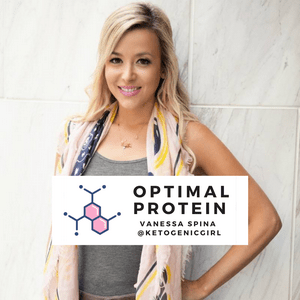
Vanessa Spina is a Sports Nutrition Specialist, Best Selling author, creator of the innovative TONE device, as well as a sought after international speaker. On the Optimal Protein podcast, Vanessa shares how to get effortlessly lean and improve metabolic health and fitness with an optimal protein intake!
Featuring interviews with world renowned and leading edge protein scientists & experts, authors, and people with inspiring transformational stories discussing the best tools for becoming optimizing your metabolic health with whole foods, nutrition, exercise and more!
Podcast websiteListen to Optimal Protein Podcast with Vanessa Spina, Move it Mama - The Sparkle Pod and many other podcasts from around the world with the radio.net app
Get the free radio.net app
- Stations and podcasts to bookmark
- Stream via Wi-Fi or Bluetooth
- Supports Carplay & Android Auto
- Many other app features
Get the free radio.net app
- Stations and podcasts to bookmark
- Stream via Wi-Fi or Bluetooth
- Supports Carplay & Android Auto
- Many other app features

Optimal Protein Podcast with Vanessa Spina
Scan code,
download the app,
start listening.
download the app,
start listening.
 New Zealand