
Listen to this podcast in the app for free: Download for free in the App Store
radio.net
Sleep timer
Save favourites
218 episodes
What Your Vet Wishes You Knew About Your Pet with Charles Cosgrave #192
22/10/2026 | 53 mins.Veterinary surgeon and founder of Village Vets, Charles Cosgrave, joins Laura to share what every pet owner should know about keeping their animals healthy, happy and safe — from neutering and pet insurance to behavioural problems, emergency care and the realities of life as a vet.
Growing up on a dairy farm in County Meath, Charles watched his father answer veterinary calls at all hours, even on Christmas Day. After qualifying from UCD and working in the UK, he returned to Ireland and helped build Village Vets, which has grown to 35 locations, including three 24-hour emergency centres.
Charles takes us behind the scenes of veterinary medicine, explaining what happens during overnight emergencies, why children can provide the most useful information about a sick pet and how veterinary care has evolved to include specialist treatment for conditions such as diabetes, epilepsy and cancer.
Laura also asks the questions many dog owners have: Should you neuter your dog? What should you look for in pet insurance? How can you prevent behavioural problems? And what needs to change to tackle puppy farming in Ireland?
They explore the responsibility of pet ownership, the importance of early training and socialisation, the challenges of treating seriously ill animals and the difficult decisions surrounding end-of-life care.
Alongside the practical advice, Charles shares the challenges of growing a family business, the shortage of vets in Ireland and why, despite running 35 practices, he still misses working directly with animals.
🔑 Key Points
Neutering and pet health:
Charles discusses neutering male dogs, potential health concerns and factors owners should consider with their vet.
Pet insurance:
Why Charles recommends insurance, what to check before choosing a policy and how switching providers can affect cover for existing conditions.
Training and behaviour:
The importance of socialising dogs early, establishing routines and helping them adjust to people, noise and unfamiliar environments.
Puppy farming and microchipping:
Charles discusses dog breeding in Ireland, existing microchipping requirements and the challenges of tackling irresponsible breeding.
When pets become seriously ill:
How vets manage chronic conditions including diabetes and epilepsy, treat cancer and approach difficult end-of-life decisions.
Inside veterinary medicine:
From overnight emergencies to specialist care, Charles explains the pressures facing vets and the growing demand for veterinary services.
📚 Resources
Village Vets
Charles's practice group, 35 clinics across Ireland and three 24-hour emergency centres
UCD School of Veterinary Medicine
where Charles trained, and still the main route into the profession
Dog microchipping
what's required in Ireland, and the measure Charles says would curb puppy farming
⏱️ Timestamps
02:37 – Growing up with a vet for a father
05:36 – How vets treat different animal species
07:30 – Building Village Vets
10:00 – Veterinary education and the shortage of vets
13:44 – Inside 24-hour emergency veterinary care
15:45 – Why children notice changes in sick pets
17:00 – Pet ownership and rehoming
19:20 – Neutering male dogs
21:09 – Puppy farming and microchipping
23:30 – The responsibility of owning a dog
26:30 – Unusual pets and animal stories
29:30 – Cats, dogs and different personalities
31:54 – Dog training and socialisation
33:41 – Pet insurance and switching providers
35:25 – Diabetes, epilepsy and chronic illness
37:20 – End-of-life decisions and cancer treatment
40:20 – Why Charles misses being a practising vet
43:00 – Growing Village Vets while maintaining quality
50:15 – Be bold, be brave and back yourself
Thanks for listening! You can watch the full episode on YouTube here. Don’t forget to follow The Laura Dowling Experience podcast on Instagram @lauradowlingexperience for updates and more information. You can also follow our host, Laura Dowling, @fabulouspharmacist for more insights and tips. If you enjoyed this episode, please subscribe and leave a review—it really helps us out! Stay tuned for more great conversations.
Hosted on Acast. See acast.com/privacy for more information.Bitesize Moment: "I Will Not Be Pressured Into Anything." — Meghan O'Neill on Consent and Boundaries
20/10/2026 | 6 mins.In this bitesize moment pulled from the Laura Dowling Experience back catalogue, Meghan O'Neill, online content creator and mother of two explains how she holds firm boundaries for herself, then how she is teaching her young children about consent, from everyday moments like a kiss or a tickle through to the bigger conversations about porn and never being with someone who is drunk.
What if the most important thing you teach your kids about sex has nothing to do with sex, and everything to do with the word no?
🔑Key Points
• Meghan will not be pressured into anything; she can walk away right up to the last moment if something does not feel right
• She wants her kids to know porn is not real, because no one ever told her that
• At home, her kids can say no to a kiss or a tickle, and that no is respected straight away
• She is direct with her son: never sleep with someone who is drunk, because they cannot consent
🎧 Listen to the full episode here.
Thanks for listening! You can watch the full episode on YouTube here. Don’t forget to follow The Laura Dowling Experience podcast on Instagram @lauradowlingexperience for updates and more information. You can also follow our host, Laura Dowling, @fabulouspharmacist for more insights and tips. If you enjoyed this episode, please subscribe and leave a review—it really helps us out! Stay tuned for more great conversations.
Hosted on Acast. See acast.com/privacy for more information.What Advanced Breast Cancer Really Looks Like with Helen Forristal & Dr Tonya Leonard #191
15/10/2026 | 1h 4 mins.#AD - This episode is sponsored by AstraZeneca
Dr Tonya Leonard was a GP when she found a lump she was sure was a cyst. By half past nine that morning, she was being told it was breast cancer and asked to decide by the following week whether she had finished her family. Her twin boys were just 18 months old.
Sixteen years, a second primary cancer and a diagnosis of advanced breast cancer later, Tonya joins Laura alongside Helen Forristal, Director of Nursing Services at the Marie Keating Foundation, for an honest conversation about living with advanced breast cancer.
They discuss metastatic or secondary breast cancer, breast cancer recurrence and the signs and symptoms women should be aware of, alongside treatment, scans, scanxiety, cancer fatigue and the difficulty of planning life beyond the next result.
Helen explains why advanced breast cancer remains largely invisible in Ireland, with no official count of how many women are living with it, and discusses the importance of specialist cancer support. Tonya shares the reality of living life in three-month segments, navigating mental health after diagnosis and learning that palliative care does not only mean end-of-life care.
The conversation is part of Living Loudly, Dying to be Heard, a campaign by AstraZeneca and supported by the Marie Keating Foundation, highlighting the experiences of people living with advanced breast cancer.
🔑 Key Points
Advanced breast cancer means it has spread
The cancer has moved from the breast to another organ; in Tonya's case, to lesions on her lung and under her arm.
Life in three-month segments
With a scan every three months, Tonya finds it hard to plan past the next result, the anxiety Laura calls scanxiety.
Fatigue is not the same as tiredness
Tonya describes cancer fatigue as like an injection of horse tranquilliser: once she feels it rising, she has minutes to lie down.
Women are living longer with it
Helen calls it the long middle, moving through lines of treatment; one woman in her group has lived with advanced breast cancer for 21 years.
Nobody is counting
Recurrences aren't recorded the way first diagnoses are; Helen's estimate is around 30% of women with primary breast cancer, and a University of Limerick project has started counting.
Know the signs of a recurrence
Symptoms depend on where it spreads, from a cough and breathlessness to weight change or bone pain; if something hasn't settled in three weeks, ask your doctor, "Could this be cancer?"
Mental health support needs to be specialist
Tonya waited eight weeks to see a psychologist; psycho-oncology services now run in Ireland's eight cancer centres.
Palliative care is not only for the end of life
Palliative teams help manage symptoms and support families, and the CLIMB programme supports children aged 5 to 12 who have a parent with cancer.
📚 Resources
Living Loudly. Dying to be Heard
A campaign by AstraZeneca and supported by the Marie Keating Foundation
Positive Living
The Marie Keating Foundation's support programme for people with advanced cancer
CLIMB
The HSE programme for children aged 5 to 12 affected by a parent's cancer
⏱️ Timestamps
00:00 — Welcome
01:52 — Helen Forristal and the Marie Keating Foundation
02:51 — Dr Tonya Leonard’s breast cancer diagnosis
06:21 — Advanced cancer support and Positive Living
09:28 — Scanxiety and living between results
12:08 — Living longer with advanced breast cancer
17:14 — Cancer fatigue
22:58 — Fertility and “Have you finished your family?”
29:17 — How many women are living with advanced breast cancer?
30:41 — Signs and symptoms of recurrence
37:57 — Mental health and psycho-oncology
46:45 — What palliative care really means
51:40 — Family, milestones and living with uncertainty
56:28 — Advice for young people
Thanks for listening! You can watch the full episode on YouTube here. Don’t forget to follow The Laura Dowling Experience podcast on Instagram @lauradowlingexperience for updates and more information. You can also follow our host, Laura Dowling, @fabulouspharmacist for more insights and tips. If you enjoyed this episode, please subscribe and leave a review—it really helps us out! Stay tuned for more great conversations.
Hosted on Acast. See acast.com/privacy for more information.Bitesize Moment: "What Can Give?" — Dr Clodagh Campbell on an Overloaded Life
13/10/2026 | 14 mins.In this bitesize moment pulled from the Laura Dowling Experience back catalogue, Dr Clodagh Campbell shares two client stories about reclaiming time for yourself, then walks through the Four Ds, a simple way to sort an overwhelming to-do list into what to delete, delegate, delay or do.
When your life feels too full, the answer isn't to try harder. It's working out what can give. Psychologist Dr Clodagh Campbell shares two client stories and a simple tool for figuring out what to drop.
🔑Key Points
• When life feels too full, the question isn't how to cope better, it's what can change and what can give
• Alice, a successful business owner, worked herself into the ground out of a deep fear of letting her parents down
• By the end of their work together, Alice had hired a manager, taken a three-month sabbatical and learned that rest could be as simple as walks on the beach
• Nikki, a mother of three, couldn't imagine one hour a week for herself, until a small boundary around one yoga class let her husband step up too
🎧 Listen to the full episode here.
Thanks for listening! You can watch the full episode on YouTube here. Don’t forget to follow The Laura Dowling Experience podcast on Instagram @lauradowlingexperience for updates and more information. You can also follow our host, Laura Dowling, @fabulouspharmacist for more insights and tips. If you enjoyed this episode, please subscribe and leave a review—it really helps us out! Stay tuned for more great conversations.
Hosted on Acast. See acast.com/privacy for more information.Half the Population Aren't Getting Enough of These Essential Nutrients with Dr Dan McCartney #190
08/10/2026 | 1h 9 mins.Dr Dan McCartney, dietitian, lecturer in Human Nutrition and Dietetics and Programme Director of the Human Nutrition and Dietetics programme at TU Dublin and Trinity College Dublin, joins Laura to discuss the vitamins and minerals many of us simply aren’t getting enough of — and why that matters for our health.
Drawing on Ireland’s national food intake data, Dan reveals striking levels of inadequate intake across essential nutrients including vitamin B6, folate, vitamin C, vitamin A, zinc, magnesium and selenium. At least half of the Irish population have inadequate intakes of magnesium and selenium, while more than 40% have inadequate vitamin C intakes.
Laura and Dan also discuss the European Food Safety Authority (EFSA) and proposals to lower or restrict the levels of certain vitamins and minerals available through supplements. Dan questions the rationale for reducing these levels when nutrient intakes are already low, discussing proposed levels for vitamin D, as well as restrictions affecting magnesium and the importance of vitamin C. He explains why he believes a restrictive, one-size-fits-all European approach may not meet the nutritional needs of the Irish population.
They also explore whether some recommended daily amounts are focused more on preventing severe deficiency than achieving optimal health, including vitamin C recommendations based around preventing scurvy and vitamin D recommendations historically centred on bone health rather than immune function.
The conversation returns to Dan’s early research into vitamin D and COVID-19, before moving into nutrition and immunity, healthy ageing, dementia, pregnancy and epigenetics — and why the nutritional choices we make today can influence our health decades into the future.
🔑 Key Points
Half the population are falling short on key nutrients
Dan discusses inadequate intakes of magnesium, selenium, vitamin B6, folate, vitamin C, vitamin A and zinc in Ireland.
Why are nutrient intakes so low?
Poor diet quality, low fruit and vegetable intake, low wholegrain consumption and highly refined diets.
EFSA and proposed supplement restrictions
Laura and Dan discuss EFSA and proposed European changes affecting vitamin and mineral supplements, including vitamin D and magnesium, and why Dan is concerned about further restrictions.
Are recommended intakes actually optimal?
Dan questions whether some guidelines focus on preventing severe deficiency rather than supporting optimal health.
Vitamin D, immunity and COVID-19
Dan revisits the research that led him and Dr Declan Byrne to propose a link between vitamin D deficiency and severe COVID-19 in 2020.
Nutrition across a lifetime
From pregnancy and epigenetics to ageing and cognitive health, Dan explains why nutrition today can affect health decades later.
📚 Resources
Optimisation of Vitamin D Status for Enhanced Immuno-protection Against Covid-19
Dan and Declan Byrne, Irish Medical Journal, 2020
Vitamin D Deficiency and ARDS after SARS-CoV-2 Infection
Faul et al., Irish Medical Journal, 2020
Autocrine vitamin D signaling switches off pro-inflammatory programs of TH1 cells
Chauss et al., Nature Immunology, 2022
Nutrition, immunity and COVID-19
Philip Calder, BMJ Nutrition, Prevention & Health, 2020
European vitamin D supplementation trials, meta-analysis
Rupprecht et al., Nutrients, 2023
⏱️ Timestamps
00:00 — Cold open
02:07 — Meet Dr Dan McCartney
04:03 — Vitamin D and COVID-19
06:10 — The 2020 research
13:49 — Why vitamin D levels run low
19:08 — Vitamin D and immunity
32:00 — Ireland’s nutrient inadequacies
34:02 — Poor diet quality
35:09 — Zinc, magnesium and selenium
37:24 — Are nutrient guidelines out of date?
38:03 — Scurvy vs optimal health
45:48 — EFSA and proposed supplement restrictions
46:24 — Vitamin D supplement levels
50:11 — Magnesium restrictions
51:03 — Nutrition guidelines for Ireland
54:35 — Primates and vitamin D
55:51 — Ageing and dementia
57:39 — Pregnancy and epigenetics
1:02:43 — Why good habits compound
Thanks for listening! You can watch the full episode on YouTube here. Don’t forget to follow The Laura Dowling Experience podcast on Instagram @lauradowlingexperience for updates and more information. You can also follow our host, Laura Dowling, @fabulouspharmacist for more insights and tips. If you enjoyed this episode, please subscribe and leave a review—it really helps us out! Stay tuned for more great conversations.
Hosted on Acast. See acast.com/privacy for more information.
More Health & Wellness podcasts








Trending Health & Wellness podcasts


![Podcast Complex PTSD Recovery [Reports]: We Are Traumatized Motherfuckers](https://nz.radio.net/podcast-images/175/complex-ptsd-recovery-we-are-traumatized-m-s.jpeg?version=0)








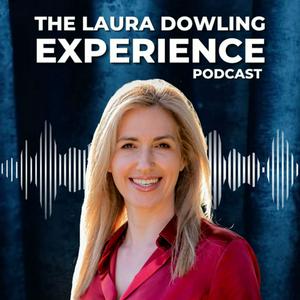
About The Laura Dowling Experience
Conversations about health, science, wellness, life, love, sex and everything in-between. Laura is a Pharmacist who loves to talk to interesting people about their unique life and work experiences. See @fabulouspharmacist on instagram for more information. Hosted on Acast. See acast.com/privacy for more information.
Podcast websiteListen to The Laura Dowling Experience, All In The Mind and many other podcasts from around the world with the radio.net app
Get the free radio.net app
- Stations and podcasts to bookmark
- Stream via Wi-Fi or Bluetooth
- Supports Carplay & Android Auto
- Many other app features
Get the free radio.net app
- Stations and podcasts to bookmark
- Stream via Wi-Fi or Bluetooth
- Supports Carplay & Android Auto
- Many other app features

The Laura Dowling Experience
Scan code,
download the app,
start listening.
download the app,
start listening.
The Laura Dowling Experience: Podcasts in Family
 New Zealand
