
Listen to this podcast in the app for free: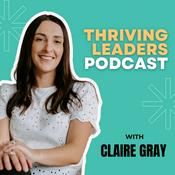 Download for free in the App Store
radio.net
Sleep timer
Save favourites
66 episodes
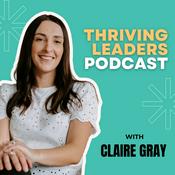
Best Of | How to Keep Teams Aligned Under Pressure
19/10/2026 | 6 mins.How do you keep a team aligned when the plan keeps changing?
In this Best Of episode of the Thriving Leaders Podcast, Matt Carroll joins me to share the behind-the-scenes challenge of getting more than 1,000 Australian athletes and officials to the Tokyo Olympics and home during the pandemic. An unexpected connection with the tuna industry became part of the solution.
We explore flexible planning, shared purpose and the trust needed to keep teams working together under pressure.
For anyone leading across teams or through uncertainty, this conversation offers a practical perspective on what it takes to stay connected when circumstances keep shifting.
Listen and consider: does every part of your team know how much their contribution matters?Why People Stay Silent at Work with Megan Reitz
13/10/2026 | 56 mins.The strategy meeting ends and everyone appears to agree. Then the real conversation begins elsewhere. I’ve seen this happen in leadership teams, and it leaves me wondering: what made it difficult to say those things in the room?
I’m joined by Megan Reitz, Professor of Leadership and Dialogue at Hult International Business School and Associate Fellow at Saïd Business School, Oxford University. Megan’s work explores speaking up, listening and the role power plays in our conversations.
We talk about what leaders might miss when a team appears aligned, how we respond when someone offers a different perspective, and why finding space for a meaningful conversation can be harder than it sounds.
In this episode, we cover:
– The meeting after the meeting
– Why some voices are easier to hear than others
– What helps people speak honestly
– How our attention shapes a conversation
– Why making space to think matters for leaders
Megan gave me plenty to reflect on in my own work with teams. If you’ve ever left a meeting wondering whether everyone said what they really thought, I’d love you to listen.
Subscribe for thoughtful conversations about leadership, thriving teams and the way we work together.
Resources:
Megan’s book Speak Out, Listen Up
Megan Reitz's Website
Megan Reitz's LinkedIn Profile
Thriving Teams by Claire Gray
#leadership #psychologicalsafety #SpeakUpCultureBest Of | Kindness and Accountability: Can Your Team Have Both?
06/10/2026 | 9 mins.Can you be kind to your people and still hold them accountable?
In this Best Of episode, Jeremy and I explore a distinction that can change how we lead: the difference between being kind and being nice.
We talk about the conversations leaders sometimes avoid, and what that means for trust, accountability and the way a team works together.
Are you saying what your team needs to hear, or what feels easier to say?
Watch this Best Of to hear Jeremy’s perspective.
I’m Claire Gray, a leadership and team facilitator, executive coach and author of Thriving Leaders and Thriving Teams. Subscribe for practical conversations about leadership, team effectiveness and creating cultures where people can thrive.
https://www.youtube.com/@thrivingculture#accountability
#psychologicalsafety #ThrivingLeadersStop Picking Sides – Why Both/And Thinking Matters with Wendy Smith
28/09/2026 | 55 mins.When two priorities both matter, why do leaders feel such pressure to choose one? The day-to-day work needs attention, but so does the future. A team needs room to act, but it also needs direction.
Wendy Smith has spent more than 25 years studying these recurring tensions. She joins me to explore why an either/or decision can feel so satisfying in the moment, yet leave leaders facing the same problem again.
We look at what both/and thinking asks of us in practice, including the conversations that become possible when different teams see a challenge from different sides. Wendy brings examples from organisational change, strategy and AI, and challenges the idea that holding two priorities means settling for a halfway compromise.
In this episode, we explore:
Why old and new priorities continue to compete as organisations change
The four common organisational paradoxes Wendy studies
How to spot the either/or question hidden in a difficult decision
Why both/and thinking asks for more than meeting in the middle
How listening reveals what each side actually needs
The tension between business as usual and future strategy
What AI reveals about fear, emotion and human judgement
How to separate competing demands before connecting them
Why a shared goal matters across organisational divides
How guardrails and measures help sustain two priorities
What Wendy means by balancing rather than finding a fixed balance
Wendy offers a practical starting point: name the tension, explore each side properly, then ask how you might accommodate both. It will not produce an easy answer to every decision. It can open up options that a quick choice would have kept out of view.
If your team keeps circling the same choice, this conversation may help you ask a better question.
Resources mentioned:
Both/And Thinking by Wendy Smith and Maryanne Lewis
Barry Johnson’s Polarity Map
Explore more leadership and team conversations: https://www.youtube.com/@thrivingculture
Subscribe for practical conversations about leading people and helping teams thrive.
#Leadership #BothAndThinking #ThrivingTeamsBest Of | Is Your Team Talking Without Really Communicating?
21/09/2026 | 9 mins.What separates a meaningful team conversation from another meeting where people simply exchange information?
In this Best Of episode of the Thriving Leaders Podcast, I revisit a standout moment from my conversation with Grant about the five skills behind better team conversations.
We explore why the quality of a conversation matters more than the amount of talking taking place and how greater presence, listening, courage and intention can help teams move beyond transactional exchanges.
You’ll hear us explore:
Why more meetings do not necessarily lead to better communication
What prevents people from being fully present
The skills that create greater depth and purpose in team conversations
Simple rituals that strengthen trust and connection
How hybrid teams can bring more humanity into the way they work
If your team talks frequently but does not always reach the clarity, honesty or depth it needs, this Best Of episode offers a practical place to start.
Subscribe for more standout insights from the Thriving Leaders Podcast and practical ideas for creating stronger leaders, healthier cultures and high-performing teams.
Learn more about my work at Thriving Culture: https://thrivingculture.com.au
#teamcommunication #leadership #highperformingteams
More Business podcasts










Trending Business podcasts





















About Thriving Leaders Podcast
The Thriving Leaders Podcast is hosted by Claire Gray, an Australian leadership and team facilitator, executive coach, keynote speaker and author. The podcast explores high-performing teams, psychological safety, accountability, workplace culture, difficult conversations, inclusive leadership and leading through change.
Podcast websiteListen to Thriving Leaders Podcast, The Prof G Pod with Scott Galloway and many other podcasts from around the world with the radio.net app
Get the free radio.net app
- Stations and podcasts to bookmark
- Stream via Wi-Fi or Bluetooth
- Supports Carplay & Android Auto
- Many other app features
Get the free radio.net app
- Stations and podcasts to bookmark
- Stream via Wi-Fi or Bluetooth
- Supports Carplay & Android Auto
- Many other app features

Thriving Leaders Podcast
Scan code,
download the app,
start listening.
download the app,
start listening.
Thriving Leaders Podcast: Podcasts in Family
 New Zealand
