
Listen to this podcast in the app for free: Download for free in the App Store
radio.net
Sleep timer
Save favourites
812 episodes
Ep. 817 - Fluoride Varnish in 2026: Modern Prevention Through Proven Science
02/11/2026 | 36 mins.Are you applying fluoride varnish the right way, or are you leaving its full clinical potential on the table?
Kayla Aamoth is a Registered Dental Hygienist since 2014 and a full-time assistant professor at the Fones School of Dental Hygiene, the world's first dental hygiene school, founded in 1913 by Alfred Fones. With nearly a decade of clinical experience in pediatric dentistry and a current academic role dedicated to training the next generation of hygienists, Aamoth brings both evidence-based science and real-world operatory insight to this conversation.
This episode takes a deep dive into the chemistry and clinical mechanics of fluoride varnish, examining how the transition from hydroxyapatite to fluorapatite fundamentally changes a tooth's resistance to acid attack and why that shift matters for every patient in your chair. The discussion covers the role of fluoride varnish within minimally invasive dentistry, its application on both enamel and exposed dentin, and how it integrates with silver diamine fluoride for managing early carious lesions. Listeners will come away with a clinically grounded understanding of why fluoride varnish is not simply a routine preventive step but a sustained fluoride delivery system with measurable biological impact.
Episode Highlights:
Fluorapatite, formed when fluoride replaces hydroxyl groups in the enamel crystal lattice, resists acid dissolution at a critical pH of approximately 4.5, compared to 4.5 versus 5.5 for natural hydroxyapatite. This difference is clinically significant for high-risk patients consuming acidic beverages, some of which have a pH as low as 2.3, and mirrors the vulnerability difference between enamel and root dentin surfaces.
Fluoride varnish works as a sustained-release reservoir by initially depositing calcium fluoride globules on the tooth surface immediately after application. These globules break down under acid challenge, releasing free fluoride ions that drive remineralization over weeks to months, meaning the clinical benefit extends far beyond the appointment itself.
For patients with exposed root surfaces and dentinal hypersensitivity, fluoride varnish precipitates mineral deposits that physically occlude dentinal tubules, providing immediate relief while allowing time for the deeper hydroxyapatite-to-fluorapatite conversion to create a durable lattice structure. Root surface exposure is common enough that it independently justifies universal varnish application beyond just high-caries-risk patients.
A clinical protocol for managing interproximal incipient lesions in pediatric patients involves applying silver diamine fluoride interproximally using tufted floss, followed immediately by fluoride varnish over the same site to act as a protective barrier that slows dissolution of the silver diamine fluoride in saliva. High-risk pediatric patients with active incipient lesions may benefit from two to four varnish applications per year using this combined approach.
Updated post-application instructions emphasize avoiding abrasion of the varnish rather than avoiding all eating and drinking. Patients should avoid hot foods, chewing gum, and alcohol-containing mouth rinses for several hours after application, as heat melts the rosin base, gum physically removes the coating, and alcohol dissolves it. Clinicians should always defer to manufacturer-specific package instructions, as recommended dwell times vary by product.
Perfect for: dental hygienists, general dentists, pediatric dentists, and dental residents seeking to strengthen their clinical understanding of preventive protocols, fluoride chemistry, and patient communication strategies around caries management and minimally invasive dentistry.
If fluoride varnish has ever felt like a routine box to check rather than a powerful clinical tool, this episode will completely change how you think about it.Ep. 816 - The OSHA Inspection That Shut Down an Ortho Practice
29/10/2026 | 26 mins.Today’s episode is a cautionary tale every dental specialty practice needs to hear. We unpack a real OSHA and Public Health Department inspection in an orthodontic office—triggered by an employee complaint and the mistaken belief that “ortho practices don’t have hazards”—which led to citations, fines, a two-week office closure, and intense oversight. Joining us is Dr. Karson Carpenter, a returning guest, general dentist, and President and CEO of Compliance Training Partners, widely regarded as one of the dental industry’s top educators and most trusted advisors on infection control, HIPAA, OSHA, and navigating inspections by OSHA, health departments, and the attorney general’s office. For more information or to reach Dr. Carpenter, visit compliancetrainingpartners.comEp. 815 - The New Era of Bulk-Fill Composites: Simpler, Faster, Better?
26/10/2026 | 32 mins.Are you still layering composite in two-millimeter increments? Advances in material science and photoinitiator chemistry may have made that requirement obsolete — and today's episode explains exactly why.
Dr. Faroud Hakim is a restorative dentist with over 30 years of private practice experience and more than three decades of dental education at the University of the Pacific Arthur A. Dugoni School of Dentistry, where he serves as Vice Chair of the Department of Restorative Dentistry and Course Director for Occlusion, TMJ, and Advanced Restorative Concepts. He is also a director of the Esthetic and Complex Care Clinic at Pacific, holds a DDS and an MBA from the University of the Pacific, is a fellow and graduate of the ADEA Leadership Institute, and is a member and past president of the OKU dental honor society. A nationally recognized lecturer and author of two chapters in the textbook Esthetic Dentistry in Clinical Practice, Dr. Hakim also serves as a clinical evaluator for emerging restorative materials, making him a uniquely credible voice on the real-world performance of modern composites.
In this episode, Dr. Hakim joins Dr. Phil Klein to break down two of the most significant trends reshaping direct composite restorative dentistry: bulk-fill materials and shade simplification. The conversation covers the materials science behind polymerization shrinkage, light penetration, and the evolution from halogen to LED curing — and explains how these advances have redefined what is clinically achievable in a single placement. Dr. Hakim also addresses the role of adhesive technique, isolation strategies, and composite injection molding as both a diagnostic and definitive treatment tool.
Episode Highlights:
The traditional two-millimeter incremental layering rule was not arbitrary — it addressed three simultaneous material limitations: polymerization shrinkage, inadequate light penetration depth, and the need for three-dimensional color stratification. Advances in stress-relieving resin chemistries, improved collimated LED curing lights, and broader-spectrum photoinitiators beyond camphorquinone have collectively enabled modern bulk-fill composites to achieve shrinkage at four-millimeter depths equal to or less than what was previously achieved with two-millimeter increments.
A visual transformation technology incorporated into one current bulk-fill composite addresses the longstanding trade-off between translucency for light penetration and adequate optical opacity for aesthetics. The material appears highly translucent in its uncured state — allowing full light transmission to the pulpal floor — and then becomes trans-opaque upon curing, mimicking the optical behavior between dentin and enamel and producing a chameleon effect by drawing color from adjacent tooth structure. Cure times are as short as 10 seconds per four-millimeter increment for lighter shades, with the darkest shade requiring 20 seconds.
Shade simplification has progressed from single-shade omnichromatic systems — which address approximately 70% of clinical cases — to five-cluster shade systems spanning the breadth of the classic Vita shade range, estimated to address approximately 95–96% of teeth. This approach reduces inventory burden while preserving the aesthetic range needed for anterior and posterior restorations, with specialty opacifiers and tints available as supplemental options for highly technique-sensitive cases requiring advanced stratification.
Radiopacity in composite restorations carries direct diagnostic and surveillance consequences. Highly filled modern bulk-fill composites are now available with radiopacity ratings of approximately 900% aluminum equivalent — roughly three times higher than conventional composites — allowing clear differentiation between restoration margins and tooth structure on follow-up radiographs, particularly critical at the gingival floor of proximal boxes where recurrent caries detection is essential. Using a flowable liner with lower radiopacity at this margin introduces a diagnostic compromise that can be avoided by warming the body composite to achieve adequate adaptation without sacrificing radiographic visibility.
Endodontically treated posterior teeth do not universally require full-coverage restorations when sufficient coronal tooth structure remains. The decision should be driven by the volume and quality of remaining buttress tooth structure, the patient's occlusal load, and the clinician's ability to achieve ideal bonding conditions — including appropriate isolation and adhesive technique capable of achieving bond strengths in the range of 40–70 megapascals. Composite injection molding offers a clinically validated alternative for full-arch rehabilitation that can serve as a diagnostic tool for occlusal testing, an intermediate restoration while staged crown and bridge work is completed, or in select cases a definitive restoration.
Perfect for: General dentists looking to update their direct restorative protocols, dental residents and new graduates building foundational composite skills, and any clinician seeking evidence-informed guidance on bulk-fill materials, shade selection, and post-endodontic restorative decision-making.
If you have ever second-guessed whether a bulk-fill composite can truly deliver on its clinical promises, this episode gives you the science, the technique, and the clinical context to make that call with confidence.Ep. 814 - The Right Perio Mix for the GP
22/10/2026 | 36 mins.Are you confident that your hygiene department is truly diagnosing and treating periodontal disease at the level your patients deserve — or are you leaving significant clinical and financial opportunity untreated?
Dr. Marc Goldman is a board-certified periodontist with over 40 years of clinical experience, founder of a premier periodontal practice in Millburn, New Jersey, and an educator at a general practice residency program at Beth Israel Hospital in Newark. With decades of mentoring general dentists and residents on the realities of periodontal and implant therapy, Dr. Goldman brings both the clinical depth and the practice management perspective that few specialists can offer.
This episode examines one of the most underappreciated revenue and risk management opportunities in general dentistry: periodontal therapy. Dr. Goldman and Dr. Phil Klein break down which periodontal services GPs should confidently keep in-house, which cases warrant referral, and how the GP-periodontist relationship should function as a collaborative business partnership rather than a competitive one. The conversation covers crown lengthening, implant treatment planning, hygiene department efficiency, and the real-world consequences of underdiagnosing periodontal disease — including malpractice exposure.
Episode Highlights:
Scaling and root planing is consistently underutilized in general practices where hygienists perform prophylaxis on patients who clinically require debridement at a therapeutic level. Using local anesthesia to anesthetize one or two quadrants at a time dramatically improves patient comfort, clinician efficiency, and case throughput, with per-quadrant fees substantially exceeding standard prophylaxis reimbursement.
The full-mouth debridement code is frequently misused as a preliminary step before diagnosis, but this approach wastes a clinical visit, reduces reimbursement, and displaces the opportunity to initiate scaling and root planing immediately. If periodontal disease is present and the patient requires root planing and scaling, initiating treatment by quadrant during that same appointment is both more efficient and more appropriate.
Crown lengthening is a significantly underutilized procedure in general practice, partly due to misconceptions about post-operative healing timelines. In many cases, adequate gingival healing occurs within two to three weeks, allowing the referring dentist to take a final impression or adjust a provisional restoration shortly thereafter — making the workflow disruption far less significant than commonly perceived.
Implant treatment planning requires a systematic, multi-specialty approach before any surgical intervention is initiated. Key pre-implant considerations include periodontal health, attached tissue adequacy, bone volume and proximity to anatomical structures such as the sinus, adjacent tooth vitality, and whether orthodontic tooth movement is indicated to optimize implant site dimensions.
Underdiagnosing or under-presenting periodontal disease carries both malpractice risk and significant consequences for long-term patient retention. Patients who later discover untreated moderate or advanced periodontal disease through a second provider consistently lose trust in their original dentist, resulting in permanent loss of that patient relationship and potential legal exposure.
Perfect for: general dentists at any career stage who want to optimize their periodontal and hygiene department profitability, dental residents building foundational practice management skills, and any clinician looking to develop stronger specialist referral relationships and reduce medico-legal risk.
If you want a clearer picture of where your practice stands on periodontal diagnosis, treatment, and referral strategy, this conversation will give you the framework to act on it.Ep. 813 - The Last Steps in Indirect Restorations Make All the Difference
19/10/2026 | 41 mins.Are you treating every indirect restoration the same way at cementation — and wondering why some cases still fail or leave patients sensitive? The answer often comes down to a few critical chairside decisions that most dentists make on autopilot.
Dr. Jennifer Derse is a restorative and cosmetic dentist with advanced training in clear aligner therapy and indirect restorations. A graduate of Marquette University School of Dentistry, she has lectured internationally and serves as a mentor at the Kois Center in Seattle, Washington — one of the most respected postgraduate dental education institutions in the world. Dr. Derse also leads clinical mentorship for incoming doctors at Espire Dental and has completed executive education programs at Harvard Business School Online, McKinsey, and the Ritz Carlton Leadership Institute.
In this episode, Dr. Derse walks through her complete cementation protocol for lithium disilicate and zirconia restorations, explaining how material choice should drive every downstream clinical decision — from intaglio surface preparation and bonding agent selection to cement choice and isolation strategy. The conversation is grounded in Kois Center-trained principles and enriched by Dr. Derse's hands-on mentorship experience watching real clinicians make real mistakes. Dr. Phil Klein, an endodontist and DMD, contributes additional clinical depth on dentin tubule anatomy and pulp proximity that every restorative dentist should understand before bonding near the pulp.
Episode Highlights:
Lithium disilicate and zirconia require completely separate preparation protocols for the intaglio surface. Air abrasion is contraindicated on glass-ceramic restorations, while hydrofluoric acid etching is contraindicated on zirconia. Confusing these two tracks is one of the most common cementation errors seen in mentored clinical settings.
For lithium disilicate crowns with an enamel margin, combining air abrasion with selective phosphoric acid etch on enamel produces superior mechanical retention compared to acid alone. The universal bonding agent is then scrubbed into both enamel and dentin — with the self-etching chemistry of the adhesive handling dentin bonding without the risks of total-etch technique.
Silane must be applied as a standalone agent, not as a component embedded within a bonding agent. Because universal bonding agents are acidic — with pH values around 3.2 — they destabilize silane over time. For adhesively retained restorations with limited ferrule, a separate silane application step is essential to preserving the chemical bond at the ceramic-cement interface.
For veneer cementation, light-cure resin cement offers superior control compared to dual-cure formulations because the ultra-thin restoration allows full light penetration. Try-in paste — a non-adhesive, shade-matched glycerin gel — allows the clinician and patient to preview the final color effect before committing to cement shade, which is especially important when masking dark underlying tooth structure or achieving very high-value aesthetics.
Post-cementation sensitivity is often preventable with two key steps: using a dual-cure resin cement that integrates into dentinal tubules as its pH neutralizes during placement, and applying a calcium- and fluoride-containing self-adhesive liner when the preparation approaches the pulp. The anatomy of dentin itself matters — intertubular dentin decreases significantly near the pulp as tubule diameter increases, reducing available bonding surface and making pulp protection even more critical in deep preparations.
Perfect for: General dentists and restorative specialists who place indirect restorations, dental residents building their cementation protocols, and any clinician who wants to stop treating lithium disilicate and zirconia the same way at the cementation appointment.
If you have ever had a patient return with sensitivity, a dislodged veneer, or a shade result that surprised you, this episode gives you the clinical framework to make sure it does not happen again.
More Health & Wellness podcasts







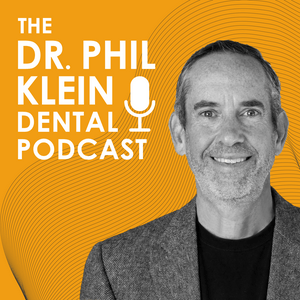
About The Dr. Phil Klein Dental Podcast
The Dr. Phil Klein Dental Podcast is the #1 clinical dental podcast for evidence-based dentistry. Hosted by endodontist Dr. Phil Klein, DMD - trusted by 250,000+ dental professionals with 750+ episodes since 2018.
The fastest-growing dental podcast worldwide, The Dr. Phil Klein Dental Podcast delivers cutting-edge clinical dentistry, state-of-the-art dental education, and actionable practice management strategies to more than 250,000 dental professionals globally. Two new episodes every Monday and Thursday featuring world-renowned clinicians, dental school faculty, academic researchers, specialty leaders, and practice management experts discussing the latest advances in evidence-based dentistry and modern practice growth you can apply immediately in practice.
Episodes span every major dental specialty - from implant dentistry, endodontics, and restorative dentistry to cosmetic dentistry, digital workflows, sleep dentistry, oral surgery, periodontics, infection control, and pediatric dentistry - giving dental professionals a single trusted source for cutting-edge clinical education across the full scope of modern dentistry.
Guests include leading clinicians from Harvard School of Dental Medicine, University of Pennsylvania School of Dental Medicine, University of Florida College of Dentistry, the American Academy of Cosmetic Dentistry, the American Academy of Endodontists, and top dental institutions across the United States and internationally. Every episode is focused on clinical excellence and state-of-the-art dental techniques — evidence-based dentistry at its highest level.
Perfect for:
General dentists seeking cutting-edge clinical techniques and evidence-based protocols
Dental specialists staying current across adjacent specialties
Dental hygienists and assistants accessing clinical education beyond typical CE options
Dental students and new graduates building a strong clinical foundation
Practice owners integrating state-of-the-art digital workflows, modern dental materials, and proven practice management strategies
Full episode library and clinical show notes: philkleindentalpodcast.com
Podcast websiteListen to The Dr. Phil Klein Dental Podcast, Grey Areas with Petra Bagust and many other podcasts from around the world with the radio.net app
Get the free radio.net app
- Stations and podcasts to bookmark
- Stream via Wi-Fi or Bluetooth
- Supports Carplay & Android Auto
- Many other app features
Get the free radio.net app
- Stations and podcasts to bookmark
- Stream via Wi-Fi or Bluetooth
- Supports Carplay & Android Auto
- Many other app features

The Dr. Phil Klein Dental Podcast
Scan code,
download the app,
start listening.
download the app,
start listening.
 New Zealand

